Calcium pyrophosphate deposition
Pseudogout
Peer reviewed by Dr Colin Tidy, MRCGPLast updated by Dr Hayley Willacy, FRCGP Last updated 21 Aug 2023
Meets Patient’s editorial guidelines
- DownloadDownload
- Share
- Language
- Discussion
- Audio Version
- Add to preferred sources on Google
Calcium pyrophosphate is a substance produced in the cartilages of the joints. It can become deposited as crystals on joint tissues. This is called calcium pyrophosphate deposition. Calcium pyrophosphate deposition can cause a number of problems of which the most well known is pseudogout.
This is almost identical to gout, causing attacks of pain and swelling in one or more joints. Some people develop damage to the joint, causing a type of long-term arthritis. Calcium pyrophosphate deposition may cause no symptoms and is sometimes picked up on an X-ray done for an unrelated condition.
Unlike gout, there is no special treatment for pseudogout. Rest, ice packs and anti-inflammatory medicines are the main forms of treatment.
At a glance
Pseudogout happens when calcium pyrophosphate (CPP) crystals deposit in and around joints.
Symptoms can include pain, warmth, redness, and swelling in one or more joints, particularly the knees.
Other forms include chronic CPP crystal inflammatory arthritis and chondrocalcinosis, which may cause no symptoms.
Pseudogout can be triggered by dehydration, severe illness, or certain medical conditions.
Treatment focuses on relieving symptoms with painkillers, anti-inflammatory medicines, and sometimes colchicine.
Although pseudogout cannot be cured, attacks usually resolve within about ten days.
What is pseudogout (calcium pyrophosphate deposition)?
Calcium pyrophosphate (CPP) crystals (sometimes called pseudogout crystals) can become deposited on cartilage and various other tissues in and around joints. This is known as CPP deposition (CPPD).
Some people have CPPD on the cartilages that cover their joints. This is known as chondrocalcinosis. It may cause no symptoms but may be picked up on an X-ray. Other people may have an attack of joint pain and swelling identical to gout. This is called pseudogout, or acute CPP crystal arthritis.
There is also a longer-term condition called chronic CPP crystal inflammatory arthritis. Some people with osteoarthritis get CPPD and, when this causes symptoms, it is referred to as osteoarthritis with CPPD.
What causes pseudogout?
Pseudogout is caused by calcium pyrophosphate deposition (CPPD).
What causes calcium pyrophosphate deposition disease?
Calcium pyrophosphate deposition disease is just a term that incorporates all problems caused by deposition of CPP crystals - mainly acute attacks of pseudogout and chronic CPP crystal inflammatory arthritis.
What causes calcium pyrophosphate crystals?
There can be many reasons why CPP forms crystals which settle on the tissues in and around the joints.
Some people inherit a fault in one of the basic units of genetic information (a gene) which makes them more prone to develop CPP crystals in the joints.
What triggers pseudogout?
An attack of pseudogout is triggered by CPP crystal formation. Several conditions can trigger crystal formation, including:
Lack of fluid (dehydration).
An attack of any severe illness.
Overactivity of the parathyroid glands (hyperparathyroidism).
Underactive thyroid gland (hypothyroidism).
Any cause of arthritis.
An illness which causes too much iron in the body (haemochromatosis).
An inherited illness causing a build-up of copper in the body (Wilson's disease).
An illness caused by an increased level of growth hormone in the body (acromegaly).
Surgery or injury.
Low magnesium level in the blood (hypomagnesaemia).
How common is pseudogout (calcium pyrophosphate deposition)?
CPPD is more common as you get older. X-ray studies show that over half of people over the age of 80 have changes typical of CPPD. One English study calculated that 7-10 people out of 100 over the age of 60 have CPP crystals which accumulate on cartilage (chondrocalcinosis). Men and women are equally affected.
Figures from America suggest that every year about 1 in 100,000 people experience an acute attack of pseudogout.
What are the symptoms of pseudogout (calcium pyrophosphate deposition)?
CPP crystals which accumulate on cartilage (chondrocalcinosis) may cause no symptoms but may just be picked up on an X-ray.
Is pseudogout painful?
Acute CPP crystal arthritis, or pseudogout, may cause exactly the same symptoms as gout. Thus, there will be pain, warmth, redness and swelling of one or more joints. Any joint can be involved but the knees are most commonly affected, followed by the wrists, shoulders, ankles, hands and feet.
Chronic CPP crystal arthritis resembles osteoarthritis. It causes longer-term damage to joints, with pain and stiffness. Knees, hips, shoulders and wrists are most often affected.
What is the difference between pseudogout and gout?
It's always a problem sorting out pseudogout vs gout, as they can cause identical symptoms. The difference only becomes apparent when tests show that the problem is the formation of CPP crystals rather than uric acid crystals.
How is pseudogout diagnosed?
X-rays (radiology) may be helpful. They show shadows that look like straight lines typical of chondrocalcinosis. Scans may also be useful. Looking at joint fluid that has been removed with a syringe and needle under the microscope may show typical CPP crystals.
Tests may be needed to rule out other causes.
Is there a pseudogout blood test?
Unlike gout, pseudogout cannot be diagnosed on a blood test alone.
What else could it be?
There are several other conditions that can cause joint pain and swelling. These include gout, infection (septic arthritis), osteoarthritis and rheumatoid arthritis.
What is the treatment for pseudogout?
Chondrocalcinosis which produces no symptoms does not need any treatment.
Ice packs and rest may be helpful. Painkillers and anti-inflammatory medicines are usually given to help the pain and inflammation. Other treatments sometimes tried include draining any fluid with a syringe and needle, injecting steroid liquid into the joint and taking steroid tablets.
Can pseudogout be cured?
Pseudogout cannot be cured but treatment is available to relieve the symptoms until the attack settles.
Chronic CPP crystal arthritis treatment
Chronic CPP crystal arthritis is usually treated in the same way as pseudogout, with painkillers and anti-inflammatory medicines. Other medicines that have been tried are called methotrexate and hydroxychloroquine.
However, little evidence has been found to support the effectiveness of methotrexate in this condition, and it is now no longer used. More research is needed into specific therapies for pseudogout.
Does colchicine work for pseudogout?
Colchicine, often used in the treatment of gout, is also sometimes helpful in pseudogout management. In pseudogout, colchicine has been found to reduce inflammation and slow the production of CPP crystals. It can therefore be used as a treatment for an acute attack of pseudogout and as a preventative treatment in people who have frequent attacks.
Is there a pseudogout diet?
Unlike gout, no specific diet has been found to be helpful in pseudogout and there's no link between pseudogout and alcohol. However, since lack of fluid (dehydration) is a trigger factor for CPP crystal deposition, it makes sense to keep up your fluid intake.
Surgery
Chronic CPP crystal arthritis affecting a large joint sometimes requires surgery.
What is the outlook (prognosis)?
Attacks of pseudogout usually settle in about ten days. Chronic CPP crystal arthritis can cause long-term joint damage and difficulties with mobility. If CPPD is caused by another illness, the seriousness will depend on the underlying condition.
Can pseudogout be prevented?
Unlike gout, there is no treatment or diet that can prevent the formation of CPP crystals. If an underlying condition caused an episode of pseudogout (eg, lack of fluid (dehydration) or low magnesium levels), treating this may prevent further attacks.
Like osteoarthritis, the damage from chronic CPP crystal arthritis can be limited by keeping your weight normal and getting a moderate amount of exercise.
Patient picks for Arthritis
Bones, joints and muscles
Arthritis
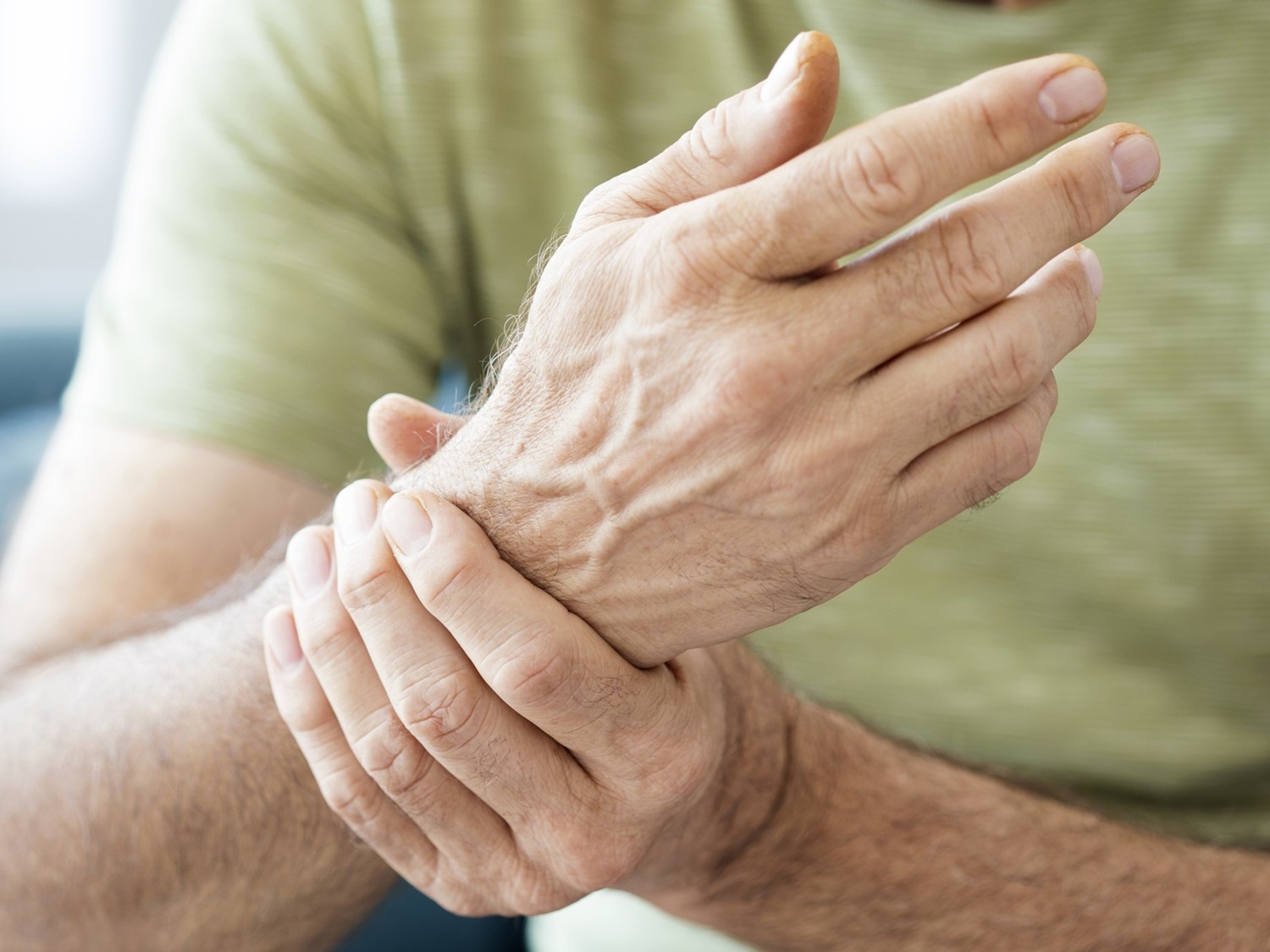
Arthritis means inflammation in a joint (like your knee, hip, elbow or fingers). It is a common problem and generally affects older people, although there are some rare conditions that cause arthritis in children and teenagers. There are lots of types of arthritis. Some give you short-term aches in the joints and then resolve completely, others can cause long-term problems and permanently affect how your joints move. This leaflet will explain a bit about how joints work and then go through the main causes of arthritis in easy-to-read language.
by Dr Toni Hazell, FRCGP
Bones, joints and muscles
Rheumatoid arthritis
Rheumatoid arthritis causes inflammation, pain, and swelling of joints. Persistent inflammation over time can damage affected joints. The severity can vary from mild to severe. Treatments include disease-modifying medicines to suppress inflammation, which can prevent or delay the progression of the disease, and medication to ease pain. The earlier treatment is started, the less joint damage is likely to occur. Surgery is needed in some cases if a joint becomes badly damaged.
by Dr Colin Tidy, MRCGP
Frequently asked questions
Does pseudogout get worse with age?
Yes, pseudogout is more common as people get older. X-ray studies show that over half of individuals over 80 years old have changes typical of calcium pyrophosphate deposition (CPPD), the underlying cause of pseudogout.
Is pseudogout more severe than gout?
Pseudogout can cause symptoms identical to gout, including pain, warmth, redness, and swelling in one or more joints. While acute attacks of pseudogout usually settle within about ten days, chronic CPP crystal arthritis can lead to long-term joint damage and mobility issues, similar to osteoarthritis.
Can pseudogout affect multiple joints?
Yes, pseudogout can affect one or more joints. While the knees are most commonly affected, other joints such as the wrists, shoulders, ankles, hands, and feet can also be involved in an acute attack. Chronic CPP crystal arthritis often affects knees, hips, shoulders, and wrists.
What kind of tests are done to rule out other conditions when diagnosing pseudogout?
When diagnosing pseudogout, tests may be conducted to rule out other conditions that cause similar joint pain and swelling. These include gout, infection (septic arthritis), osteoarthritis, and rheumatoid arthritis.
Are there any alternative treatments for chronic pseudogout besides painkillers and anti-inflammatory medicines?
For chronic CPP crystal arthritis, which is similar to chronic pseudogout, other medicines like methotrexate and hydroxychloroquine have been tried. However, methotrexate is no longer widely used due to insufficient evidence of its effectiveness. More research is needed to find specific therapies for this condition.
Further reading and references
- EULAR recommendations for calcium pyrophosphate deposition - Part I: terminology and diagnosis; European League Against Rheumatism (2011)
- EULAR recommendations for calcium pyrophosphate deposition - Part II Management; European League Against Rheumatism (2011)
- Stack J, McCarthy G; Calcium pyrophosphate deposition (CPPD) disease - Treatment options. Best Pract Res Clin Rheumatol. 2021 Dec;35(4):101720. doi: 10.1016/j.berh.2021.101720. Epub 2021 Oct 28.
- Zamora EA, Naik R; Calcium Pyrophosphate Deposition Disease.
About the authorView full bio

Dr Hayley Willacy, FRCGP
General Practitioner, Medical Author
MBChB (1992), DRCOG, DFFP, MRCOG (Part 1) MRCGP (2007), DFSRH (2013), MSc - medical education (2020)
Dr Hayley Willacy was an NHS GP working in northwest England, who retired from clinical practice in 2022 after 30 years.
About the reviewerView full bio

Dr Colin Tidy, MRCGP
General Practitioner, Medical Author
MBBS, MRCGP, MRCP (Paediatrics), DCH
Dr Colin Tidy is an NHS Doctor, based in Oxfordshire.
Article history
The information on this page is written and peer reviewed by qualified clinicians.
Article also available in English, German, Spanish, French, Italian, Portuguese, Hindi, Hebrew, Arabic, and Swedish.
Next review due: 19 Aug 2028
21 Aug 2023 | Latest version
Join the conversation
Share your thoughts or experiences with others in our patient communities.

Ask, share, connect.
Browse discussions, ask questions, and share experiences across hundreds of health topics.

Feeling unwell?
Assess your symptoms online for free
Sign up to the Patient newsletter
Your weekly dose of clear, trustworthy health advice - written to help you feel informed, confident and in control.
By subscribing you accept our Privacy Policy. You can unsubscribe at any time. We never sell your data.