Dealing with a child who is unresponsive
Peer reviewed by Dr Rachel Hudson, MRCGPLast updated by Dr Philippa Vincent, MRCGPLast updated 5 Dec 2023
Meets Patient’s editorial guidelines
- DownloadDownload
- Share
- Language
- Discussion
- Audio Version
- Add to preferred sources on Google
In this series:Breathing difficulties in children
If someone becomes unresponsive they need someone to help keep them safe and prevent further harm. The type of help they need varies depending on why they have become unresponsive, whether they are breathing or not breathing and if they are a baby, child or adult.
At a glance
If a child is unresponsive, check if they are breathing normally.
If they are breathing, put them in the recovery position and call 999 or 112.
If you suspect a spinal injury, use the jaw thrust technique to open the airway.
If they are not breathing, start CPR by giving 5 rescue breaths, then 30 chest compressions and 2 rescue breaths.
If alone, give one minute of CPR before calling 999 or 112.
Continue CPR until help arrives or the child starts breathing normally.
If a child is unresponsive, you should shout for help and dial 999. Make sure an ambulance is on its way.
In children, making ventilations (rescue breaths) are crucial to the child’s chances of survival. For those not trained in paediatric resuscitation, seeking help quickly is the most important thing. In any case, calling an ambulance and taking immediate action is critical.
This leaflet is created from first aid advice provided by St John Ambulance, the nation's leading first aid charity. This advice is no substitute for first aid training - find a training course near you.
Unresponsive and breathing
What to look for
If a child is not responding to you and you think they are unresponsive, ask loudly: 'What has happened?' or 'Open your eyes'. Place one hand on their shoulder and tap gently. If they still do not respond, it's likely they're unresponsive.
What you need to do
If you think your child is unresponsive, check to see if they are still breathing normally. If they are unresponsive and breathing, here's what you need to do:
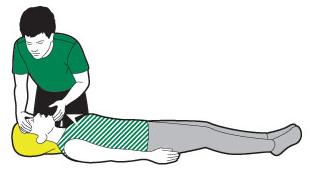
Step 1 - Open their airway
Place one hand on the child's forehead and gently tilt their head back. As you do this, their mouth will fall open slightly.
Place the fingertips of your other hand on the point of their chin and lift it.
Open the airway
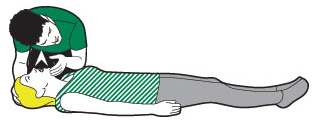
Step 2 - Check to ensure they are breathing normally
Look, listen and feel for normal breathing - chest movement, sounds and breaths on your cheek. Do this for no more than ten seconds.
Check breathing
If they are breathing normally, put them into the recovery position to keep their airway open.
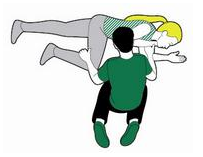
Step 3 - Put them in the recovery position
The next three steps are for if you find the child lying on their back. If you find them lying on their side or their front you may not need all three.
Place their arm nearest you at a right angle to their body, with the palm facing upwards.
Take their other arm and place it across their chest so the back of their hand is against their cheek nearest you, and hold it there. With your other hand, lift their far knee and pull it up until their foot is flat on the floor.
Now roll the child on to their side. Carefully pull on their bent knee and roll them towards you. Once you've done this, the top arm should be supporting their head and the bent leg should be on the floor to stop them from rolling over too far.
Recovery position
Next, check that their airway is open, so they can breathe, and any fluid in their mouth can drain away. To do this, tilt their head back, gently tilt their chin forward and make sure that their airway will stay open and clear.
Step 4 - If you suspect a spinal injury
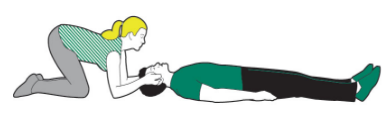
If you think the child could have a spinal injury, you must try and keep their neck as still as possible. Instead of tilting their neck, use the jaw thrust technique:
Place your hands on either side of their face and with your fingertips gently lift the jaw to open the airway, avoiding any movement of their neck.
Suspect spinal injury
Step 5 - Call for help
Once you've put them safely into the recovery position, call 999 or 112 for emergency help.
Remember that until help arrives you must keep checking that they're still breathing normally.
If they stop breathing normally at any point, call 999 or 112 straight away and get ready to give them chest compressions and rescue breaths - CPR.
Unresponsive and not breathing
If a child is not responding to you and you think they are unresponsive, ask loudly 'What's happened?' or say to them: 'Open your eyes!'. Place one hand on their shoulder and tap gently. If they still do not respond, it's likely that they're unresponsive.
Open their airway and check to see if they are breathing normally by looking for chest movement, listening for the sounds of normal breathing and seeing if you can feel their breaths on your cheek.
If they are not breathing, you need to start CPR (cardiopulmonary resuscitation - a combination of chest compressions and rescue breaths) straight away.
What you need to do
If someone is with you, get them to call 999 or 112 for emergency help.
If you're on your own, you need to give one minute's worth of CPR - cardiopulmonary resuscitation - before you call for help. This involves giving chest compressions and rescue breaths to keep the child's circulation going.
How to perform CPR on a child
Kneel down beside the child on the floor, level with their chest.
Give five initial rescue breaths before starting the sequence of 30 chest compressions and two rescue breaths.
Step 1 of 1
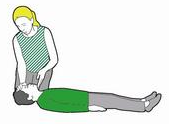
Ensure the child's airway is open.
Open airway child
Step 2 of 7
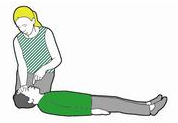
Pinch their nose firmly closed.
Pinch nose child
Step 3 of 7
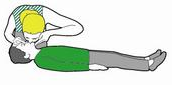
Take a deep breath and seal your lips around their mouth.
Blow steadily into the mouth until the chest rises.
Rescue breath child
Step 4 of 7
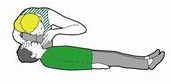
Remove your mouth and allow the chest to fall.
Check breathing child
Give two more rescue breaths.
Now give 30 chest compressions.
Step 5 of 7
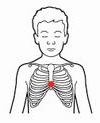
Place the heel of one hand towards the end of their breastbone, in the centre of their chest, making sure you keep the fingers off the ribs.
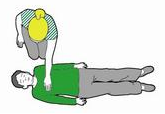
Lean over the child, with your arm straight, pressing down vertically on the breastbone, and press the chest down by at least one third of its depth.
CPR finger position child
CPR child 1
Release the pressure without removing your hand from their chest. Allow the chest to come back up fully - this is one compression.
CPR child 2
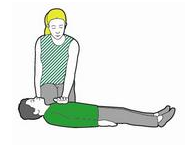
Repeat this 30 times, at a rate of about twice a second or the speed of the song 'Staying Alive'.
Now give two rescue breaths.
Step 6 of 7 Call for help
Remember to call for emergency help after about a minute if you are on your own.
Carry on giving 30 chest compressions followed by two rescue breaths for as long as you can, or until help arrives. If the child starts breathing normally again, stop CPR and put them in the recovery position.
Note: these hints are no substitute for thorough knowledge of first aid. St John Ambulance holds first aid courses throughout the country.
Copyright for this leaflet is with St John Ambulance.
Patient picks for First aid
Treatment and medication
Dealing with an adult who is unresponsive
This leaflet is created from first aid advice provided by St John Ambulance, the nation's leading first aid charity. If someone becomes unresponsive they need someone to help keep them safe and prevent further harm. The type of help they need varies depending on why they have become unresponsive, whether they are breathing or not breathing and if they are baby, child or adult.
by Dr Colin Tidy, MRCGP

Treatment and medication
Cuts
This leaflet gives a guide as to what you should do following a cut.
by Dr Doug McKechnie, MRCGP
Frequently asked questions
What should I do if I'm alone and a child is unresponsive and not breathing?
If you are on your own, you should give one minute's worth of CPR (cardiopulmonary resuscitation) before calling 999 or 112 for emergency help. This initial minute of CPR involves giving chest compressions and rescue breaths to help maintain the child's circulation.
How long should I continue CPR for an unresponsive and not breathing child?
You should continue giving 30 chest compressions followed by two rescue breaths for as long as you can, or until emergency medical help arrives. If the child starts breathing normally again at any point, stop CPR and place them into the recovery position.
In what specific situations should I use the jaw thrust technique instead of tilting the head back?
You should use the jaw thrust technique if you suspect the child might have a spinal injury. This technique helps to open the airway while keeping their neck as still as possible, preventing further potential injury.
What is the recommended rate for chest compressions on a child?
Chest compressions should be performed at a rate of approximately twice a second, or at the speed of the song 'Staying Alive'.
How deep should chest compressions be for a child?
When performing chest compressions on a child, you should press their chest down by at least one third of its depth.
About the authorView full bio

Dr Philippa Vincent, MRCGP
General Practitioner, Medical Author
MB BS, Bsc, MRCGP (2000), DCH, DFSRH, DRCOG
Dr Philippa Vincent is an NHS GP working in North London.
About the reviewerView full bio

Dr Rachel Hudson, MRCGP
General Practitioner and Medical Author
MBChB, MRCGP (2008), BSc (Medical Science), DFSRH, DRCOG, DCH
Dr Rachel Hudson, is an NHS GP working in the North West of England.
Article history
The information on this page is written and peer reviewed by qualified clinicians.
Article also available in English, German, Spanish, French, Italian, Portuguese, Hindi, Hebrew, Arabic, and Swedish.
Next review due: 3 Dec 2028
5 Dec 2023 | Latest version
Join the conversation
Share your thoughts or experiences with others in our patient communities.

Ask, share, connect.
Browse discussions, ask questions, and share experiences across hundreds of health topics.

Feeling unwell?
Assess your symptoms online for free
Sign up to the Patient newsletter
Your weekly dose of clear, trustworthy health advice - written to help you feel informed, confident and in control.
By subscribing you accept our Privacy Policy. You can unsubscribe at any time. We never sell your data.
More in treatment and medication
- Alternatives to HRT for menopause symptoms
- Antidepressants
- Beta-blockers
- Biological medicines for rheumatoid arthritis
- Buprenorphine replacement for heroin
- Calcium channel blockers
- Cancer treatment
- Complementary and alternative medicine
- Hormone replacement therapy (HRT)
- Insulin
- Medical cannabis in palliative care
- Meningococcal vaccine for meningitis
- Methadone replacement for heroin
- Mucolytics
- Peripheral vasodilators
- Steroid injections
- Steroid nasal sprays
- Strong painkillers
- Topical anti-inflammatory painkillers
- Travel vaccinations