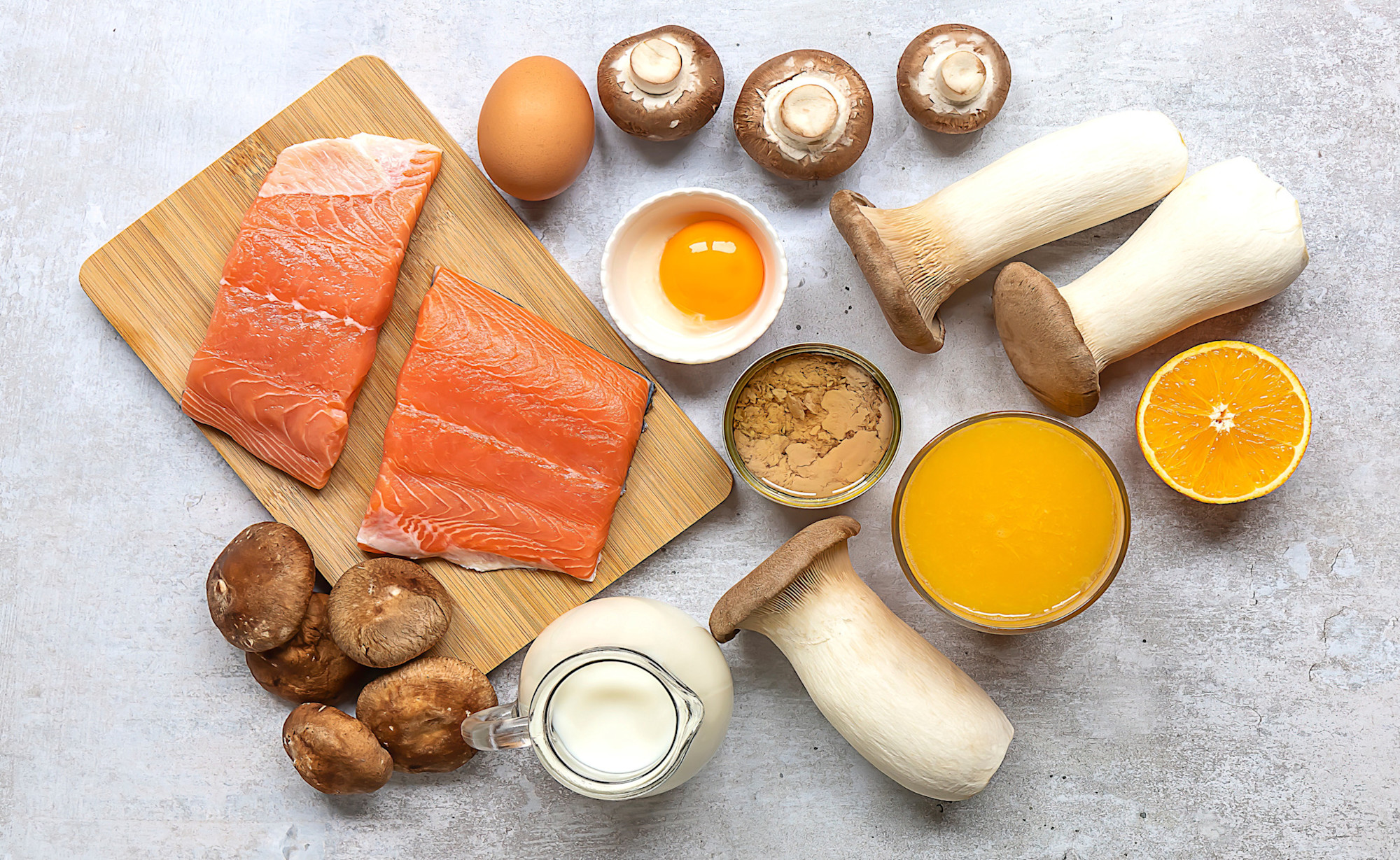
10 everyday foods high in vitamin D
Peer reviewed by Dr Colin Tidy, MRCGPAuthored by Josh AldermanOriginally published 29 Oct 2025
Meets Patient’s editorial guidelines
- DownloadDownload
- Share
- Language
- Discussion
- Audio Version
- Add to preferred sources on Google
Vitamin D plays an essential role in bone health, immunity, and mood, yet many people in the UK don’t get enough, especially during the darker months.
While sunlight is the main source, certain foods can also help to boost your levels naturally. In this article, we explore vitamin D foods you might not expect and how to include them in your diet.
Why do we need vitamin D?
Vitamin D helps the body absorb calcium and phosphate, nutrients that are vital for strong bones, teeth, and muscles. A deficiency can cause fatigue, low mood, weakened immunity, and, in severe cases, bone problems such as rickets or osteoporosis.
Since the body produces vitamin D when the skin is exposed to sunlight, some people may be deficient during the autumn and winter months.
To bridge that seasonal gap, experts recommend adults consider a daily 10 micrograms (400 International Units) supplement from October through March to maintain healthy levels of this essential vitamin.¹
Alongside your daily supplement, it’s a good idea to boost your vitamin D intake through food. There are plenty of everyday sources that you might already know of - and a few that might even surprise you.
10 foods high in vitamin D
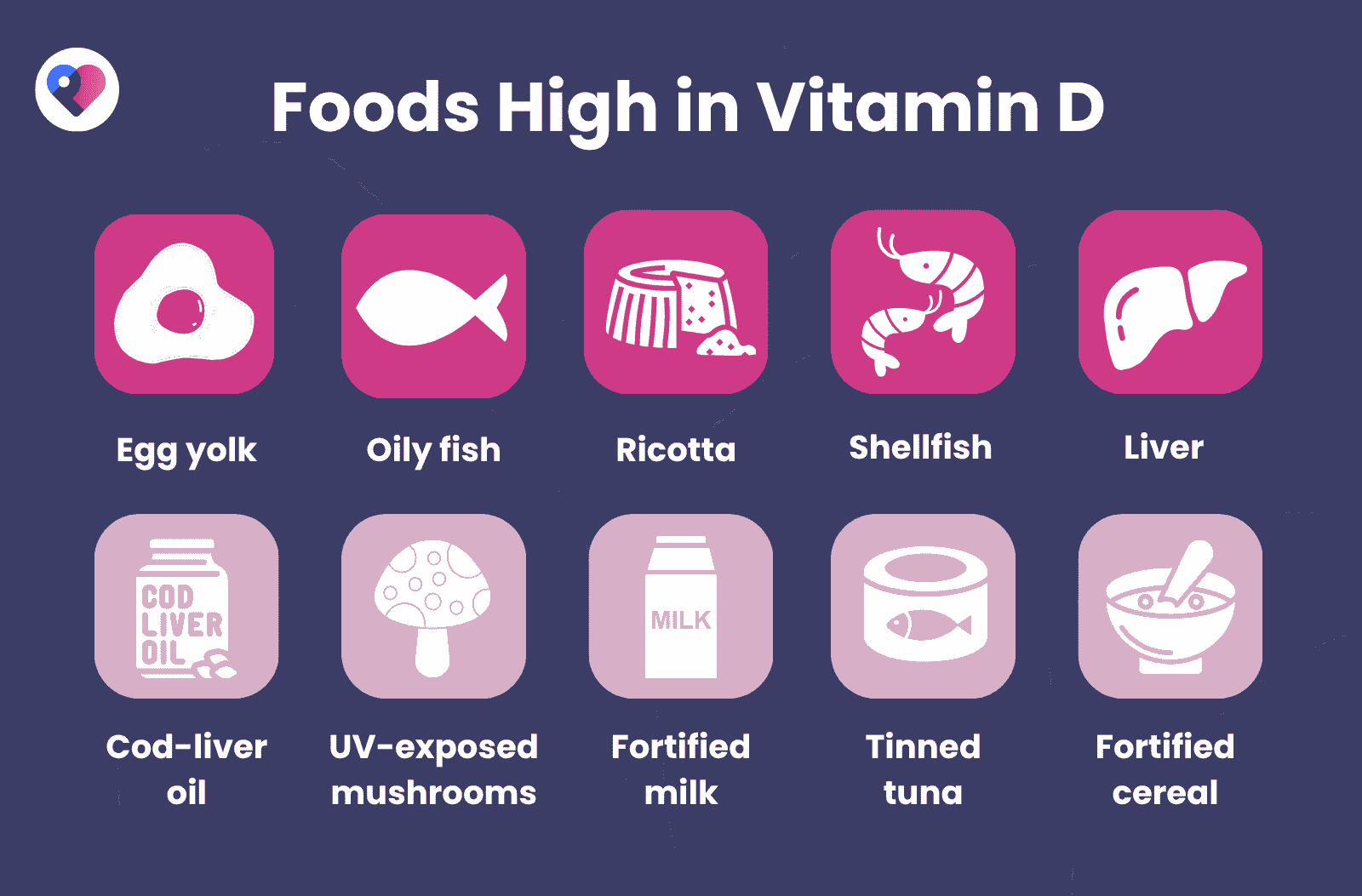
© Patient / Heather Ainsworth
Everyday foods high in vitamin D
1. Oily fish
Oily fish, are among the richest natural sources of vitamin D. Just one serving of salmon or mackerel can provide most of your daily requirement.
Sardines, whether fresh or canned, are another excellent option and supply calcium and omega-3 fatty acids.
2. Egg yolks
Eggs are a convenient and versatile way to get more vitamin D. The yolk contains most of the nutrient, so eating whole eggs rather than just the whites is best.
Vitamin D levels can vary depending on how the hens were raised, and eggs from free-range or outdoor-reared hens tend to contain more.
3. Fortified foods
In the UK, many everyday foods are fortified with vitamin D, meaning it is added during production. Common examples include:
Breakfast cereals.
Margarine and spreads.
Some plant-based milks such as soya, oat, or almond.
Fortified orange juice.
Fortified foods are particularly useful for vegetarians, vegans, or anyone who does not eat fish. Always check the label to see how much vitamin D a product contains.
4. Mushrooms exposed to sunlight
Most mushrooms contain very little vitamin D unless they have been exposed to UV light, which increases their vitamin D2 content. Look for labels that say “UV-exposed” or “vitamin D enriched”.
Leaving ordinary mushrooms on a sunny windowsill for an hour before cooking can slightly boost their vitamin D levels.
5. Liver
Beef and lamb liver are rich in several nutrients, including vitamin D, iron, and vitamin A. However, because they are high in vitamin A, they should be eaten in moderation, especially by people who are pregnant, as too much vitamin A can be harmful to the baby.
6. Cod liver oil
Cod liver oil has long been a popular supplement in the UK and is still one of the richest natural sources of vitamin D.
Just one teaspoon can give you your entire daily dose. However, because it’s also high in vitamin A, it’s best to follow the recommended dosage and avoid taking it alongside other vitamin A supplements.
7. Tinned tuna
Fresh tuna loses much of its vitamin D during cooking, but tinned tuna retains more of it. It is a convenient cupboard staple that can be added to sandwiches, salads, or pasta dishes.
Choose tuna canned in spring water rather than oil for a lighter option.
8. Cheese
Some types of cheese, particularly ricotta, contain small amounts of vitamin D, and when combined with other foods high in vitamin D, can contribute to your overall intake.
Cheese also provides calcium and protein, which support bone and muscle health.
9. Shellfish
Prawns, and oysters contain modest amounts of vitamin D, along with protein, zinc, and vitamin B12. They are also lower in fat than other animal sources, making them a healthy addition to a balanced diet.
10. Fortified plant-based alternatives
For those following a vegan diet, fortified plant-based milks, yoghurts, and spreads are among the most reliable vitamin D foods.
They usually contain vitamin D2, though some brands now add D3 derived from lichen2, which is suitable for vegans and thought to be more effective.
Getting enough vitamin D
It can be difficult to meet your vitamin D needs through food alone, even with a varied diet. This is why supplementation is sometimes recommended, particularly during the winter months or for people at higher risk of deficiency, including those who rarely go outdoors or have darker skin tones.
If you are unsure whether you need a supplement, speak to your doctor or pharmacist. They may recommend a simple blood test to check your levels.
Summary
Although sunlight is the main source of vitamin D, certain foods high in vitamin D, such as oily fish, fortified products, and eggs, can make a valuable contribution.
For most people, combining these foods with a daily supplement during the winter offers the best protection against deficiency. Always make sure to stick to the recommended intake to avoid vitamin D toxicity.
Keeping your vitamin D levels healthy supports not only bones and muscles but also your immune system and overall wellbeing.
Further reading
Patient picks for Vitamins and supplements
Senior health
The best anti-ageing supplements for your health
The term anti-ageing is written on many beauty creams and other skincare products packaging. But what does anti-ageing mean inside the body? Here, it goes beyond the appearance of our face lines, to healthy internal ageing. This means how well our cells and organs are remaining healthy and able to fight decline and disease as we grow older - so that we can live happily for as long as possible. We explore the anti-ageing supplements that help our bodies do just this, according to experts.
by Lawrence Higgins
Diabetes
Can taking supplements help manage diabetes?
According to Diabetes UK, some people with diabetes believe that certain vitamins and supplements may help manage their blood sugar levels. While they shouldn't be a substitute for conventional treatment, here’s a look at some of the most commonly used supplements, and their purported benefits.
by Victoria Raw
About the authorView full bio

Josh Alderman
SEO Executive
BA (Hons) Media and Print Journalism
Josh is an SEO executive at Patient with over 4 years experience working within the healthcare sphere.
About the reviewerView full bio

Dr Colin Tidy, MRCGP
General Practitioner, Medical Author
MBBS, MRCGP, MRCP (Paediatrics), DCH
Dr Colin Tidy is an NHS Doctor, based in Oxfordshire.
Article history
Article also available in English, German, Spanish, French, Italian, Portuguese, Hindi, Hebrew, Arabic, and Swedish.
Next review due: 29 Oct 2028
29 Oct 2025 | Originally published
Authored by:
Josh AldermanPeer reviewed by
Dr Colin Tidy, MRCGP
Join the conversation
Share your thoughts or experiences with others in our patient communities.

Ask, share, connect.
Browse discussions, ask questions, and share experiences across hundreds of health topics.

Feeling unwell?
Assess your symptoms online for free
Sign up to the Patient newsletter
Your weekly dose of clear, trustworthy health advice - written to help you feel informed, confident and in control.
By subscribing you accept our Privacy Policy. You can unsubscribe at any time. We never sell your data.
More in diet and nutrition
- 8 benefits of matcha tea
- NewCan chicory root be a healthier alternative to coffee?
- Can taking supplements help manage diabetes?
- Can vitamins really prevent hair loss?
- Diabetes diet: managing type 2 diabetes
- Do supplements work for depression?
- How diet can reduce your risk of stroke and heart attack
- How gut bacteria affect mood, focus and brain health
- How much meat should we be eating?
- How to eat more healthily during the colder months
- How to set achievable health goals
- How to snack healthily when you are vegan
- Magnesium: Health benefits and risks
- Plant-based proteins could help prevent high blood pressure
- Two soft drinks a day may increase risk of early death
- What are the benefits of baby probiotics?
- UpdatedWhat is the carnivore diet and is it healthy?
- Why fad diets can actually lead to weight gain
- Why too much sugar is bad for children
- Why you don't need to detox