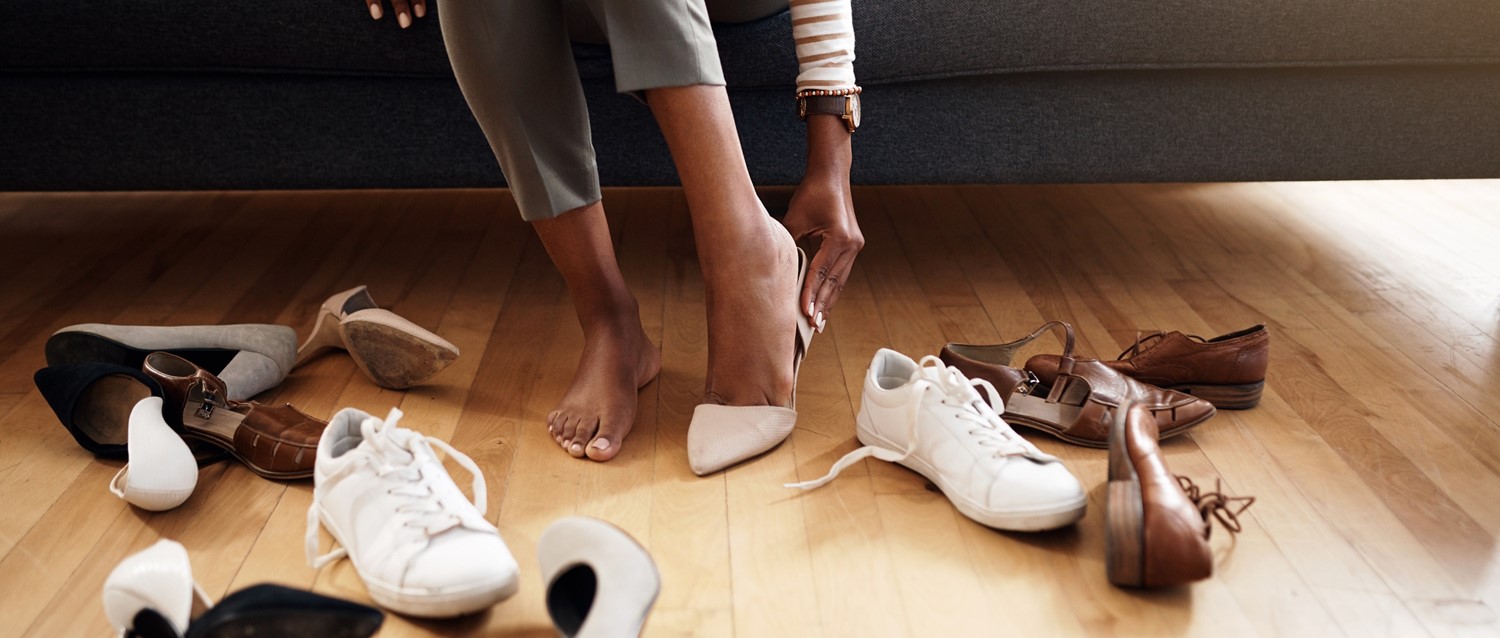
What your shoes can tell you about your feet
Peer reviewed by Dr Sarah JarvisAuthored by Allie AndersonOriginally published 11 Mar 2021
Meets Patient’s editorial guidelines
- DownloadDownload
- Share
- Language
- Discussion
- Audio Version
- Add to preferred sources on Google
As the saying goes, good shoes will take you to good places. However, as well as signalling your lifestyle and sense of fashion, your footwear can in fact say a lot about the state of your feet.
Each foot has 26 bones, 33 joints, and more than 100 muscles, ligaments and tendons. "The feet are quite complex and no two are a pair," explains Emma McConnachie, podiatrist and spokesperson for The College of Podiatry. "There are plenty of issues that can occur, and podiatrists see a wide range of foot and lower-limb concerns."
Pain or discomfort is often the first sign of a foot problem, but for many people, the clues are in the shoes.
The sole of the problem
If you notice that the soles of your shoes wear down more markedly or quickly on one side than the other, it can be a sign that the pressure on your feet is being distributed unequally.
This doesn't necessarily mean there's anything wrong. However, while plenty of people experience no symptoms as a result of an uneven wear pattern, others get quite severe problems like pain, often in the big toe and sometimes dispersed to the ankle, or even up to the knee and hip.
"If your foot has a very low or high arch, it can cause different wear patterns in your shoes. Even one damaged joint can completely change things and it's unique to the patient," McConnachie says.
"Where the patient is reporting an issue, or where there is an uneven wear pattern, we would usually carry out a gait analysis - also known as a biomechanical assessment - to look at how the body is working."
This involves examining the structure and mechanics of the feet and lower limbs, how they function and move together when you're standing and walking, and whether they could be contributing to pain or discomfort.
If so, the solution might be as simple as wearing insoles or having custom-made orthotics to balance the unequal pressure on your feet.
Wear and tear
Comfortable footwear can help to keep your feet in tip-top shape, so it stands to reason that if your shoes don't fit properly - especially if they pinch and rub - they can cause you all manner of trouble.
Shoes that are too small, tight or poorly cushioned can lead to small lumps of hard skin (corns), larger areas of thickened, rough skin (calluses), and blisters, all of which can be bothersome though not serious. "The shoes can wear through to the end where the toes are pushing against the fabric, and this is often accompanied by a thick and damaged nail or ingrown toenail," McConnachie adds. Over-the-counter remedies from a pharmacy will often be sufficient to treat minor ailments like these.
If the footwear fits
Ill-fitting shoes, and certain styles of footwear, can also cause more serious problems and have a significant impact on your day-to-day life.
Plantar fasciitis is pain around the bottom of the heel and arch of your foot, caused by straining the part of the foot than connects the heel bone to the toes, called the plantar fascia.
It's often linked with activity - you might be more likely to get plantar fasciitis if you've recently started walking more or running, or working out on a hard surface - but it can also be caused by shoes that have insufficient cushioning or support.
A similarly painful foot complaint, Morton's neuroma, is frequently the consequence of wearing high heels and tight, pointy shoes. Caused by inflammation of or damage to a nerve in between two (usually the third and fourth) toes, the main symptom is shooting or stabbing pain in the bottom of the foot, and sometimes a burning sensation in the area.
Bunions, on the other hand, are not caused by ill-fitting shoes - the cause is unknown, although there may be a genetic element. But these protruding bony lumps on the inside of the big toe often become more painful if you wear shoes that are too narrow and have a particularly hard sole.
Footwear woes
If your foot troubles come and go, you'll probably get away with continuing to wear the shoes of your choice.
However, if pain becomes hard to bear and problem feet are impacting your daily life, it might be time to ditch the stilettos and winklepickers in favour of a more sensible style.
"If you suffer from problems with your toes, such as corns or ingrown toenails, then avoid a narrow toe box, which is the front of your shoe," McConnachie says. "Yes, your toes really will slide forward into the pointy parts of your shoes! Even slight compression can cause problems, and I often see patients in my clinic suffering as a result of wearing shoes that are narrower than their forefoot."
If this is the case, try wide-fit shoes. But as McConnachie points out, a 'wide fit' is simply wider than other shoes in a particular range and doesn't necessarily mean they will fit if you have a wider foot, so having your feet measured properly is important.
She adds that our footwear needs are as unique as our feet, but we can all help to protect our feet by following some simple advice.
"Good support is key, and you should aim for shoes that have a good arch support and a way of staying on across the middle of your foot, such as straps or laces. This helps avoid straining your feet or clawing your toes to keep shoes on," she comments.
"If you wear insoles or orthotics, then look for shoes that have a removable liner as this makes them fit more easily."
Patient picks for Foot health
Foot care
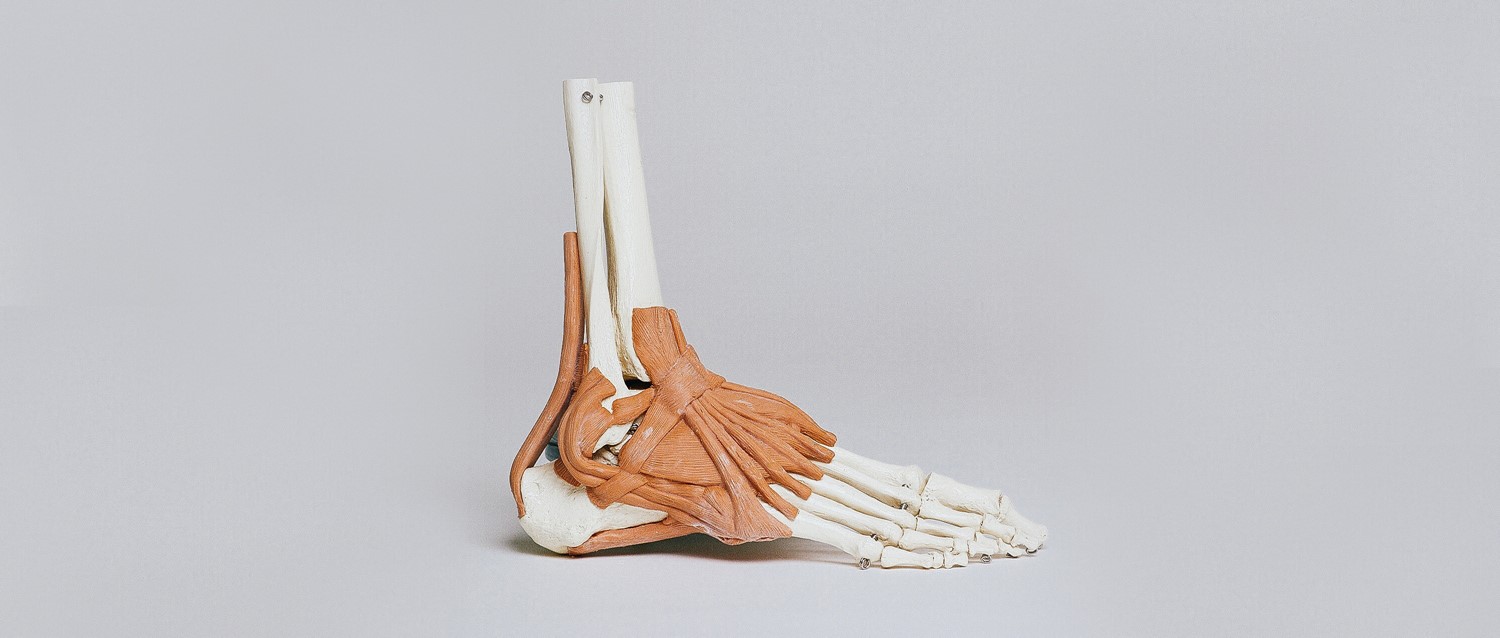
Anatomy of the foot
It may surprise you to know that the foot is one of the most complicated structures of the body. It contains a lot of moving parts - 26 bones, 33 joints and over 100 ligaments. Such complexity is necessary because the foot is required to do many different activities such as walking, running and climbing. Between them, the two feet need to balance your body weight, redistributing it in response to position changes. This is, if you'll pardon the pun, no mean feat.
by Dr Laurence Knott

Foot care
How to find the perfect running shoes for your feet
Whether you've only just decided to take up running, or have long been in training for a marathon, having the right pair of trainers can make a big difference in keeping injuries at bay. But before you think about buying the latest brand, always make sure you get the best advice, as I discovered on a recent shopping trip to London.
by Ross Davies
About the authorView full bio
Authored by

Allie Anderson
Freelance Journalist
NCTJ
Allie Anderson is an NCTJ-qualified journalist with many years of experience writing and editing for a range of publishers.
About the reviewerView full bio

Dr Sarah Jarvis
Clinical Consultant
MA (Cantab), BM, BCh (Oxon), DRCOG, FRCGP, MBE
After training in medicine at Cambridge and Oxford, Dr Sarah Jarvis MBE became a GP.
Article history
Article also available in English, German, Spanish, French, Italian, Portuguese, Hindi, Hebrew, Arabic, and Swedish.
11 Mar 2021 | Originally published
Authored by:
Allie AndersonPeer reviewed by
Dr Sarah Jarvis
Join the conversation
Share your thoughts or experiences with others in our patient communities.

Ask, share, connect.
Browse discussions, ask questions, and share experiences across hundreds of health topics.

Feeling unwell?
Assess your symptoms online for free
Sign up to the Patient newsletter
Your weekly dose of clear, trustworthy health advice - written to help you feel informed, confident and in control.
By subscribing you accept our Privacy Policy. You can unsubscribe at any time. We never sell your data.