The importance of learning CPR: Emma tells her story
Peer reviewed by Dr Krishna Vakharia, MRCGPAuthored by Victoria RawOriginally published 18 Jun 2025
Meets Patient’s editorial guidelines
- DownloadDownload
- Share
- Language
- Discussion
- Audio Version
- Add to preferred sources on Google
According to the British Heart Foundation (BHF) 30,000 people have a cardiac arrest each year. Fewer than one in ten of these people will survive. Cardiac arrest can happen to anyone, anywhere, at any time - and without warning.
Knowing how to perform CPR could double someone's chances of surviving it. We hear from real-life heroes who've saved lives through CPR. Their stories highlight the vital importance of learning this life-saving skill.
What is CPR?
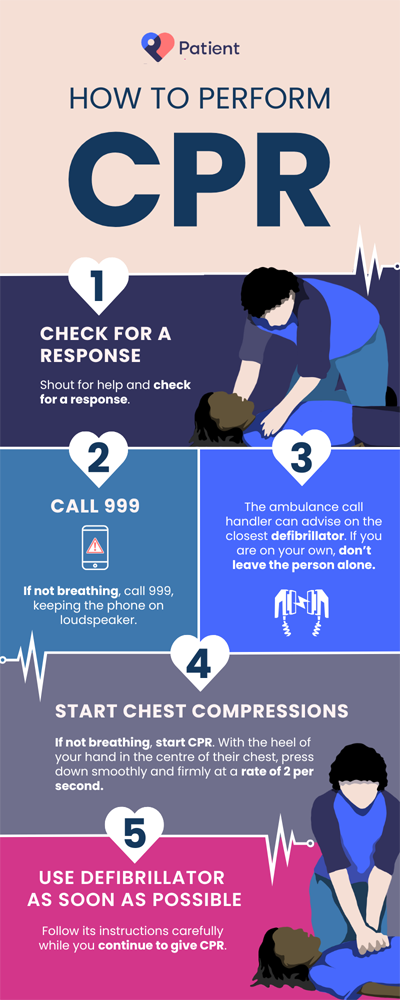
CPR (cardiopulmonary resuscitation) is an emergency procedure to get your heart beating again when it unexpectedly stops (cardiac arrest). When your heart stops beating it stops pumping blood around your body - starving your brain of oxygen. The longer your brain goes without oxygen, the greater the chance of brain damage and death. CPR can keep your blood pumping until professional medical help arrives.
How to do CPR
Why is learning CPR important?
Without CPR, your chance of dying dramatically increases after cardiac arrest. By learning CPR, you can become a hero and save someone else's life. Minutes spent learning CPR can mean a lifetime saved. The British Heart Foundation's RevivR campaign puts this power in your hands. Taking its free 15-minute online CPR course means you could be ready to act in an emergency.
Emma's story
For Emma Kenyon, a typical February evening in 2021 turned into a medical emergency when her husband Matt went into cardiac arrest at their West Yorkshire home. Emma - a mum of two - immediately sprang into action, performing CPR on Matt until emergency services arrived.
"It began with him being unable to sleep because of what he thought was bad indigestion," says the former design manager. "He then developed a pain in his chest that travelled down his arms and across his back.
"I called 111 for advice, who sent an ambulance as a precaution. He started to feel a little better until he suddenly went dizzy and fell unconscious. That's when I called 999."
With no prior knowledge of CPR, Emma relied on the emergency call handler, who coached her through each step. In what must have been a terrifying experience, Emma followed the instructions closely, performing CPR on Matt until the paramedics got there.
Thankfully, her quick thinking and careful attention to the operator's guidance helped save her husband's life.
"Since Matt's heart attack and cardiac arrest, I set up a Facebook group called Local Lifesavers that provides free CPR training opportunities to members of my local community. About 300 people have attended these courses over the last few years - that's 300 people who before this training might not have been able to act in an emergency."
Emma is raising funds to replace the defibrillator pads at Emley Moor Working Men's Club, West Yorkshire. This is to ensure their availability for emergencies and support ongoing maintenance.
For more inspiring stories about the life-saving power of CPR, tune in to Andy's story.
Patient picks for First aid
Treatment and medication
How to teach yourself first aid
Would you know what to do if someone was choking? Or if they lost consciousness? Knowing first aid can be the difference between life and death, which is why it's important to know the basics.
by Andrea Downey
Treatment and medication
What supplies do you need for a sports first aid kit?
Sport often tests the limits of our physical abilities, sometimes resulting in injury, so a dedicated first aid kit can really come in handy for quick, effective relief. But deciding on the contents can be challenging, given that they are often dictated by the sport in question.
by Danny Chadburn
About the authorView full bio

Victoria Raw
Feature Writer
BA (Hons), English Literature
Victoria is a content writer at Patient, with special interests spanning mental wellbeing, societal trends and the impact of technology on our health.
About the reviewerView full bio

Dr Krishna Vakharia, MRCGP
Chief Medical Officer for Health, Optum UK
MBChB, MRCGP(2013), BMedSci (hons), DFSRH, DRCOG, PGDipDerm (Distn)
Dr Krishna Vakharia is an NHS GP. She is also a regular examiner for the postgraduate Diploma in Practical Dermatology at Cardiff University as well as being the Chief Medical Officer for health at Optum UK.
Article history
Article also available in English, German, Spanish, French, Italian, Portuguese, Hindi, Hebrew, Arabic, and Swedish.
Next review due: 18 Jun 2028
18 Jun 2025 | Originally published
Authored by:
Victoria RawPeer reviewed by
Dr Krishna Vakharia, MRCGP
Join the conversation
Share your thoughts or experiences with others in our patient communities.

Ask, share, connect.
Browse discussions, ask questions, and share experiences across hundreds of health topics.

Feeling unwell?
Assess your symptoms online for free
Sign up to the Patient newsletter
Your weekly dose of clear, trustworthy health advice - written to help you feel informed, confident and in control.
By subscribing you accept our Privacy Policy. You can unsubscribe at any time. We never sell your data.
More in treatment and medication
- Can deaf people have therapy?
- Can hypnotherapy help you lose weight?
- Chemical found in cannabis could be more effective than painkillers
- Essential first aid items for your home
- Health problems you don't need to see your doctor about
- How does paracetamol know where our pain is?
- How to choose a therapist
- Labiaplasties – what are they and are they ever medically necessary?
- Pets as therapy: benefits for all ages
- Prescriptions: your questions answered
- The dangers of fake drugs
- What factors are causing antimicrobial resistance?
- What is psychodynamic therapy?
- What not to say to someone who is dying
- What should you do if someone goes into cardiac arrest?
- What you need to know before you take erectile dysfunction medication
- When should you stop taking antidepressants?
- Why is therapy so exhausting?
- Why is there still stigma around antidepressants?