National Houseplant Week: Health benefits of biophilia and plants
Peer reviewed by Dr Krishna Vakharia, MRCGPAuthored by Noella Pio KivlehanOriginally published 11 Jan 2024
Meets Patient’s editorial guidelines
- DownloadDownload
- Share
- Language
- Discussion
- Audio Version
- Add to preferred sources on Google
Getting a breath of fresh air has been sage advice for centuries to those needing some moments of calm and clarity. Taking a walk and getting among greenery in open spaces is now proven to boost mental health and improve wellbeing. A way to achieve this, both in the home and workplace, is through biophilia - the term used to describe getting closer to nature. We explore how you can invite nature - and its benefits - into your life, your home, and even your workspace.
Mental health support for adults and children
Online CBT and psychological therapy for adults and children aged 8–17. Onebright’s accredited clinicians support people experiencing anxiety, depression and other emotional challenges.
Bringing nature into our homes and workspaces can immediately make us feel less stressed and anxious1. In an increasingly stressful, populated, and urbanised world - where most of us live in urban areas2 - these so-called biophilic indoor environments are needed more than ever:
What is biophilia?
Biophilia literally translates to 'love of life or living things'. This word was first used by famed psychologist Erich Fromm but was made popular by Harvard University biologist Edward O Wilson, who wrote the book Biophilia in 1984.
The idea is that human's love for and desire to be with nature comes from an inherent, biologically driven need to interact with other forms of life, such as plants and animals.
For instance, Wilson believed that humans love flowers because for many plant species, flowers signal that fruit, a known source of nutrients for early mankind, would be arriving soon. Also, our affection for baby animals suggests that connecting with animals, and protecting the most vulnerable of them, gave early people an evolutionary advantage.
Why does it help, and how does it work?
Nature has been widely shown to benefit mental health and wellbeing, and is simply our proper place in the world, according to Dr Peter James, assistant professor of public and environmental health.
James believes that we can better recover from stress and improve our mental health and function in natural settings, because that’s where we are meant to be.
Biophilia works on many levels. Psychotherapist Laura Duester says: "It allows us to connect with the world around us, be more mindful, and switch-off from anxious or difficult thoughts."
There are many sensory inputs which can be calming and provide pleasure, says Duester, like looking at trees, smelling flowers and hearing birdsong. "Being in the sunlight increases our bodies vitamin D, and getting outdoors is also fun, such as when we enjoy splashing in puddles, sitting in the sun, or stepping on crunchy leaves."
The benefits of vitamin D have long been noted. Nicknamed the 'sunshine vitamin, it is made by the skin directly from sunlight, and plays a major role in the normal function of the immune system and in bone, tooth, and muscle health.
"There is lots of research which shows that nature has substantial physical and emotional health benefits," says Duester. "When people experiencing stress spend time in natural environments, they experience more positive emotions and a decreased physiological stress response3".
Research also shows that people who regularly enjoy nature are happier and more satisfied with life and feel less depressed and anxious4.
What is the best way to get biophilia in your life?
Outdoors
Think in colours green, blue and yellow:
Spend time in green spaces, like parks or forests.
Enjoy blue spaces, such as rivers, beaches, or banksides.
When the yellow sunshine's out, get outdoors, even to just sit in a garden, balcony, or doorstep. But take steps not to burn.
"Use your eyes and ears," says Duester: “Whether it’s bird-watching, growing scented herbs, forest-bathing or hiking in the mountains, find out what works for you and prioritise it. Even if you're walking in a city, try and enjoy urban plants and wildlife."
At home
It's not always possible to get outdoors in nature, but research suggests that we can get similar benefits when we bring nature into our homes.
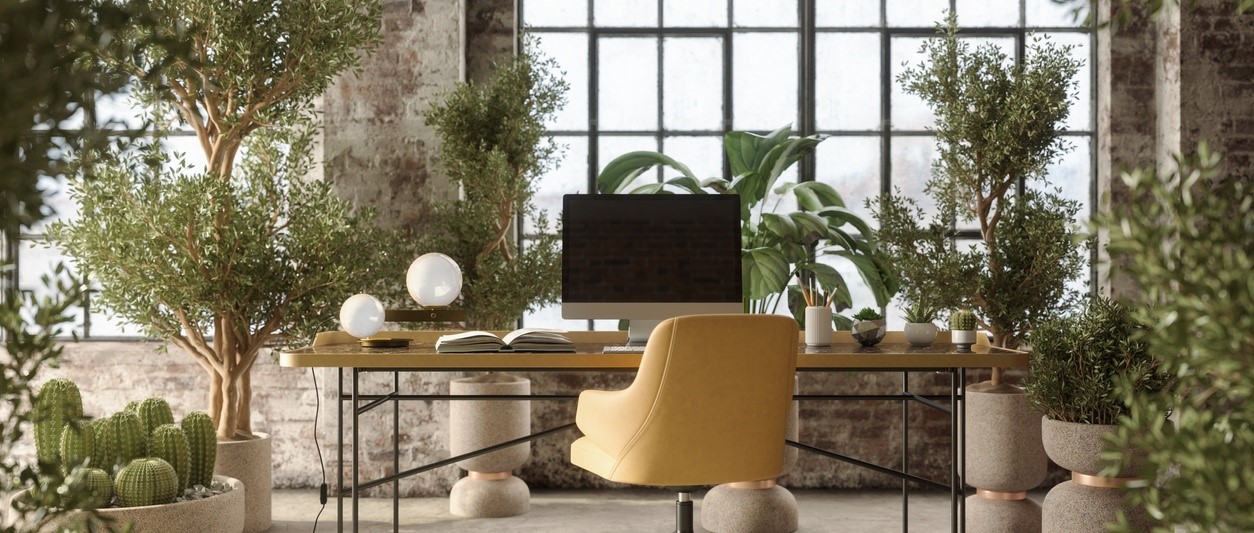
One study found that filling a room with houseplants and other natural materials, having significant window space showing daylight and a natural view, or both of these things combined can instantly reduce stress and anxiety1.
Duester also recommends gardening or growing fruit and vegetables at home. "Or indoors, you might enjoy looking at trees through the window, or placing a simple indoor plant on your desk. Even watching nature documentaries and listening to nature soundscapes can be effective."
At Work
In 2019, the World Health Organization (WHO) officially classified workplace burnout - the feeling of exhaustion caused by ongoing stress at work - as an occupational phenomenon5.
Given many of us spend around one third of our lives in an office, there's been increasing focus on making the work environment as healthy and attractive as possible.
One study looked at the effects of drab, plant-free working environments over 10 years6. The results showed that employees were happier and 15% more productive when workplaces are filled with a few houseplants.
Indoor greenery acts as a natural air purifier, letting everyone in the office breathe a little easier, which allows them to relax better.
We have control over home-offices, but what about shared office spaces? Increasingly, interior designers and architects are turning to nature to create the healthiest workplaces, as Sheela Shukla of Building Design Partnership (BDP) explains:
"The WELL Building Standard™ gives guidance on how many plants to use in an area, and other ways to integrate nature. For example, we consider indoor planting, calming colours, textures, shapes, forms, imagery, sounds, lighting, and views to external areas.
"An Urban Greening Factor, such as that in the London Plan, also evaluates and quantifies the amount and quality of natural, healthy greening measures in offices."
Further reading
Patient picks for Mental wellbeing
Mental health
What are the mental health benefits of making your bed in the morning?
Making the bed in the morning is a simple task that many don't think twice about - perhaps it's the first thing you do after waking up. However, for others, making the bed can feel like a real challenge. If you're striving to adopt healthier habits, let's explore the benefits of making your bed.
by Emily Jane Bashforth

Mental health
Is the vagus nerve the key to our mental health?
The vagus nerve provides two-way communication between the brain and organs including the heart, the lungs and the gut. Stimulating it via an electrical implant can alleviate symptoms of epilepsy and depression. We ask the experts about the exciting possibilities in this area of medicine.
by Sally Turner
About the authorView full bio
Authored by

Noella Pio Kivlehan
About the reviewerView full bio

Dr Krishna Vakharia, MRCGP
Chief Medical Officer for Health, Optum UK
MBChB, MRCGP(2013), BMedSci (hons), DFSRH, DRCOG, PGDipDerm (Distn)
Dr Krishna Vakharia is an NHS GP. She is also a regular examiner for the postgraduate Diploma in Practical Dermatology at Cardiff University as well as being the Chief Medical Officer for health at Optum UK.
Article history
Article also available in English, German, Spanish, French, Italian, Portuguese, Hindi, Hebrew, Arabic, and Swedish.
11 Jan 2024 | Originally published
Authored by:
Noella Pio KivlehanPeer reviewed by
Dr Krishna Vakharia, MRCGP
Join the conversation
Share your thoughts or experiences with others in our patient communities.

Ask, share, connect.
Browse discussions, ask questions, and share experiences across hundreds of health topics.

Feeling unwell?
Assess your symptoms online for free
Sign up to the Patient newsletter
Your weekly dose of clear, trustworthy health advice - written to help you feel informed, confident and in control.
By subscribing you accept our Privacy Policy. You can unsubscribe at any time. We never sell your data.