Does rosemary oil actually help hair grow?
Peer reviewed by Dr Colin Tidy, MRCGPLast updated by Lynn StephenLast updated 7 Oct 2026
Meets Patient’s editorial guidelines
- DownloadDownload
- Share
- Language
- Discussion
- Audio Version
- Add to preferred sources on Google
We’re always on the lookout for the latest miracle health product - especially if it’s inexpensive and easily found on the high street. And TikTok is full of claims that rosemary oil is a remedy for rapid hair growth. But is there any evidence it works?
What is rosemary oil?
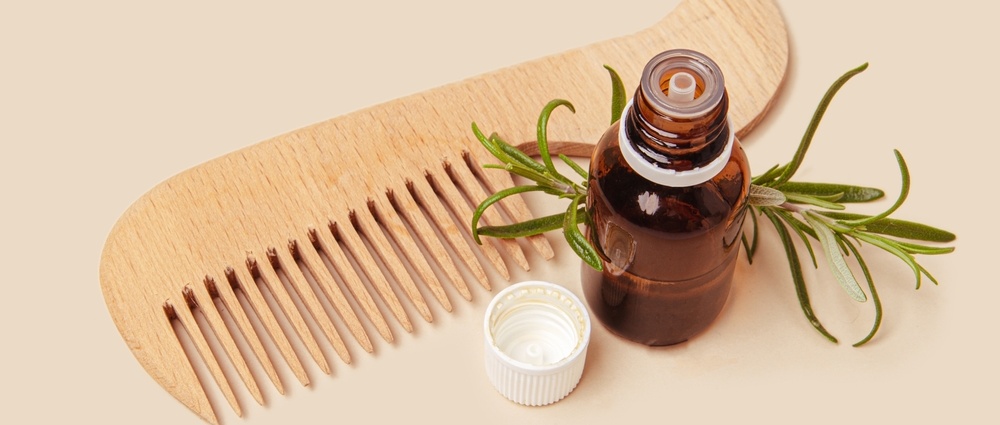
Rosemary oil comes from the rosemary plant, a fragrant herb that grows as an evergreen shrub. It’s known as a food seasoning, but is used in herbal medicines and cosmetics too.
Can rosemary oil help with hair loss?
Using rosemary oil as a hair product has fast-become a hit on social media, with many claiming it has helped treat hair loss and promote growth. There is some evidence to support this.
One study found rosemary oil to be as effective at encouraging hair regrowth as minoxidil, a medicine to treat male pattern hair loss (androgenic alopecia)1 - however this study was small and it is difficult to make any conclusions from it.
Male pattern baldness is a form of hair loss that happens when a by-product of testosterone called dihydrotestosterone attacks your hair follicles. It’s thought that rosemary oil helps to prevent this hormone from attacking your follicles, which allows your hair to grow. The rosemary oil also reduced scalp itchiness too.
A small body of research suggests that rosemary oil might also help with other forms of hair loss. For example, a study suggested that rosemary oil may help to kill certain bacteria, which may help treat hair loss if it is caused by a bacterial infection.2 There is no solid evidence, however, that rosemary oil definitely works and should replace standard treatments. Although these studies are promising, it’s hard to judge the effectiveness of rosemary oil based on a handful of small studies.
Dr Sharon Wong, Consultant Dermatologist, Hair Specialist, and President of the Institute of Trichologists, London says that rosemary oil is being lauded as a miracle hair growth product, with very little data to back this claim up.
"One study looked at comparing the effects of rosemary oil versus common medical treatment on male pattern baldness," she says. "However, there are several flaws with the study that raise the question of its reliability. Furthermore, there is currently no data that can confirm if rosemary oil works on any other forms of hair loss."
Is rosemary oil safe?
Rosemary oil is a natural remedy, but that does not mean it is safe for everyone. As with any product, some people may be allergic to rosemary oil. Those with sensitive skin may get irritation, rashes, or other skin issues when using it.
If you are pregnant or breastfeeding you should not use rosemary oil unless your doctor advises otherwise. As children’s skin is especially sensitive, it may not be suitable for them.
How to use rosemary oil for hair
You should not apply rosemary oil directly to your scalp. Always dilute it with a carrier oil - such as coconut or jojoba oil. For example, mix a few drops of rosemary essential oil with around a tablespoon of your chosen carrier oil.
Before applying, always do a test patch beforehand to check for any allergic reactions, and wash your hair thoroughly afterwards with shampoo.
What else helps with hair growth?
The treatments available for hair loss depend on the causes of the issue. Some types of hair loss may be genetic - such as male and female pattern baldness. Other causes include illness, stress, cancer treatment, weight loss, or iron deficiency. Some treatments may not be available on the NHS.
Minoxidil
Minoxidil and finasteride are the main treatments for male pattern baldness. Minoxidil can also be used to treat female pattern baldness, but women should not use finasteride.
Steroids
Steroids in the form of creams or injections may help control alopecia areata by reducing the inflammation and suppressing the immune system. This stops the body from attacking your hair follicles.
Immunotherapy
Immunotherapy - the topical application of a chemical to bald areas of your scalp - may help those with alopecia areata.3 It aims to alter the immune system so that it stops attacking your hair.
Low-level light therapy
Low-level light therapy, otherwise known as laser therapy, involves using different wavelengths of light to stimulate your hair follicles and promote hair growth. It may help hair loss caused by male and female pattern baldness, alopecia areata, and hair loss caused by chemotherapy.4
Eat healthily
Eating a varied diet which is full of vitamins, minerals, and other nutrients is important for healthy skin and hair. A lack of vitamin D, folate, and zinc may contribute to alopecia areata.5 Vitamin D can be found in supplements, sunlight, oily fish, and eggs - but it is often added to cereals, plant milks, and fat spreads.
Green, leafy veg such as spinach, broccoli, and sprouts contain folate, while zinc can be found in meat, beans, nuts, wholegrains such as wholemeal bread, cereals, and dairy products. You can find iron in red meat and green vegetables - for example, broccoli.
Low iron levels are a common cause of hair loss.
Common symptoms of low iron include:
Tiredness.
Shortness of breath.
Heart palpitations.
Pale skin.
Low energy.
Your doctor may carry out blood tests and if your levels are too low, they may recommend taking iron supplements.
Hair volumising products
While these products won't make hair regrow or grow back, it can enhance the look of the hair you have and make it appear thicker. Being gentle with your hair - and avoiding using heat from hairdryers or straighteners on it - will also keep it looking healthier. Avoid brushing it when it's wet or vigorously towel drying it, as this can lead to the strands breaking. Also, try not to style your hair in a tight ponytail or bun, as this can pull your hair.
Get help for stress
Psychological stress can lead to hair loss. If you're struggling with stress, anxiety, low mood, or any other mental health issue, it's important to speak to your doctor - they can advise on the right treatment and support.
Patient picks for Hair and scalp
Skin, nail and hair health
4 common winter hair problems - and how to treat them
In winter, we're constantly going between the chilly, outdoor weather and indoor, central heating. Both these conditions can be harsh on our hair, depriving it of the moisture it needs to stay healthy and full. We asked a hair specialist for tips on preventing the most common winter hair problems, and explore other possible health issues that could be linked to your hair troubles.
by Victoria Raw

Skin, nail and hair health
Why hair turns grey - and how lifestyle may play a role
It’s natural, as you get older, to think about grey hair. While embracing a natural white, silvery, or salt-and-pepper look can be empowering, many people wonder if targeted lifestyle choices can delay it. Whether you’re ready to embrace a new hue, or want to hold onto your natural colour a bit longer, we dive into the science of why hair greys and if it’s actually possible to slow down the clock.
by Victoria Raw
Further reading and references
- Panahi Y, Taghizadeh M, Marzony ET, et al; Rosemary oil vs minoxidil 2% for the treatment of androgenetic alopecia: a randomized comparative trial. Skinmed. 2015 Jan-Feb;13(1):15-21.
- de Oliveira JR, de Jesus D, Figueira LW, et al; Biological activities of Rosmarinus officinalis L. (rosemary) extract as analyzed in microorganisms and cells. Exp Biol Med (Maywood). 2017 Mar;242(6):625-634. doi: 10.1177/1535370216688571. Epub 2017 Jan 17.
- Singh G, Lavanya M; Topical immunotherapy in alopecia areata. Int J Trichology. 2010 Jan;2(1):36-9. doi: 10.4103/0974-7753.66911.
- Pillai JK, Mysore V; Role of Low-Level Light Therapy (LLLT) in Androgenetic Alopecia. J Cutan Aesthet Surg. 2021 Oct-Dec;14(4):385-391. doi: 10.4103/JCAS.JCAS_218_20.
- Thompson JM, Mirza MA, Park MK, et al; The Role of Micronutrients in Alopecia Areata: A Review. Am J Clin Dermatol. 2017 Oct;18(5):663-679. doi: 10.1007/s40257-017-0285-x.
About the authorView full bio

Lydia Smith
Feature writer
BA, MA, MSc
Lydia Smith is an award-winning journalist and feature writer who has written extensively on women's health and mental health. She is currently studying for an MSc in psychology.
About the reviewerView full bio

Dr Colin Tidy, MRCGP
General Practitioner, Medical Author
MBBS, MRCGP, MRCP (Paediatrics), DCH
Dr Colin Tidy is an NHS Doctor, based in Oxfordshire.
Article history
Article also available in English, German, Spanish, French, Italian, Portuguese, Hindi, Hebrew, Arabic, and Swedish.
Next review due: 7 Oct 2029
7 Oct 2026 | Latest version
1 Sept 2023 | Originally published
Authored by:
Lydia Smith
Join the conversation
Share your thoughts or experiences with others in our patient communities.

Ask, share, connect.
Browse discussions, ask questions, and share experiences across hundreds of health topics.

Feeling unwell?
Assess your symptoms online for free
Sign up to the Patient newsletter
Your weekly dose of clear, trustworthy health advice - written to help you feel informed, confident and in control.
By subscribing you accept our Privacy Policy. You can unsubscribe at any time. We never sell your data.
More in skin, nail and hair health
- Can vitamins really prevent hair loss?
- Common skin complaints: understanding tinea versicolor
- Do LED face masks really work?
- Glycolic acid: skincare benefits, side effects, and more
- Here's how to protect a bald head from the sun
- How to avoid tick bites and Lyme disease
- How to look after your skin during chemotherapy
- How your environment affects skin conditions
- Protecting your skin from harmful pollution
- Skin-picking and hair-pulling: managing body-focused repetitive behaviours
- Smoking effects on skin: from ageing to illness
- The best ways to get rid of head lice
- The best ways to prevent and treat insect bites
- The mental health impact of skin conditions
- What are the dangers of drinking in hot weather?
- What causes sudden eczema in adults?
- When should I worry about an insect bite?
- Whole body 3D mole mapping: the future of skin health?
- Why losing weight can cause hair loss - and what to do about it
- Will a gluten-free diet help my child's eczema?