Why we need better care for people with eczema
Peer reviewed by Dr Sarah JarvisAuthored by Lydia SmithOriginally published 22 Dec 2021
Meets Patient’s editorial guidelines
- DownloadDownload
- Share
- Language
- Discussion
- Audio Version
- Add to preferred sources on Google
Atopic eczema, the most common form of the skin condition eczema, affects one in five children and one in ten adults in the UK. Not only does it cause the skin to become itchy, sore, dry and cracked, the discomfort and appearance can lead to considerable psychological distress - affecting people's sleep, work and more. Despite this, many people with eczema wait many months for treatment and suffer in silence.
Around 1.5 million people live with moderate or severe eczema in the UK. However, a recent report by Allergy UK and Sanofi highlights a number of problems they face when trying to access care.
National Institute for Health and Care Excellence (NICE) guidelines are evidence-based recommendations for health and care in England. Yet for adolescents and adults with eczema, there are no standardised guidelines to reduce the variation of timely care and treatment seen across the country. As a result, nearly half of the healthcare professionals surveyed in the report, including GPs and dermatologists, said they did not have clear guidance and support around when to diagnose and refer people with severe eczema.
The impact of this for people with eczema is far-reaching. More than 50% wait more than a year for a treatment regime that makes their condition manageable, with over 75% saying eczema had impacted their mental health. The condition also disrupts daily life for many people, with almost 25% of adults with eczema taking more than 15 days off work a year due to their eczema.
Although the report highlights that these issues existed before the pandemic, COVID-19 has had an impact on care and treatment too. Almost half of patients surveyed said COVID-19 has made it more difficult to access services and treatments, while 87% of healthcare professionals say the pandemic has made it harder to identify patients.
Eczema isn't always taken seriously
Dr Adil Sheraz, a consultant dermatologist and British Skin Foundation spokesperson, says it's important that patients are assessed carefully in primary care, both for their skin issues but also for the impact the condition has on their mental well-being.
"Unfortunately on many occasions patients are asked to just 'stop scratching' or are not taken seriously as it's perceived as 'just' a skin condition," he says.
"For most patients, eczema tends to be something that they have lived with for most of their lives," Sheraz adds. "In the case of adults with eczema, I often get the impression that when patients are seen in a specialist dermatology clinic, they are surprised to learn that there are other options than topical steroids to treat eczema."
Eczema is a relapsing and remitting condition, which means that there will be periods when a short course of topical steroid use will clear the skin. The patient may remain in remission for many months before their eczema symptoms return. "Occasionally it may also take some time to build up to a treatment regime that works for the patient," says Sheraz.
Timely eczema treatment is key
Eczema can have a serious impact on people's physical and mental health. Adequate psychological support for people with eczema is essential. As well as treating the physical symptoms of eczema, interventions such as counselling allow people to cope better with the mental impact of their condition.
"Living with eczema can have a profound impact on one's mental health. It is absolutely vital that patients who have eczema and are struggling either physically or mentally as a result are referred onwards to a dermatologist to start treatment early," says Sheraz.
"We must not forget the impact that eczema will have on family members, particularly in the case of children, who may be up all night scratching, resulting in tired and weary parents. There are also some schools of thought that early, effective intervention and treatment of eczema may help prevent the development of other conditions such as food allergies or allergic rhinitis," he adds.
"Early and effective treatments will also lead to reductions in skin flare-ups, fewer GP and hospital visits, and a reduced need for admitting patients."
Why eczema patients need better mental health support
A study in the British Journal of Dermatology revealed that atopic eczema has a significant detrimental impact on patients' quality of life. When looking at the Children's Life Quality Index - a measure used to assess the impact of any condition on quality of life - eczema had the second highest score, surpassed only by cerebral palsy.
"From a physical perspective the skin of course is extremely itchy, can burn or become infected. Sleep is often disturbed, leading to further tiredness and physical stress," says Sheraz. "A factor that is often overlooked with severe eczema is the pain that can be associated with inflamed skin. Over time the skin can thicken, become discoloured or scarred. Scratching behaviour is worsened when patients are frustrated or stressed."
A survey by the National Eczema Association revealed that more than 30% of people with eczema were diagnosed with depression or anxiety. Additionally, research published in JAMA dermatology in 2018 showed a significant increase in risk of suicidal thoughts in adults with eczema when compared to the general population.
"The impact that moderate-to-severe eczema continues to have on people's lives is laid out here in stark terms," says Carla Jones, CEO of Allergy UK. "Yet still, a very small percentage of Integrated Care Systems (ICSs) and their predecessors, Clinical Commissioning Groups (CCGs), have an eczema commissioning policy in place. And there is still no NICE adolescent or adult guidelines for eczema to help reduce unwarranted variation in care."
By providing these guidelines, healthcare professionals will be better able to support patients with eczema.
Patient picks for Eczema
Skin, nail and hair health
Why eczema itches - and how to stop it
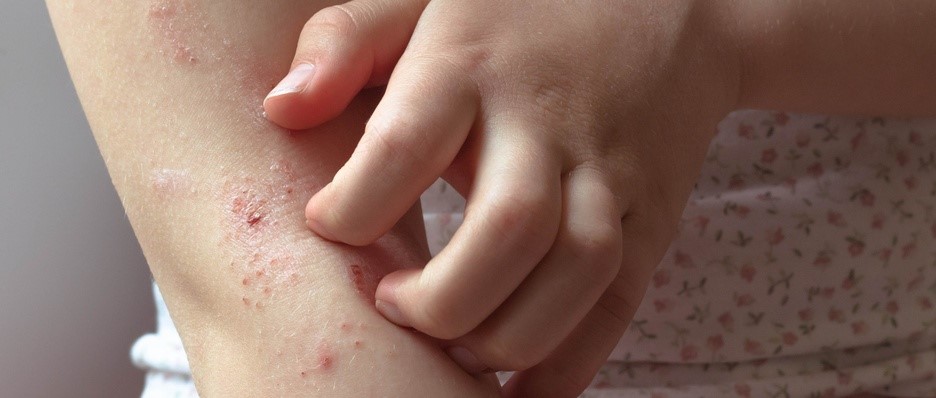
Itchiness is one of the most uncomfortable symptoms of eczema - and the urge to scratch can be unbearable. Itchy skin can also lead to sleep problems and make it hard to concentrate, but scratching can make the skin feel sore and lead to infections. So what can you do to ease the itchiness of eczema?
by Lydia Smith
Skin, nail and hair health
Will a gluten-free diet help my child's eczema?
One in five children in the UK has eczema. Many children develop the condition in their first year of life and often, the earlier symptoms become apparent, the more severe the child's eczema. Eczema is one of a group of 'atopic' conditions that also includes asthma, hay fever and food allergy, so they commonly occur together to varying degrees. The term 'atopic' means sensitive to allergens: in people with atopic conditions, their immune system overreacts to a substance and attacks the body, resulting in the symptoms of the allergy.
by Allie Anderson
About the authorView full bio

Lydia Smith
Feature writer
BA, MA, MSc
Lydia Smith is an award-winning journalist and feature writer who has written extensively on women's health and mental health. She is currently studying for an MSc in psychology.
About the reviewerView full bio

Dr Sarah Jarvis
Clinical Consultant
MA (Cantab), BM, BCh (Oxon), DRCOG, FRCGP, MBE
After training in medicine at Cambridge and Oxford, Dr Sarah Jarvis MBE became a GP.
Article history
Article also available in English, German, Spanish, French, Italian, Portuguese, Hindi, Hebrew, Arabic, and Swedish.
22 Dec 2021 | Originally published
Authored by:
Lydia SmithPeer reviewed by
Dr Sarah Jarvis
Join the conversation
Share your thoughts or experiences with others in our patient communities.

Ask, share, connect.
Browse discussions, ask questions, and share experiences across hundreds of health topics.

Feeling unwell?
Assess your symptoms online for free
Sign up to the Patient newsletter
Your weekly dose of clear, trustworthy health advice - written to help you feel informed, confident and in control.
By subscribing you accept our Privacy Policy. You can unsubscribe at any time. We never sell your data.
More in skin, nail and hair health
- Can you get great skin without spending a fortune?
- Do any natural remedies really work for acne?
- Does wearing make-up give you acne?
- Eczema in children: how to soothe your child
- Here's how to protect a bald head from the sun
- How to choose the right sunscreen
- How to manage skin issues at menopause
- How to soothe a nettle sting
- How to spot bedbugs and get rid of them
- Is your exercise routine giving you acne?
- Skin condition videos
- Smoking effects on skin: from ageing to illness
- The 'second puberty': why you might be breaking out in your thirties
- The best ways to prevent and treat insect bites
- The health benefits of seawater
- The simplest men's skincare routine
- What it's really like to live with rosacea
- What to do when your child has a rash
- Why do we have nails?
- Why it's so important to know your skin type this summer