Hem- och ambulatorisk blodtrycksmätning
Granskad av Dr Philippa Vincent, MRCGPSenast uppdaterad av Dr Colin Tidy, MRCGPSenast uppdaterad 17 nov 2024
Uppfyller patientens redaktionella riktlinjer
- Ladda nerLadda ner
- Dela
- Language
- Diskussion
- Ljudversion
- Lägg till i föredragna källor på Google
Blood pressure recording outside of the doctor's surgery is recommended in most people who are suspected of having high blood pressure. This is because readings taken while people are going about their daily lives are more accurate than those taken in a doctor's surgery. They may also be used to give the doctor information about how well a blood pressure medicine is working.
The ideal method is ambulatory blood pressure monitoring, which uses a portable recorder. If this is inconvenient or uncomfortable, readings can be taken using a traditional blood pressure machine at home.
Överblick
Blood pressure monitoring checks your blood pressure outside of a doctor's surgery.
It helps determine if high blood pressure is due to stress or is persistently high.
An ambulatory monitor checks your blood pressure frequently over 24 hours.
A home blood pressure monitor can be used as an alternative.
For home monitoring, take two readings twice a day for 4 to 7 days.
Sponsrad
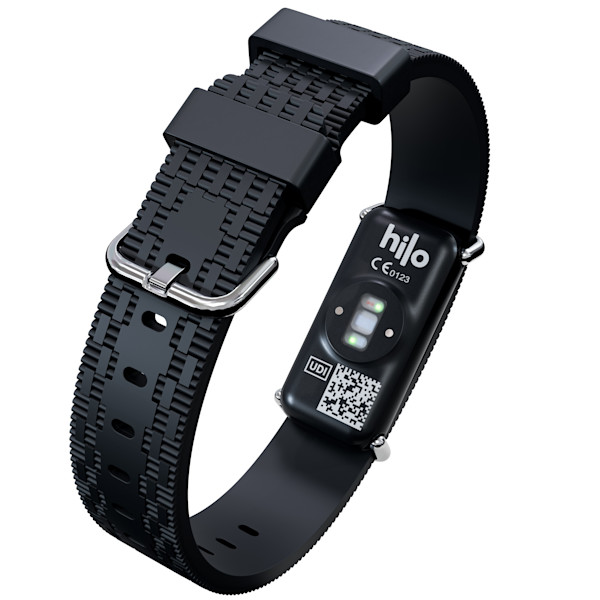
Patient recommends... Hilo
Track your blood pressure continuously, day and night - without an inflatable cuff. Traditional cuffs capture just one moment, if you remember to use them. Hilo takes about 25 readings a day, revealing how stress, meals, and activity affect your blood pressure so you can make informed choices for your wellbeing.
› Shop now
Why is it important for you to monitor your blood pressure?
Some people find it a bit stressful to have their blood pressure checked in a doctor's surgery. This can then cause their blood pressure to go up in that situation. This is known as white coat syndrome.
If your blood pressure is raised, the doctor will not know if this is because of the stress of being in the surgery (white coat high blood pressure) or because your blood pressure is usually and persistently high, even when relaxed at home. A persistently high blood pressure is known as hypertension. See the separate leaflet called High blood pressure (Hypertension). This leaflet is just about ways of recording your blood pressure.
The unit for measuring blood pressure is known as millimetres of mercury, or mm Hg for short. The National Institute for Health and Care Excellence (NICE) recommends that if your blood pressure is found to be 140/90 mm Hg or above, you should check it at home and during your normal day-to-day activities.
The best way to do this is using an ambulatory blood pressure monitor which can be worn for 24 hours a day. But, if you find this uncomfortable or inconvenient, a home blood pressure monitor can be used.
Ambulatory blood pressure monitoring is also sometimes used to check how well medicine used to treat hypertension is working.
Ambulatorisk blodtrycksövervakning
The ambulatory blood pressure monitor checks your blood pressure at frequent intervals throughout one day and one night. It consists of a cuff which wraps around your arm. The cuff is attached to a small electric recording device on a belt or strap worn on your body.
The doctor or nurse who supplies the device should make sure the cuff is the right size for your arm. You should keep the device safe and dry and not have a bath or shower whilst wearing it. From time to time you will feel a tightening sensation in your arm. This is whilst the cuff is inflating to take your blood pressure.
It will not last very long and most people will not be worried by it. Try not to move your arm whilst the cuff is inflating. If the device cannot record your blood pressure it will try to repeat the process up to three times. The machine is usually set to record twice an hour whilst you are awake and hourly at night.
The ambulatory monitor can be worn whilst you go about your everyday activities. So, it will give an accurate impression about how your blood pressure behaves under normal circumstances. The doctor will look at multiple readings spread throughout the day. (The minimum number is 14 but it may be many more than that.) The results will help them decide whether or not you have high blood pressure (hypertension).
Home blood pressure monitoring
This is an alternative to ambulatory blood pressure monitoring. The process for doing this will be exactly the same as that used by the doctor or nurse in the surgery. You will be given a blood pressure monitor to use at home.
Wrap the cuff around your arm just above the level of the elbow. (Check the instructions with the monitor to make sure the tubing is in the right position.) You should be seated comfortably with your arm supported (for example, on a table) at the level of your heart. Press the button to inflate the machine and then make a note of the reading.
You should measure your blood pressure twice a day, once in the morning and once in the evening. On each occasion you should take two readings, one minute apart. You should take readings for at least four days and ideally for seven days. The doctor should use all the readings, apart from those taken on the first day, to calculate your average blood pressure.
What your readings mean
If your blood pressure is below 140/90 mm Hg at the surgery, it will be considered normal.
If your blood pressure is above 140/90 mm Hg at the surgery but your average ambulatory or home reading is below 135/85 mm Hg, it will be considered normal.
If your blood pressure at the surgery is 140/90 mm Hg or above and your average ambulatory or home reading is 135/85 mm Hg or higher, it will be considered high.
Patientval för Blodtryck

Hjärthälsa och blodkärl
Lågt blodtryck
Low blood pressure (also called hypotension) is quite common and isn't usually a problem. However, it can cause symptoms in some people or some situations. Postural or orthostatic hypotension is low blood pressure on standing up from lying or sitting and is more common in teenagers and older people. edit
av Dr Rachel Hudson, MRCGP
Hjärthälsa och blodkärl
Högt blodtryck
High blood pressure (hypertension) happens when the force on the walls of blood vessels (caused by the blood within them) is more than normal. This means the heart has to work harder and the blood vessels are under more strain, making it a major risk factor for heart disease, stroke and other serious conditions.
av Dr Doug McKechnie, MRCGP
Vanliga frågor
What is the typical blood pressure reading that would prompt my doctor to suggest further monitoring?
If your blood pressure reading at the doctor's surgery is consistently 140/90 mm Hg or above, your doctor will likely recommend checking it at home to get a clearer picture of your usual blood pressure during your daily activities.
Are there any specific times I should avoid taking my blood pressure when using a home monitor?
The article does not specify times to avoid, but it advises taking readings twice a day, once in the morning and once in the evening. Each time, you should take two readings, one minute apart, for at least four days and ideally for seven days.
How long does a typical ambulatory blood pressure monitoring period last?
An ambulatory blood pressure monitor is worn for 24 hours a day. During this period, it checks your blood pressure at frequent intervals throughout both the day and night.
What should I do if the home blood pressure monitor requires me to adjust the cuff's position?
You should always check the instructions provided with your specific home blood pressure monitor to ensure the tubing and cuff are placed in the correct position. Generally, the cuff is wrapped around your arm just above the elbow.
How many readings are used by the doctor to determine if I have high blood pressure when using an ambulatory monitor?
When using an ambulatory monitor, the doctor will look at multiple readings spread throughout the day. While the minimum number is 14, there may be many more readings taken over the 24-hour period to help them decide if you have hypertension.
Vidare läsning och referenser
- Hypertension in adults: diagnosis and management; NICE (August 2019 - last updated November 2023)
- CKS Hypertension; NICE CKS, december 2023 (endast tillgång i Storbritannien)
- Huang QF, Yang WY, Asayama K, et al; Ambulatory Blood Pressure Monitoring to Diagnose and Manage Hypertension. Hypertension. 2021 Feb;77(2):254-264. doi: 10.1161/HYPERTENSIONAHA.120.14591. Epub 2021 Jan 4.
- Camafort M, Chung WJ, Shin JH; Role of ambulatory blood pressure monitoring in elderly hypertensive patients. Clin Hypertens. 2022 Jul 1;28(1):22. doi: 10.1186/s40885-022-00205-6.
- O'Brien E, White WB, Parati G, et al; Ambulatory blood pressure monitoring in the 21st century. J Clin Hypertens (Greenwich). 2018 Jul;20(7):1108-1111. doi: 10.1111/jch.13275.
Om författarenVisa fullständig biografi

Dr Colin Tidy, MRCGP
Allmänläkare, Medicinsk Författare
MBBS, MRCGP, MRCP (Paediatrics), DCH
Dr Colin Tidy är en NHS-läkare, baserad i Oxfordshire.
Om recensentenVisa fullständig biografi

Dr Philippa Vincent, MRCGP
Allmänläkare, Medicinsk Författare
MB BS, Bsc, MRCGP (2000), DCH, DFSRH, DRCOG
Dr Philippa Vincent är en NHS-läkare som arbetar i norra London.
Artikelhistorik
Informationen på denna sida är skriven och granskad av kvalificerade kliniker.
Artikeln finns också på Engelska, Tyska, Spanska, Franska, Italienska, Portugisiska, Hindi, Hebreiska, Arabiska, och Svenska.
Nästa granskning: 16 nov 2027
17 nov 2024 | Senaste versionen

Fråga, dela, anslut.
Bläddra i diskussioner, ställ frågor och dela erfarenheter inom hundratals hälsorelaterade ämnen.

Känner du dig sjuk?
Bedöm dina symtom online gratis
Anmäl dig till Patientens nyhetsbrev
Din veckovisa dos av tydliga, pålitliga hälsoråd - skrivna för att hjälpa dig känna dig informerad, självsäker och i kontroll.
Genom att prenumerera accepterar du våra Sekretesspolicy. Du kan avsluta prenumerationen när som helst. Vi säljer aldrig dina uppgifter.