Väsentliga första hjälpen-artiklar för ditt hem
Granskad av Dr Sarah JarvisFörfattad av Danny ChadburnUrsprungligen publicerad 19 Oct 2017
Uppfyller patientens redaktionella riktlinjer
- Ladda nerLadda ner
- Dela
- Language
- Diskussion
- Ask Patient
- Ljudversion
- Lägg till i föredragna källor på Google
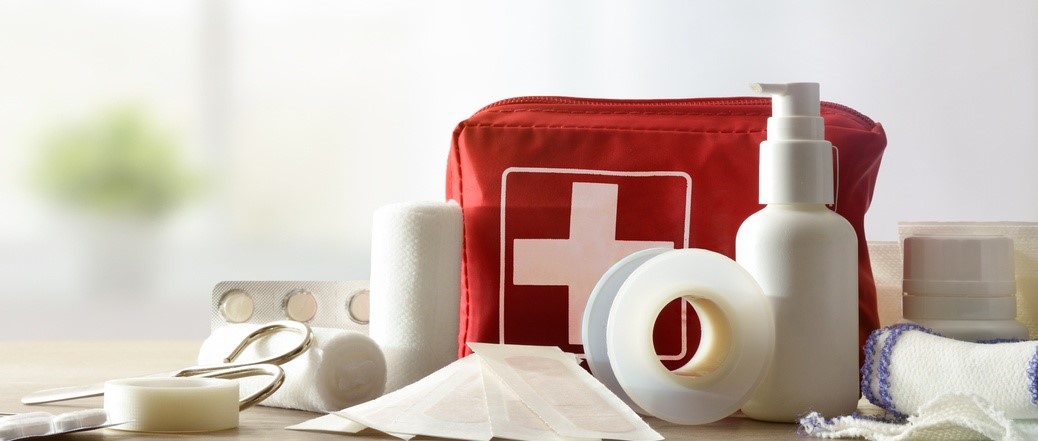
We all like to be prepared for emergency medical situations at home, especially those of us living with children, the elderly or anyone particularly accident-prone. From covering up a cut to treating a severe burn, a well-stocked first aid kit can prove pivotal to a patient's recovery.
Explore antiseptic products
Get expert healthcare advice from the comfort of home. Complete a quick online consultation, available 24/7, with your request reviewed by a UK-registered clinician. Next day delivery available on eligible treatments.

Videoval för First aidVideobibliotek
'You never know when you will need a first aid kit. It's not only useful for putting a plaster on a small cut, but also for more serious ailments from severe bleeding to broken bones,' says Isobel Kearl, product implementation officer at St John Ambulance.
'Immediate first aid attention can lessen the likelihood of injuries getting worse. Even small cuts and grazes can become infected if left untreated and, if sepsis takes hold, they can become life-threatening. By treating injuries with a sterile wipe and dressing the wound appropriately, this risk can be dramatically reduced.'
Kearl recommends these essential first aid kit items for every home:
Sterile medical wipes - useful to clean cuts and grazes, and other small wounds.
Waterproof plasters to keep small injuries clean.
Fabric plaster strip - if the wound is bigger or awkwardly shaped, you can cut your own plasters to size.
Adhesive wound dressing to protect wounds from dirt and germs.
Low-adherent wound dressing to protect wounds from dirt and germs, while allowing the skin to breathe and providing cushioning.
Crepe bandage to provide support for sprains and strains, and hold dressings in place.
Stretch bandage to keep dressings in place, especially in awkward areas like joints.
Microporous tape to hold dressings in place, or used alone for minor cuts and grazes.
Safety pins to secure bandages or slings.
Triangular bandage to make a sling or used to hold dressings in place in awkward areas.
Eye pad dressing for minor eye injuries.
Eye wash phial to wash a foreign body out of the eye.
Burn gel sachets to absorb and disperse heat from burn injuries if no water is available.
Heat-retaining foil blanket for treating shock or hypothermia.
Instant ice pack for reducing swelling in sprains and strains.
Disposable gloves to prevent infections to yourself and the patient - go for nitrile if you're worried about latex allergies.
Tweezers or a splinter remover.
Blunt-ended scissors to cut bandages or a patient's clothing to access a wound.
When to replace your items
When stored correctly, nitrile gloves have a shelf life around four years. Any topical creams or ointments have an expiration date around three years. You should also check for any dates printed on to tubes or packaging.
For sterile medical wipes and eye wash, always check the expiration date as the seal may have become compromised over time and caused contamination.
Many ice packs don't have expiration dates; however, some companies advise replacing them every few years as the plastic may have degraded causing them to leak.
Alternative first aid equipment
If you can't get to a first aid kit, there are some household items that will double up as first aid equipment too. These include:
Tweezers to remove ticks or splinters (not bee stings as they can push more venom into the skin) - sterilise beforehand with boiling water or rubbing alcohol.
A credit card for removing a bee stings - try scraping it across the surface of your skin so the stinger catches the edge and is pushed up.
Distilled white vinegar - this can be used to treat mild cuts and abrasions when diluted in a 50/50 mixture of water and vinegar, but beware that it may sting.
A bag of frozen vegetables can be used in place of an ice pack.
Duct tape can be used to seal an open wound - use a clean piece of cloth, such as an old T-shirt, between the skin and the tape to help protect the wound but make sure it's not so tight that it cuts off circulation.
Patientval för First aid
Behandling och medicinering
Vad ska du göra om någon får hjärtstopp?
Varje år drabbas 30 000 personer av hjärtstopp i Storbritannien. Om någon är okontaktbar och du märker att de inte andas, kan de ha hjärtstopp. I dessa situationer är det förståeligt varför vi får panik och blir förvirrade. Det är dock avgörande att vi kan känna igen tecknen och vet exakt vad vi ska göra för att ge någon den bästa chansen att överleva.
av Emily Jane Bashforth
Behandling och medicinering
What to do if someone is choking - first aid advice from St John Ambulance
Would you know what to do if you saw someone choking and struggling to breathe? According to St John Ambulance, one in three people in the UK don’t realise that failing to act in the first few minutes of a choking emergency could cost a life. That’s why the charity is aiming to teach 500,000 people life-saving first aid skills, giving more people the confidence to act quickly and potentially save a life during one of the most common everyday emergencies.
av Victoria Raw
Om författaren
Författad av

Danny Chadburn
Innehållschef
Danny var tidigare innehållschef på Patient.
Om recensentenVisa fullständig biografi

Dr Sarah Jarvis
Klinisk konsult
MA (Cantab), BM, BCh (Oxon), DRCOG, FRCGP, MBE
Efter att ha utbildat sig i medicin vid Cambridge och Oxford blev Dr Sarah Jarvis MBE allmänläkare.
Artikelhistorik
Artikeln finns också på Engelska, Tyska, Spanska, Franska, Italienska, Portugisiska, Hindi, Hebreiska, Arabiska, och Svenska.
19 Oct 2017 | Ursprungligen publicerad
Författad av:
Danny Chadburn
Granskad av
Dr Sarah Jarvis
Dela dina tankar eller erfarenheter med andra i vår patientgemenskaper.
Anmäl dig till Patientens nyhetsbrev
Din veckovisa dos av tydliga, pålitliga hälsoråd - skrivna för att hjälpa dig känna dig informerad, självsäker och i kontroll.
Genom att prenumerera accepterar du våra Sekretesspolicy. Du kan avsluta prenumerationen när som helst. Vi säljer aldrig dina uppgifter.