Adolescent idiopathic scoliosis
Senast uppdaterad 7 Nov 2023
Uppfyller patientens redaktionella riktlinjer
- Ladda nerLadda ner
- Dela
- Language
- Diskussion
- Ask Patient
- Ljudversion
- Lägg till i föredragna källor på Google
Adolescent idiopathic scoliosis is an abnormal curvature of the spine that appears in late childhood or adolescence. Instead of growing straight, the spine develops a side-to-side curvature, usually in an elongated "S" or "C" shape; the bones of the spine are also slightly twisted or rotated.
Videoval för Genetiska tillståndVideobibliotek
Beskrivning
Adolescent idiopathic scoliosis is an abnormal curvature of the spine that appears in late childhood or adolescence. Instead of growing straight, the spine develops a side-to-side curvature, usually in an elongated "S" or "C" shape; the bones of the spine are also slightly twisted or rotated.
Adolescent idiopathic scoliosis appears during the adolescent growth spurt, a time when children are growing rapidly. In many cases the abnormal spinal curve is stable, although in some children the curve is progressive (meaning it becomes more severe over time). For unknown reasons, severe and progressive curves occur more frequently in girls than in boys. However, mild spinal curvature is equally common in girls and boys.
Mild scoliosis generally does not cause pain, problems with movement, or difficulty breathing. It may only be diagnosed if it is noticed during a regular physical examination or a scoliosis screening at school. The most common signs of the condition include a tilt or unevenness (asymmetry) in the shoulders, hips, or waist, or having one leg that appears longer than the other. A small percentage of affected children develop more severe, pronounced spinal curvature.
Scoliosis can occur as a feature of other conditions, including a variety of genetic syndromes. However, adolescent idiopathic scoliosis typically occurs by itself, without signs and symptoms affecting other parts of the body.
Inheritance patterns
The source lists the following possible inheritance patterns: Pattern unknown. More than one pattern can apply in different cases.
Other names
AIS
Late onset idiopathic scoliosis
Related patient information and medicines
Patient information leaflet
Skolios och kyfos
Scoliosis is a back condition that causes the (back) spine till curve to the side - either left or right. Most cases develop in children between the ages of 9 and 14 years during the growth spurt of puberty. What are the causes of... Adolescent kyphosis, is known as Scheuermann's disease.This type of kyphosis is caused by the wedging together in a.

Patient information leaflet
Turners syndrom
Ear problems Hearing impairment is common and can be due to persistent (chronic) ear infections or deterioration of the nerves. 'Thinning' of the bones This is also known as osteoporosis Osteoporosis. It may occur later in life as a complication of a lack of oestrogen if oestrogen treatment is not started early enough or taken continuously..

Patient information leaflet
Marfans syndrom
Marfan syndrome can affect the connective tissue in different parts of your body, including your heart, blood vessels, eyes and skeleton. Marfan syndrome is rare and is thought to affect about 1 in 3,000 to 1 in 5,000 people. It affects males and females equally. It is usually painless and causes no health problems. More than 6 out of 10 people.
Patient information leaflet
Ryggsmärta hos barn
Retroperitoneal infection - infection underneath the peritoneum, the membrane lining the abdominal cavity. Rarely, tumours of the bone or spinal cord. Congenital disorders - conditions your child is born with (for example, scoliosis Scoliosis och kyphosis , which can be congenital or can come on later in life). Diseases affecting the whole body -.
Patient information leaflet
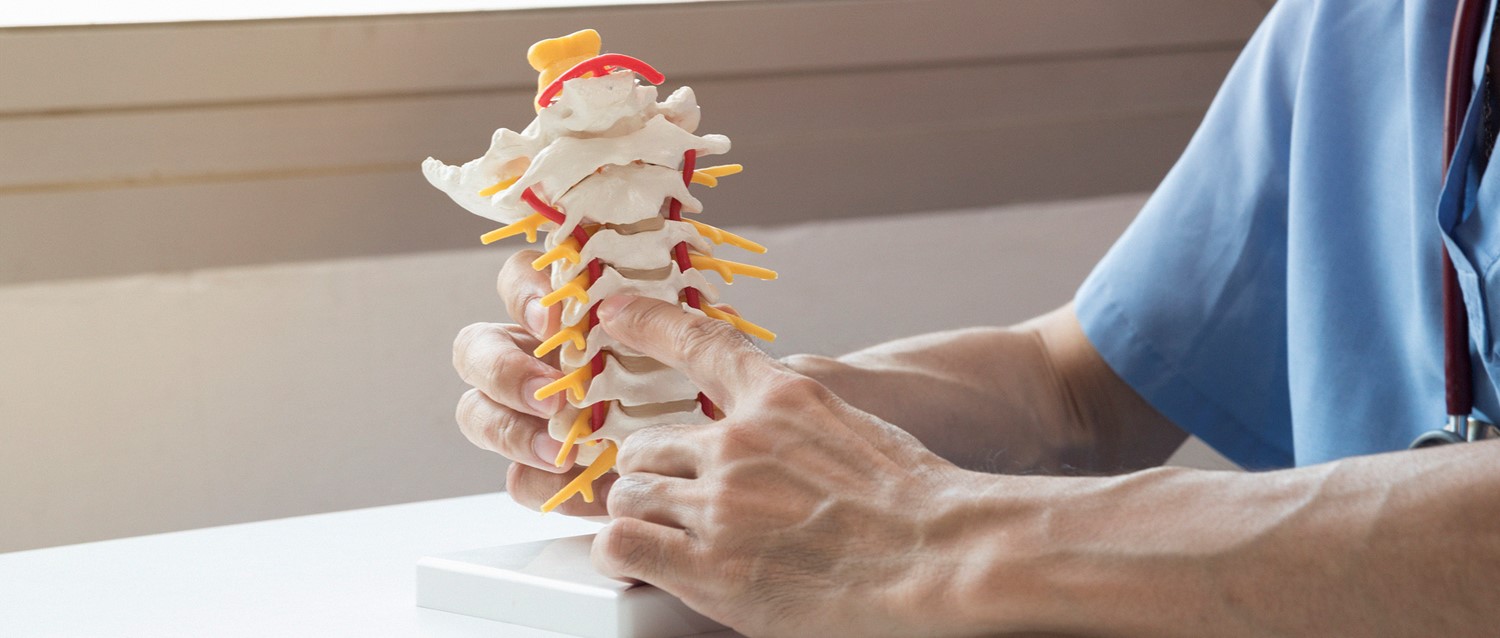
Rygg- och ryggradssmärta
It will also direct you to pages with more detailed information on the different conditions that can cause back pain. Dr Sarah Jarvis MBE Back pain is pain that is felt anywhere from the bottom of the neck to your bottom. It can range from mild and fleeting to s... Shingles: Shingles Shingles is a common infection, which can cause pain before any.
Patient information leaflet
Hiatusbråck
Operations around the stomach and gullet can make you more likely to get the para-oesophageal type of hiatus hernia. You are also more likely to get this type if your spine or rib cage is more curved than usual. For example, people with skolios eller kyphosis Scoliosis and kyphosis. There is a rare type of hiatus hernia which occurs in newborn.
Vidare läsning och referenser
- Adolescent idiopathic scoliosis; MedlinePlus, National Library of Medicine.
- Altaf F, Gibson A, Dannawi Z, Noordeen H. Adolescent idiopathic scoliosis. BMJ. 2013 Apr 30;346:f2508. doi: 10.1136/bmj.f2508. No abstract available.
- Burwell RG, Dangerfield PH, Moulton A, Grivas TB, Cheng JC. Whither the etiopathogenesis (and scoliogeny) of adolescent idiopathic scoliosis? Incorporating presentations on scoliogeny at the 2012 IRSSD and SRS meetings. Scoliosis. 2013 Feb 28;8(1):4. doi: 10.1186/1748-7161-8-4.
- Hresko MT. Clinical practice. Idiopathic scoliosis in adolescents. N Engl J Med. 2013 Feb 28;368(9):834-41. doi: 10.1056/NEJMcp1209063. No abstract available.
- Miller NH. Idiopathic scoliosis: cracking the genetic code and what does it mean? J Pediatr Orthop. 2011 Jan-Feb;31(1 Suppl):S49-52. doi: 10.1097/BPO.0b013e318202bfe2.
- Sharma S, Gao X, Londono D, Devroy SE, Mauldin KN, Frankel JT, Brandon JM, Zhang D, Li QZ, Dobbs MB, Gurnett CA, Grant SF, Hakonarson H, Dormans JP, Herring JA, Gordon D, Wise CA. Genome-wide association studies of adolescent idiopathic scoliosis suggest candidate susceptibility genes. Hum Mol Genet. 2011 Apr 1;20(7):1456-66. doi: 10.1093/hmg/ddq571. Epub 2011 Jan 7.
- Wise CA, Gao X, Shoemaker S, Gordon D, Herring JA. Understanding genetic factors in idiopathic scoliosis, a complex disease of childhood. Curr Genomics. 2008 Mar;9(1):51-9. doi: 10.2174/138920208783884874.
Artikelhistorik
Artikeln finns också på Engelska, Tyska, Spanska, Franska, Italienska, Portugisiska, Hindi, Hebreiska, Arabiska, och Svenska.
7 Nov 2023 | Senaste versionen
1 Sept 2013 | Ursprungligen publicerad
Dela dina tankar eller erfarenheter med andra i vår patientgemenskaper.
Enkel tillgång till pålitliga behandlingar och hälsotjänster online.
Common conditions
Get help with common conditions through the NHS, without a GP appointment.





Anmäl dig till Patientens nyhetsbrev
Din veckovisa dos av tydliga, pålitliga hälsoråd - skrivna för att hjälpa dig känna dig informerad, självsäker och i kontroll.
Genom att prenumerera accepterar du våra Sekretesspolicy. Du kan avsluta prenumerationen när som helst. Vi säljer aldrig dina uppgifter.