Hypochromic microcytic anaemia with iron overload
Senast uppdaterad 18 aug 2020
Uppfyller patientens redaktionella riktlinjer
- Ladda nerLadda ner
- Dela
- Language
- Diskussion
- Ask Patient
- Ljudversion
- Lägg till i föredragna källor på Google
Hypochromic microcytic anaemia with iron overload is a condition that impairs the normal transport of iron in cells. Iron is an essential component of hemoglobin, which is the substance that red blood cells use to carry oxygen to cells and tissues throughout the body. In this condition, red blood cells cannot access iron in the blood, so there is a decrease of red blood cell production (anaemia) that is apparent at birth. The red blood cells that are produced are abnormally small (microcytic) and pale (hypochromic). Hypochromic microcytic anaemia with iron overload can lead to pale skin (pallor), tiredness (fatigue), and slow growth.
Videoval för Genetiska tillståndVideobibliotek
Beskrivning
Hypochromic microcytic anaemia with iron overload is a condition that impairs the normal transport of iron in cells. Iron is an essential component of hemoglobin, which is the substance that red blood cells use to carry oxygen to cells and tissues throughout the body. In this condition, red blood cells cannot access iron in the blood, so there is a decrease of red blood cell production (anaemia) that is apparent at birth. The red blood cells that are produced are abnormally small (microcytic) and pale (hypochromic). Hypochromic microcytic anaemia with iron overload can lead to pale skin (pallor), tiredness (fatigue), and slow growth.
In hypochromic microcytic anaemia with iron overload, the iron that is not used by red blood cells accumulates in the liver, which can impair its function over time. The liver problems typically become apparent in adolescence or early adulthood.
Inheritance patterns
The source lists the following possible inheritance patterns: Autosomal recessive. More than one pattern can apply in different cases.
Related genes
Other names
Microcytic anaemia and hepatic iron overload
Microcytic anaemia with liver iron overload
Related patient information and medicines
Patient information leaflet
Thalassemi
Thalassaemia is an inherited condition affecting the blood. There are also some rarer types of thalassaemia such as delta beta thalassaemia, or combinations of a beta-thalassaemia gen... However, it can be useful to know your diagnosis because: Some types of thalassaemia trait give you a very mild type of anaemia, where your red blood cells are.
Patient information leaflet
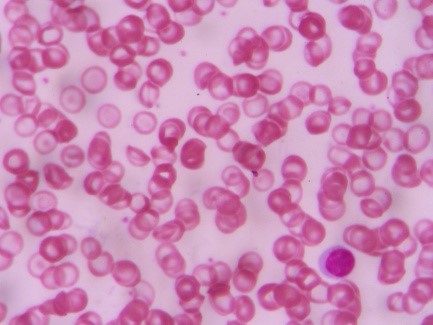
Sicklecellanemi
In between episodes of sickling, people with SCD are normally well. Sickle cell disease Sickle cell disease (SCD) is a serious group of conditions which are inherited (genetic). It affects the red blood cells in the blood. There are potential side-effects from blood transfusions såsom iron overload och problems with the immune system. Therefore,.
Patient information leaflet
Anemi
Anemi means that you have fewer red blood cells than normal or you have less haemoglobin than normal in each red blood cell. In either case, a reduced amount of oxygen is carried around in the bloodstream. Anaemia types and causes Iron-deficiency anaemia Lack of iron is the most common type of anemi in the UK. This is called iron-deficiency.
Patient information leaflet
Järnbristanemi
Järnbristanemi is a common type of anaemia that is caused by a lack of iron. A low level of iron, leading to anaemia, can result from various causes. What is iron-deficiency anaemia. Anaemia Anaemia means: You have fewer red blood cells than normal; or You have less haemoglobin than normal in each red blood cell. The most common cause of.
Patient information leaflet
Flerbörd
Being pregnant with twins is the most common example. Symptoms include feeling thirsty, needing to pass urine frequently, and tiredness. Anaemia Iron-deficiency anaemia (low levels of haemoglobin in the blood). You will be advised to take järn tablets Järntillskott if you are found to be anaemic. Vaginal bleeding. It is a serious condition, as.
Patient information leaflet
Fullständig blodstatus och blodutstryk
The main abnormalities which can be detected are: Anaemia Anaemia - this means that you have fewer red blood cells than normal, or have less haemoglobin than normal in each red blood cell. ... With this type of anaemia, the average size of the red blood cells is smaller than normal. The cause of iron deficiency can be benign (for example, heavy.
Vidare läsning och referenser
- Hypochromic microcytic anaemia with iron overload; MedlinePlus, National Library of Medicine.
- Bardou-Jacquet E, Island ML, Jouanolle AM, Detivaud L, Fatih N, Ropert M, Brissot E, Mosser A, Maisonneuve H, Brissot P, Loreal O. A novel N491S mutation in the human SLC11A2 gene impairs protein trafficking and in association with the G212V mutation leads to microcytic anemia and liver iron overload. Blood Cells Mol Dis. 2011 Dec 15;47(4):243-8. doi: 10.1016/j.bcmd.2011.07.004. Epub 2011 Aug 26.
- Beaumont C, Delaunay J, Hetet G, Grandchamp B, de Montalembert M, Tchernia G. Two new human DMT1 gene mutations in a patient with microcytic anemia, low ferritinemia, and liver iron overload. Blood. 2006 May 15;107(10):4168-70. doi: 10.1182/blood-2005-10-4269. Epub 2006 Jan 26.
- Iolascon A, d'Apolito M, Servedio V, Cimmino F, Piga A, Camaschella C. Microcytic anemia and hepatic iron overload in a child with compound heterozygous mutations in DMT1 (SCL11A2). Blood. 2006 Jan 1;107(1):349-54. doi: 10.1182/blood-2005-06-2477. Epub 2005 Sep 13.
- Iolascon A, De Falco L. Mutations in the gene encoding DMT1: clinical presentation and treatment. Semin Hematol. 2009 Oct;46(4):358-70. doi: 10.1053/j.seminhematol.2009.06.005.
- Lam-Yuk-Tseung S, Camaschella C, Iolascon A, Gros P. A novel R416C mutation in human DMT1 (SLC11A2) displays pleiotropic effects on function and causes microcytic anemia and hepatic iron overload. Blood Cells Mol Dis. 2006 May-Jun;36(3):347-54. doi: 10.1016/j.bcmd.2006.01.011. Epub 2006 Apr 3.
Artikelhistorik
Artikeln finns också på Engelska, Tyska, Spanska, Franska, Italienska, Portugisiska, Hindi, Hebreiska, Arabiska, och Svenska.
18 aug 2020 | Senaste versionen
1 Nov 2014 | Ursprungligen publicerad
Dela dina tankar eller erfarenheter med andra i vår patientgemenskaper.
Enkel tillgång till pålitliga behandlingar och hälsotjänster online.
Common conditions
Get help with common conditions through the NHS, without a GP appointment.





Anmäl dig till Patientens nyhetsbrev
Din veckovisa dos av tydliga, pålitliga hälsoråd - skrivna för att hjälpa dig känna dig informerad, självsäker och i kontroll.
Genom att prenumerera accepterar du våra Sekretesspolicy. Du kan avsluta prenumerationen när som helst. Vi säljer aldrig dina uppgifter.