peripheral myelin protein 22
Senast uppdaterad 19 Apr 2023
Uppfyller patientens redaktionella riktlinjer
- Ladda nerLadda ner
- Dela
- Language
- Diskussion
- Ljudversion
- Lägg till i föredragna källor på Google
Den PMP22 gene provides instructions for making a protein called peripheral myelin protein 22 (PMP22). This protein is found in the peripheral nervous system, which connects the brain and spinal cord to muscles and to sensory cells that detect sensations such as touch, pain, heat, and sound.
Normal function
Den PMP22 gene provides instructions for making a protein called peripheral myelin protein 22 (PMP22). This protein is found in the peripheral nervous system, which connects the brain and spinal cord to muscles and to sensory cells that detect sensations such as touch, pain, heat, and sound.
The PMP22 protein is a component of myelin, a protective substance that covers nerves and promotes the efficient transmission of nerve impulses. The protein is produced primarily by specialized cells called Schwann cells that wrap around and insulate nerves. Within Schwann cells, PMP22 plays a crucial role in the development and maintenance of myelin. Studies suggest that the PMP22 protein is particularly important in protecting nerves from physical pressure, helping them restore their structure after being pinched or squeezed (compressed). Compression can interrupt nerve signaling, leading to the sensation commonly referred to as a limb "falling asleep." The ability of nerves to recover from normal, day-to-day compression, for example when sitting for long periods, keeps the limbs from constantly losing sensation. The PMP22 gene also plays a role in the growth of Schwann cells and the process by which cells mature to carry out specific functions (differentiation).
Before they become part of myelin, newly produced PMP22 proteins are processed and packaged in specialized cell structures called the endoplasmic reticulum and the Golgi apparatus. Completion of these processing and packaging steps is critical for proper myelin function.
Conditions referring to this gene or chromosome
Other names
GAS-3
GAS3
growth arrest-specific 3
HNPP
MGC20769
PMP22_HUMAN
Sp110
Related patient information and medicines
Patient information leaflet
Multipel skleros
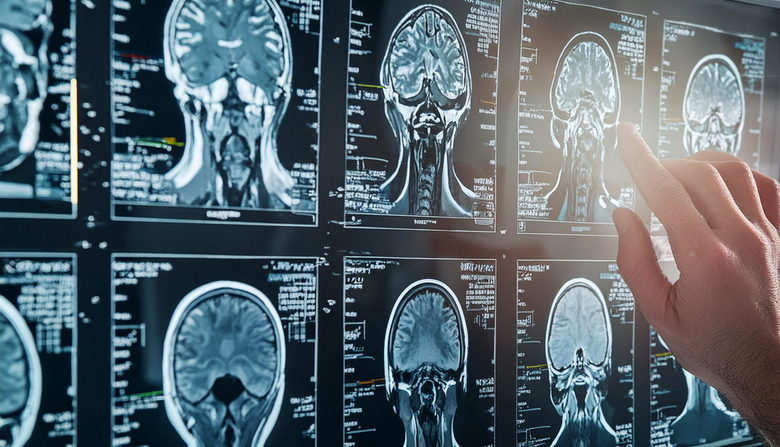
Multiple sclerosis is a disorder of the brain and spinal cord. It can cause various symptoms. What is multiple sclerosis. Multiple sclerosis (MS) is a disease where patches of inflammation occur in parts of your brain and/or spinal cord. This can cause damage to parts of your brain and lead to various symptoms (described below). Each nerve fibre.

Patient information leaflet
Nervledningsstudier
Nervledningsstudier help to test how well and how fast nerves conduct electrical signals. Note : the information below is a general guide only. The arrangements, and the way tests are performed, may vary between d... To work well, most nerves need to be surrounded by a special substance called myelin. Myelin provides a form of insulation for.

Patient information leaflet
Proteinuria
Proteins are molecules that are found in almost every part of the body, including in the blood. The kidneys normally have a filter which stops protein from entering the urine, except in very tiny amounts; however, kidney problems can cause higher levels of protein to be found in the urine. What is proteinuria. Proteinuria means that there is an.

Patient information leaflet
Orsaker till minnesförlust och demens
It is thought that the... So, doing things such as reading regularly, quizzes, crosswords, memorising plays or poetry, learning new skills, etc, may help to keep your memory in good shape. Who gets dementia. It is estimated that in 2019, there were almost 885,000 people aged 65 years and over living with dementia in the UK. By 2040 this number is.

Patient information leaflet
Diabetisk njursjukdom
Diabetisk njursjukdom is one of the causes of chronic njursjukdom , a long-term condition where the kidneys do not work as well as they should. In diabetic kidney disease, the filters of the kidneys, the glomeruli, become damaged. Because of this the kidneys 'leak' abnormal amounts of protein from the blood into the urine. The main protein.
Patient information leaflet
Blodprov för att upptäcka inflammation
If you have inflammation in a part of your body then certain types av extra protein are often released from the site of inflammation and circulate in the bloodstream. Healthcare professionals use a blood test for inflammation to assess if any inflammation is happening in a person's body. In this way they are used as markers of inflammation. Note :.
Vidare läsning och referenser
- peripheral myelin protein 22; MedlinePlus, National Library of Medicine.
- Bai Y, Zhang X, Katona I, Saporta MA, Shy ME, O'Malley HA, Isom LL, Suter U, Li J. Conduction block in PMP22 deficiency. J Neurosci. 2010 Jan 13;30(2):600-8. doi: 10.1523/JNEUROSCI.4264-09.2010.
- Bird TD. Charcot-Marie-Tooth Hereditary Neuropathy Overview. 1998 Sep 28 [updated 2025 Nov 20]. In: Adam MP, Bick S, Mirzaa GM, Wallace SE, Amemiya A, editors. GeneReviews(R) [Internet]. Seattle (WA): University of Washington, Seattle; 1993-2026. Available from http://www.ncbi.nlm.nih.gov/books/NBK1358/
- Boutary S, Echaniz-Laguna A, Adams D, Loisel-Duwattez J, Schumacher M, Massaad C, Massaad-Massade L. Treating PMP22 gene duplication-related Charcot-Marie-Tooth disease: the past, the present and the future. Transl Res. 2021 Jan;227:100-111. doi: 10.1016/j.trsl.2020.07.006. Epub 2020 Jul 18.
- Guo J, Wang L, Zhang Y, Wu J, Arpag S, Hu B, Imhof BA, Tian X, Carter BD, Suter U, Li J. Abnormal junctions and permeability of myelin in PMP22-deficient nerves. Ann Neurol. 2014 Feb;75(2):255-65. doi: 10.1002/ana.24086. Epub 2014 Feb 20.
- Jetten AM, Suter U. The peripheral myelin protein 22 and epithelial membrane protein family. Prog Nucleic Acid Res Mol Biol. 2000;64:97-129. doi: 10.1016/s0079-6603(00)64003-5.
- Katona I, Wu X, Feely SM, Sottile S, Siskind CE, Miller LJ, Shy ME, Li J. PMP22 expression in dermal nerve myelin from patients with CMT1A. Brain. 2009 Jul;132(Pt 7):1734-40. doi: 10.1093/brain/awp113. Epub 2009 May 15.
- Niedrist D, Joncourt F, Matyas G, Muller A. Severe phenotype with cis-acting heterozygous PMP22 mutations. Clin Genet. 2009 Mar;75(3):286-9. doi: 10.1111/j.1399-0004.2008.01120.x. Epub 2008 Nov 29.
- Niemann A, Berger P, Suter U. Pathomechanisms of mutant proteins in Charcot-Marie-Tooth disease. Neuromolecular Med. 2006;8(1-2):217-42. doi: 10.1385/nmm:8:1-2:217.
- Rosso G, Liashkovich I, Gess B, Young P, Kun A, Shahin V. Unravelling crucial biomechanical resilience of myelinated peripheral nerve fibres provided by the Schwann cell basal lamina and PMP22. Sci Rep. 2014 Dec 2;4:7286. doi: 10.1038/srep07286.
- Rossor AM, Polke JM, Houlden H, Reilly MM. Clinical implications of genetic advances in Charcot-Marie-Tooth disease. Nat Rev Neurol. 2013 Oct;9(10):562-71. doi: 10.1038/nrneurol.2013.179. Epub 2013 Sep 10.
- Stavrou M, Kleopa KA. CMT1A current gene therapy approaches and promising biomarkers. Neural Regen Res. 2023 Jul;18(7):1434-1440. doi: 10.4103/1673-5374.361538.
- Yuan B, Harel T, Gu S, Liu P, Burglen L, Chantot-Bastaraud S, Gelowani V, Beck CR, Carvalho CM, Cheung SW, Coe A, Malan V, Munnich A, Magoulas PL, Potocki L, Lupski JR. Nonrecurrent 17p11.2p12 Rearrangement Events that Result in Two Concomitant Genomic Disorders: The PMP22-RAI1 Contiguous Gene Duplication Syndrome. Am J Hum Genet. 2015 Nov 5;97(5):691-707. doi: 10.1016/j.ajhg.2015.10.003.
Artikelhistorik
Artikeln finns också på Engelska, Tyska, Spanska, Franska, Italienska, Portugisiska, Hindi, Hebreiska, Arabiska, och Svenska.
19 Apr 2023 | Senaste versionen
1 Oct 2018 | Ursprungligen publicerad
Delta i konversationen
Dela dina tankar eller erfarenheter med andra i vår patientgemenskaper.

Fråga, dela, anslut.
Bläddra i diskussioner, ställ frågor och dela erfarenheter inom hundratals hälsorelaterade ämnen.
Anmäl dig till Patientens nyhetsbrev
Din veckovisa dos av tydliga, pålitliga hälsoråd - skrivna för att hjälpa dig känna dig informerad, självsäker och i kontroll.
Genom att prenumerera accepterar du våra Sekretesspolicy. Du kan avsluta prenumerationen när som helst. Vi säljer aldrig dina uppgifter.