SNF2 related chromatin remodeling ATPase with DExD box 1
Senast uppdaterad 1 Oct 2024
Uppfyller patientens redaktionella riktlinjer
- Ladda nerLadda ner
- Dela
- Language
- Diskussion
- Ask Patient
- Ljudversion
- Lägg till i föredragna källor på Google
Den SMARCAD1 gene provides instructions for making two versions (isoforms) of the SMARCAD1 protein: a full-length isoform and a shorter, skin-specific isoform. The full-length isoform is active (expressed) in multiple tissues, where it regulates the activity of a wide variety of genes involved in maintaining the stability of cells' genetic information. The skin-specific isoform is expressed only in skin cells, and little is known about its function. However, it appears to play a critical role in the formation of dermatoglyphs, which are the patterns of skin ridges on the pads of the fingers that form the basis for each person's unique fingerprints. These ridges are also present on the toes, the palms of the hands, and the soles of the feet. Dermatoglyphs develop before birth and remain the same throughout life. The activity of the skin-specific isoform of the SMARCAD1 protein is likely one of several factors that determine each person's unique fingerprint pattern.
Videoval för GenesVideobibliotek
Normal function
Den SMARCAD1 gene provides instructions for making two versions (isoforms) of the SMARCAD1 protein: a full-length isoform and a shorter, skin-specific isoform. The full-length isoform is active (expressed) in multiple tissues, where it regulates the activity of a wide variety of genes involved in maintaining the stability of cells' genetic information. The skin-specific isoform is expressed only in skin cells, and little is known about its function. However, it appears to play a critical role in the formation of dermatoglyphs, which are the patterns of skin ridges on the pads of the fingers that form the basis for each person's unique fingerprints. These ridges are also present on the toes, the palms of the hands, and the soles of the feet. Dermatoglyphs develop before birth and remain the same throughout life. The activity of the skin-specific isoform of the SMARCAD1 protein is likely one of several factors that determine each person's unique fingerprint pattern.
Conditions referring to this gene or chromosome
Other names
ADERM
ATP-dependent helicase 1
ETL1
HEL1
SMRCD_HUMAN
Related patient information and medicines
Patient information leaflet
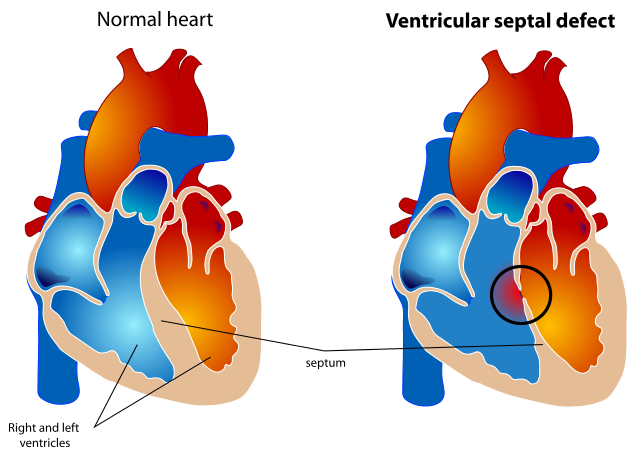
Ventrikelseptumdefekt
Ventricular septal defect (VSD) is a gap or defect in the septum between the heart's two lower chambers (ventricles). The septum is a wall that separates the heart's right and left side of the heart. Septal defects are sometimes called a 'hole' in the heart. It is the most common heart problem that babies are born with. Many defects in the.

Patient information leaflet
Nasoendoskopi
A nasoendoscopy is a test till look inside the nose (nasal passage), the back of the throat (pharynx) and the voice box (larynx). It's sometimes called a flexible nasal endoscopy or FNE. Note : the information below is a general guide only. The arrangements and the way tests are performed may vary between different hospitals. Always follow the.

Patient information leaflet
Tuberkulos
Tuberkulos (TB) is an infection with a germ (bacterium) called Mycobacterium tuberculosis. The death rate from TB is falling but it still causes about two million deaths per year worldwide. AIDS HIV and AIDs (TB is common in people with AIDS). The number of people with active TB was at an all-time low in the UK in the early 1980s but the number.
Patient information leaflet
Makula degeneration
Age-related macular degeneration is the most common cause of sight impairment in those aged over 50. What is macular degeneration. Macular degeneration (also known as age-related macular degeneration) occurs when cells in the macula - the central area of the retina - degenerate. It is composed of light sensitive cells known as rods and cones..
Patient information leaflet
Perthes sjukdom
Perthes sjukdom is a condition where the top of the thigh bone in the hip joint (the femoral head) loses its blood supply and so the bone is damaged. The bone gradually heals and reforms but Perthes' disease may cause hip problems later in life. What is Perthes' disease. Perthes' disease, also known as Legg-Calvé-Perthes disease, is a rare.

Patient information leaflet
Brännmanet sting
Jellyfish species in the UK are generally not dangerous, although stings from the Portuguese man o' war, Lion's mane jellyfish and compass jellyfish can be painful and, if stung many times, harmful. Jellyfish are soft-bodied free-swimming animals with a jelly-like umbrella-shaped bell and trailing tentacles. They are believed to be the oldest.
Vidare läsning och referenser
- SNF2 related chromatin remodeling ATPase with DExD box 1; MedlinePlus, National Library of Medicine.
- Adra CN, Donato JL, Badovinac R, Syed F, Kheraj R, Cai H, Moran C, Kolker MT, Turner H, Weremowicz S, Shirakawa T, Morton CC, Schnipper LE, Drews R. SMARCAD1, a novel human helicase family-defining member associated with genetic instability: cloning, expression, and mapping to 4q22-q23, a band rich in breakpoints and deletion mutants involved in several human diseases. Genomics. 2000 Oct 15;69(2):162-73. doi: 10.1006/geno.2000.6281.
- Burger B, Fuchs D, Sprecher E, Itin P. The immigration delay disease: adermatoglyphia-inherited absence of epidermal ridges. J Am Acad Dermatol. 2011 May;64(5):974-80. doi: 10.1016/j.jaad.2009.11.013. Epub 2010 Jul 8.
- Costelloe T, Louge R, Tomimatsu N, Mukherjee B, Martini E, Khadaroo B, Dubois K, Wiegant WW, Thierry A, Burma S, van Attikum H, Llorente B. The yeast Fun30 and human SMARCAD1 chromatin remodellers promote DNA end resection. Nature. 2012 Sep 27;489(7417):581-4. doi: 10.1038/nature11353. Epub 2012 Sep 9.
- Nousbeck J, Burger B, Fuchs-Telem D, Pavlovsky M, Fenig S, Sarig O, Itin P, Sprecher E. A mutation in a skin-specific isoform of SMARCAD1 causes autosomal-dominant adermatoglyphia. Am J Hum Genet. 2011 Aug 12;89(2):302-7. doi: 10.1016/j.ajhg.2011.07.004. Epub 2011 Aug 4.
- Nousbeck J, Sarig O, Magal L, Warshauer E, Burger B, Itin P, Sprecher E. Mutations in SMARCAD1 cause autosomal dominant adermatoglyphia and perturb the expression of epidermal differentiation-associated genes. Br J Dermatol. 2014 Dec;171(6):1521-4. doi: 10.1111/bjd.13176. Epub 2014 Oct 26.
- Okazaki N, Ikeda S, Ohara R, Shimada K, Yanagawa T, Nagase T, Ohara O, Koga H. The novel protein complex with SMARCAD1/KIAA1122 binds to the vicinity of TSS. J Mol Biol. 2008 Oct 3;382(2):257-65. doi: 10.1016/j.jmb.2008.07.031. Epub 2008 Jul 17.
- Rowbotham SP, Barki L, Neves-Costa A, Santos F, Dean W, Hawkes N, Choudhary P, Will WR, Webster J, Oxley D, Green CM, Varga-Weisz P, Mermoud JE. Maintenance of silent chromatin through replication requires SWI/SNF-like chromatin remodeler SMARCAD1. Mol Cell. 2011 May 6;42(3):285-96. doi: 10.1016/j.molcel.2011.02.036.
Artikelhistorik
Artikeln finns också på Engelska, Tyska, Spanska, Franska, Italienska, Portugisiska, Hindi, Hebreiska, Arabiska, och Svenska.
1 Oct 2024 | Senaste versionen
1 Apr 2015 | Ursprungligen publicerad
Dela dina tankar eller erfarenheter med andra i vår patientgemenskaper.
Enkel tillgång till pålitliga behandlingar och hälsotjänster online.
Common conditions
Get help with common conditions through the NHS, without a GP appointment.





Anmäl dig till Patientens nyhetsbrev
Din veckovisa dos av tydliga, pålitliga hälsoråd - skrivna för att hjälpa dig känna dig informerad, självsäker och i kontroll.
Genom att prenumerera accepterar du våra Sekretesspolicy. Du kan avsluta prenumerationen när som helst. Vi säljer aldrig dina uppgifter.