Hur tekniken förändrar diabetes
Granskad av Dr Sarah JarvisFörfattad av Dr Colin Tidy, MRCGPUrsprungligen publicerad 29 sep 2017
Uppfyller patientens redaktionella riktlinjer
- Ladda nerLadda ner
- Dela
- Language
- Diskussion
- Ljudversion
- Lägg till i föredragna källor på Google
Teknikens roll inom diabetesvård fortsätter att växa i snabb takt. Utvecklare och forskare arbetar för att skapa många olika tekniska verktyg för att hjälpa till med många aspekter av diabetes, inklusive diagnos, patientinformation, behandling, övervakning av glukosnivåer, upptäckt av komplikationer och till och med att tillhandahålla individuell patientvård med hjälp av telemedicin.
Anmäl dig till vår kostnadsfria 10-veckors kurs om diabetes!
Varje vecka kommer vi att utforska ett nytt ämne för att hjälpa dig att bättre förstå och hantera din diabetes, inklusive vardagsliv och mediciner, till mental hälsa, det senaste inom diabetesteknik och näring.
Genom att prenumerera accepterar du våra Sekretesspolicy. Du kan avsluta prenumerationen när som helst. Vi säljer aldrig dina uppgifter.
Many of the emerging technologies for diabetes are mainly for typ 1-diabetes - for example, continuous glucose monitoring and insulin pumps. However, some of the new technologies are also very important for typ 2 diabetes - for example, sensors for early diagnosis of diabetes and the early diagnosis of some of the complications of diabetes.
Improving diabetes diagnosis
There are now emerging technologies that are being used to create sensors for early diagnosis of diabetes and for the diagnosis of some of the complications of diabetes such as nerve damage (neuropathy).
There are also analytical tools that can be used, such as a tool to analyse photographs of the back of the eye (retina) and so enable earlier diagnosis of diabetisk retinopati.
Improving monitoring of glucose and ketones
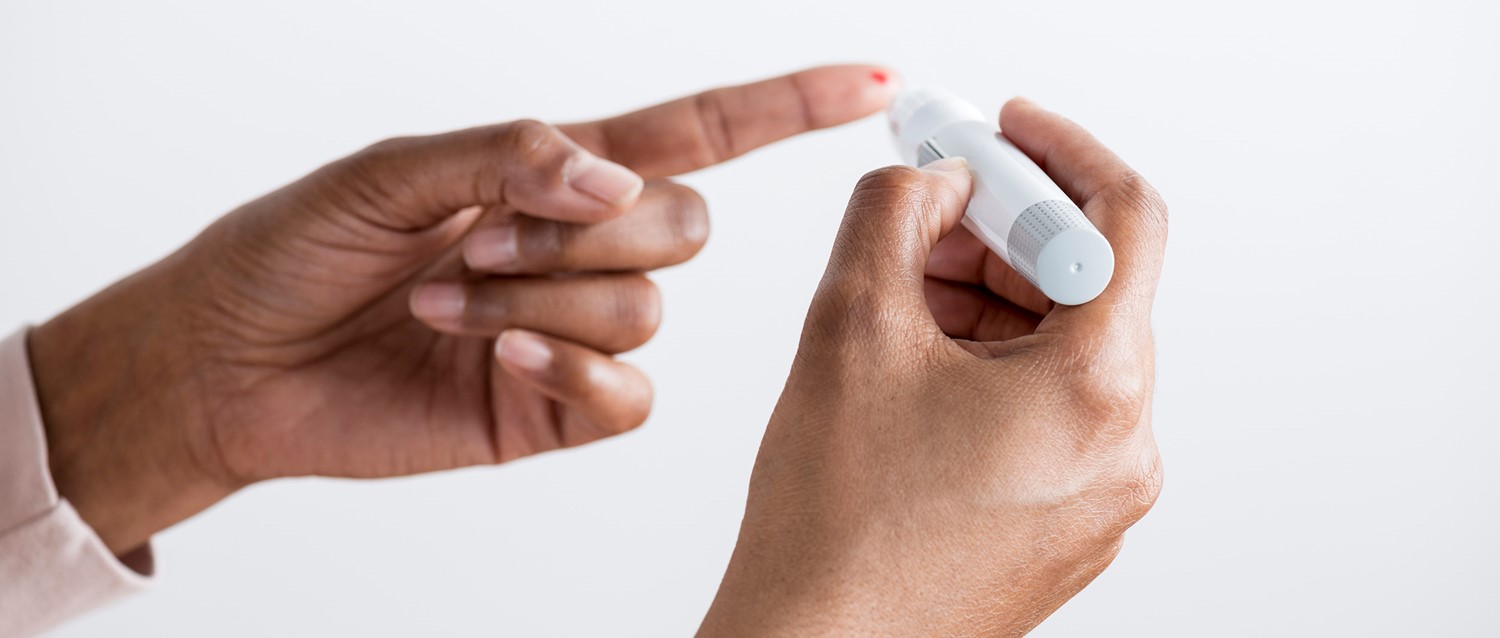
Traditionally glucose monitoring has required using lancets to get a drop of blood on to a test strip. Continuous glucose monitoring has become available to provide a more complete picture of blood glucose levels. This measures blood sugar levels throughout the day and night using a tiny electrode or glucose sensor inserted under the skin. The monitor alerts you if your reading is too high or low. This ongoing monitoring makes it easier to make adjustments before your blood sugar levels become very high or very low.
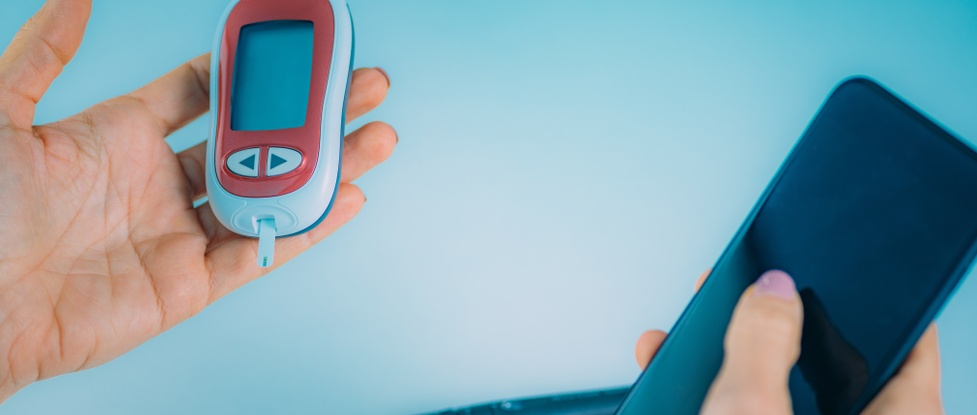
Glucose monitors have tended to be big and bulky in the past but modern devices have become much more streamlined and much easier to use, as well as providing much more accurate monitoring. Most of these devices are also compatible with Apple and other widely used devices. As an example, the iHealth Smart Gluco-Monitoring System connects wirelessly with your smartphone to provide more accurate information that can easily be exported and shared with your healthcare professional.
Technology is also making it much easier to keep an accurate record of your daily blood sugar levels, food intake, physical activity and medication. For example, the iHealth Smart Glucose Meter functions with the iHealth Gluco App, a mobile health app, to allow users to log their daily activities and other information.
Apple has announced that a new Bluetooth application programming interface will allow users of Apple Watch to link the device directly with a glucose sensor from Dexcom.
A small glucose monitoring patch (Freestyle Libre system) is available in the UK. The patch, with a sensor placed under the skin, can be applied to the back of the arm and each patch lasts for two weeks. The blood glucose readings can also be transferred to a smartphone. It offers fingerprick-free glucose testing but, unlike continuous glucose monitoring systems, does not automatically alert you if your sugar is low or high.
Research into future sensors is getting even more exciting. A sensor being developed in South Korea monitors blood sugar levels by analysing the sweat on your skin. Also in development are 'smart socks' which use temperature sensors to detect areas of swelling on the feet and send an alert to a mobile app, preventing further injury if you have any nerve damage with loss of sensation in your feet.
There is also now a range of available biosensors to measure and quantify ketone levels to help people with type 1 diabetes become aware of possible ketoacidosis much sooner.
Insulin pens and pumps
Smart insulin pens are becoming available which not only calculate your dosage but also track and record the doses to help ensure you don’t forget your insulin injections.
Although insulin pumps have been available since the 1990s, technology is improving and making them more accurate and effective to use. Pumps are worn close to the body and release insulin as needed via a catheter located under the skin. Modern insulin pumps contain a range of sensors to ensure the safe and controlled delivery of insulin.
Progression in both glucose monitoring and insulin delivery technologies is allowing the delivery of insulin in the same way as a normal pancreas. This effectively produces an 'artificial pancreas' system that can deliver controlled insulin doses based on the blood glucose levels indicated by accurate sensors.
In July 2015, Dr Edward Damiano introduced the iLet, a bionic pancreas. The iLet is a single hand-held unit. The user wears a continuous glucose sensor on the body. This sends glucose levels directly to the iLet device, which has two built-in pumps that deliver insulin and glucagon. This has the potential of bringing average glucose levels down to levels that would reduce the risk of long-term complications and reduce the risk of hypos.
'Smart Insulin' is being researched in the UK. This involves capsules which travel through the body and release insulin when they come into contact with high levels of blood sugar.
Inhaled insulins
Although inhaled insulins remove the need for using needles, they have so far failed to make any significant impact.
In 2006, the US Food and Drug Administration (FDA) approved the use of Exubera, a form of inhalable insulin. In 2007, Pfizer announced that it would no longer manufacture or market Exubera.
In June 2014, the FDA approved Afrezza, another fast-acting inhaled insulin. In 2014 Mannkind and Sanofi agreed that Sanofi would take over manufacturing and marketing of Afrezza, but Sanofi said it was dropping the effort in January 2016 due to poor sales. However, Afrezza continues to be available.
In general, inhaled insulins have been more rapidly absorbed than subcutaneous injected insulin, with a faster peak concentration. Therefore inhaled insulins must be used with long-acting insulin injections.
Creating new care possibilities
Technology is also improving the way doctors collect, track and analyse data to provide more effective care. Telemedicine can be provided remotely to give more patients access to care. This type of care provides more immediate responses to concerns.
Patientval för Diabetes mellitus
Diabetes
Framtiden för diabetesbehandling
How might the landscape of diabetes have changed by 2050? We asked leading diabetes physician Dr David Cavan, author of Reverse Your Diabetes and Reverse Your Diabetes Diet, for his predictions.
av Danny Chadburn
Diabetes
Diabetesteknologi
Att hantera din diabetes kräver mycket mental och fysisk ansträngning, men tekniken kan hjälpa till att minska en del av din arbetsbelastning. Här tittar vi på den teknik som finns tillgänglig, vad den gör och om den är rätt för dig.
av Lawrence Higgins
Om författarenVisa fullständig biografi
Författad av

Dr Colin Tidy, MRCGP
Allmänläkare, Medicinsk Författare
MBBS, MRCGP, MRCP (Paediatrics), DCH
Dr Colin Tidy är en NHS-läkare, baserad i Oxfordshire.
Om recensentenVisa fullständig biografi

Dr Sarah Jarvis
Klinisk konsult
MA (Cantab), BM, BCh (Oxon), DRCOG, FRCGP, MBE
Efter att ha utbildat sig i medicin vid Cambridge och Oxford blev Dr Sarah Jarvis MBE allmänläkare.
Artikelhistorik
Artikeln finns också på Engelska, Tyska, Spanska, Franska, Italienska, Portugisiska, Hindi, Hebreiska, Arabiska, och Svenska.
29 sep 2017 | Ursprungligen publicerad
Författad av:
Dr Colin Tidy, MRCGPGranskad av
Dr Sarah Jarvis
Delta i konversationen
Dela dina tankar eller erfarenheter med andra i vår patientgemenskaper.

Fråga, dela, anslut.
Bläddra i diskussioner, ställ frågor och dela erfarenheter inom hundratals hälsorelaterade ämnen.

Känner du dig sjuk?
Bedöm dina symtom online gratis
Anmäl dig till Patientens nyhetsbrev
Din veckovisa dos av tydliga, pålitliga hälsoråd - skrivna för att hjälpa dig känna dig informerad, självsäker och i kontroll.
Genom att prenumerera accepterar du våra Sekretesspolicy. Du kan avsluta prenumerationen när som helst. Vi säljer aldrig dina uppgifter.