
Förstå diabetesjargong
Granskad av Dr Sarah JarvisFörfattad av Dr Ben Janaway, MBChBUrsprungligen publicerad 9 Oct 2017
Uppfyller patientens redaktionella riktlinjer
- Ladda nerLadda ner
- Dela
- Language
- Diskussion
- Ask Patient
- Ljudversion
- Lägg till i föredragna källor på Google
När du pratar med din läkare om diabetes kan vissa av termerna vara förvirrande. Här är en snabbguide till vad allt det medicinska snacket betyder.
Anmäl dig till vår kostnadsfria 10-veckors kurs om diabetes!
Varje vecka kommer vi att utforska ett nytt ämne för att hjälpa dig att bättre förstå och hantera din diabetes, inklusive vardagsliv och mediciner, till mental hälsa, det senaste inom diabetesteknik och näring.
Genom att prenumerera accepterar du våra Sekretesspolicy. Du kan avsluta prenumerationen när som helst. Vi säljer aldrig dina uppgifter.
Basal bolus - part of an injectable insulin regime. Basal insulins last for a long time but work slowly. Once or twice daily doses of these are complemented by top-up bolus doses of rapid-acting insulin to reduce high blood sugar when you eat.
Blood glucose meter - machine using test strips to estimate blood sugar level
BM - an outdated term. This abbreviation was used for a paper strip designed to estimate blood sugar levels. It has been replaced, but you may still hear your 'blood sugar' measurement referred to as 'BMs'.
Blood sugar level - a value, in mmol/litre, of the sugar content (glucose) of your blood. Used in both diagnosis and monitoring of disease.
Blood sugar targets - the agreed target range for your blood sugar level as part of your treatment
Carbohydrate 'carb' counting - the process of monitoring food intake to help predict insulin need. Very useful in planning effective treatment, and gives you more power in managing your condition.
Diabetisk ketoacidos (DKA) -a dangerous complication of type 1 (and rarely type 2) diabetes, where your body runs out of insulin and breaks down fatty acids instead. This causes toxic ketones to build up and the normal pH (acid-base balance) of your blood is affected.
Diabetisk nefropati - kidney damage caused by long-term high blood sugar levels in diabetes.
Diabetisk neuropati - a catch-all term for nerve damage caused by long-term high blood sugar levels in diabetes. Can lead to pain and to amputations in severe cases.
Diabetisk retinopati - damage to the retina (back of the eye) caused by high blood glucose and vascular disease. Causes gradual loss of vision.
Diabetologist/Endocrinologist - different terms for a doctor specialising in diabetes.
Glukos - the basic sugar used by your body for energy. Measured in the blood using 'test strips' and a 'blood glucose meter.'
Hba1c - a blood test used to estimate average blood sugar levels and control over the last three months.
Hyperglycaemia - a state of high blood sugar (high blood glucose).
Hypoglykemi - a potentially dangerous state of low blood sugar (low blood glucose) - a possible side-effect of diabetes treatments, especially insulin and sulfonylureas.
Impaired glucose tolerance/pre-diabetes - a state of high blood sugar, not high enough for a diagnosis of type 2 diabetes but meaning you are at higher risk of type 2 diabetes and its complications.
Insulin - a hormone required to process sugar in the body.
Insulin pen - a delivery device for injectable insulin. Comes in variable strengths.
Insulin pump - a delivery device for constant or pulsed insulin injection. Attached through a tiny tube under your skin and worn 24 hours a day.
Ketosis - the build-up of a toxic substance called ketones caused by your body breaking down fatty acids for energy when it runs out of insulin. Rare in type 2 diabetes, it can affect people with type 1 diabetes if they do not take enough insulin, are generally unwell, etc.
Ketotic coma (diabetic coma) - an extremely dangerous state where blood toxicity caused by ketosis leads to unconsciousness, and if untreated, death.
Pancreas - a body organ that produces insulin and other hormones.
Perifer neuropati - nerve damage to the toes, feet, fingers and hands. Occurs progressively with diabetes if blood glucose levels are high over a long period
Rapid-acting insulin - a quick-acting dose of insulin taken with meals. Mimics natural Insulin spike. Taken as part of your treatment regime.
Typ 1-diabetes - caused by the complete absence of insulin, a hormone secreted by the pancreas to metabolise glucose (sugars).
Typ 2-diabetes - is caused by a gradual wearing out of cellular transporters for glucose by a long period of elevated blood sugar (hyperglycaemia).
Quick-acting carbohydrate - a form of carbohydrate designed to replace blood sugars quickly in the case of sudden hypoglycaemia. Can include sugary drinks, glucose tablets or sweets (candy). Injectable forms exist.
Patientval för Diabetes mellitus
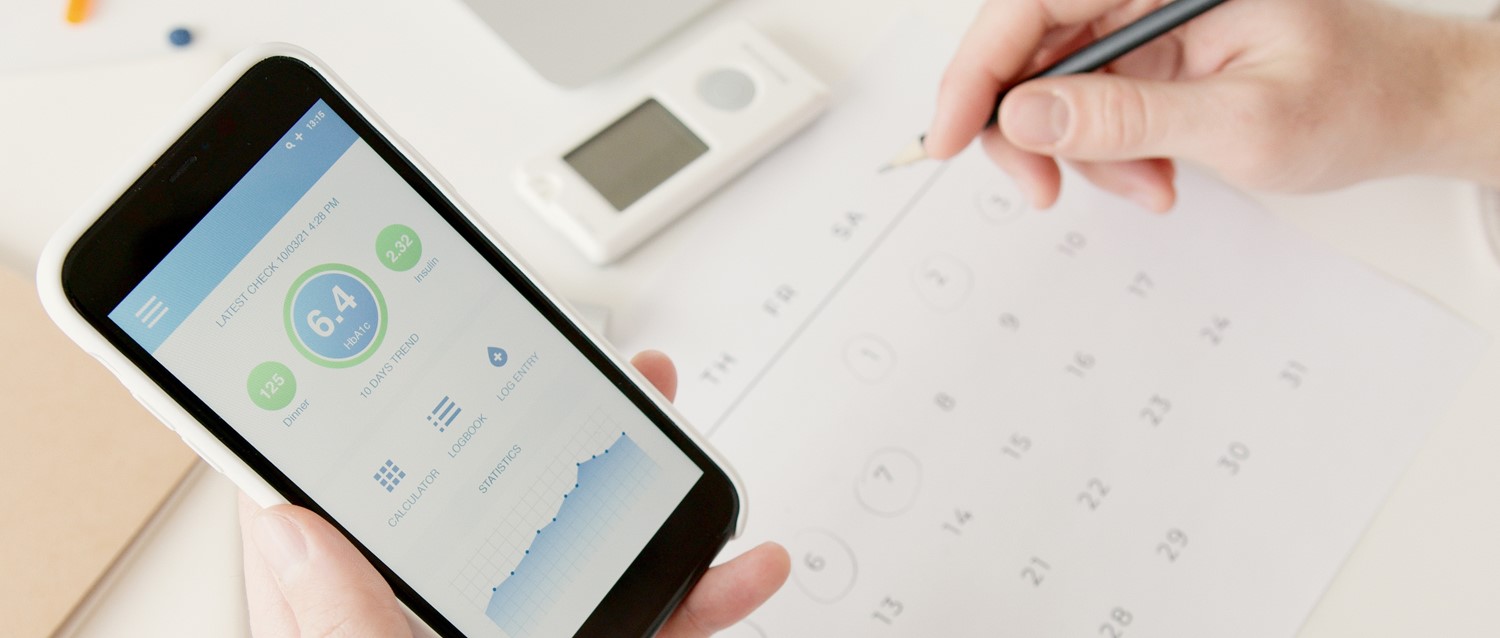
Diabetes
Vad är flashglukosövervakning och hur kan det hjälpa personer med diabetes?
Technology is changing the way we live our lives and making it easier to live with health conditions such as diabetes. A flash glucose monitor, also called a flash, uses a sensor that is placed on the back of the upper arm and worn externally by the user. It is attached to a tiny needle that sits just under the skin. This allows glucose information to be monitored quickly and easily. But what exactly are these devices and what are the benefits?
av Lydia Smith

Diabetes
Kan bättre sömn hjälpa vid diabetes?
Att få tillräckligt med sömn är avgörande för ditt allmänna välbefinnande - du behöver cirka 7 till 9 timmar per natt för att stödja din mentala och fysiska hälsa. Om du har diabetes är det särskilt viktigt att få tillräckligt med sömn, eftersom det kan spela en nyckelroll i att hantera ditt tillstånd. I den här artikeln utforskar vi varför sömn är viktig och hur du kan integrera hälsosamma sömnvanor i din dagliga rutin.
av Victoria Raw
Om författaren
Författad av

Dr Ben Janaway, MBChB
MBChB
Om recensentenVisa fullständig biografi

Dr Sarah Jarvis
Klinisk konsult
MA (Cantab), BM, BCh (Oxon), DRCOG, FRCGP, MBE
Efter att ha utbildat sig i medicin vid Cambridge och Oxford blev Dr Sarah Jarvis MBE allmänläkare.
Artikelhistorik
Artikeln finns också på Engelska, Tyska, Spanska, Franska, Italienska, Portugisiska, Hindi, Hebreiska, Arabiska, och Svenska.
9 Oct 2017 | Ursprungligen publicerad
Författad av:
Dr Ben Janaway, MBChB
Granskad av
Dr Sarah Jarvis
Dela dina tankar eller erfarenheter med andra i vår patientgemenskaper.
Enkel tillgång till pålitliga behandlingar och hälsotjänster online.
Common conditions
Get help with common conditions through the NHS, without a GP appointment.





Anmäl dig till Patientens nyhetsbrev
Din veckovisa dos av tydliga, pålitliga hälsoråd - skrivna för att hjälpa dig känna dig informerad, självsäker och i kontroll.
Genom att prenumerera accepterar du våra Sekretesspolicy. Du kan avsluta prenumerationen när som helst. Vi säljer aldrig dina uppgifter.