How big is a portion?
Granskad av Dr Sarah JarvisSenast uppdaterad av Milly EvansSenast uppdaterad 17 Jan 2020
Uppfyller patientens redaktionella riktlinjer
- Ladda nerLadda ner
- Dela
- Language
- Diskussion
- Ljudversion
- Lägg till i föredragna källor på Google
When it comes to healthy eating, it's not just about what we eat but also how much. As portion sizes have grown over time, many of us are finding it harder to cook balanced, filling meals, without eating too much.
Portion control is "the cornerstone to building good eating habits," says Lucy Perrow, British Dietetic Association spokesperson and registered dietician. "It's about balancing the food groups and finding the portion sizes that are right for you."
Lots of people find it difficult to regulate their portion sizes, whether that's attempting to clear our plates in a restaurant or cooking just a bit too much pasta at home and not wanting to waste it.
"Eating too much or too little of any of the major food groups can be bad for your health," says Perrow. "Identifying the correct portion size allows you to know exactly how many calories, carbohydrates, proteins, or fats you are consuming."
Are portions getting bigger?
Portion control isn't just an individual problem. Culturally, our dietary habits have changed and it's warping the way we view portion sizes.
"Eating out has become more of a habit than a treat and portions when we eat out have changed," says Perrow. "A portion of meat should be approximately 4 oz, yet most people have no problem having a 16 oz steak in a restaurant - that is four times the portion we should eat."
Not only are restaurant portions growing, our overall perception of what a portion is has changed as a result. "We have a belief that we need to eat everything on our plate and, seeing larger portions when eating out, we get used to visualising bigger portions even when cooking at home," she explains.
We tend to eat until we are full - or beyond full - rather than satisfied. Clearing the plate feels more important than stopping when our bodies tell us to. "We should stop eating when we feel satisfied, not when full - this means we have eaten too much," says Perrow. "We also have difficulty recognising satisfaction and fullness as we often eat with distractions - for example, watching TV or eating on the go. We are not listening to our bodies."
If you've ever looked at a portion size on the back of a packet, you might have imagined you'd be left wanting more after eating. But the suggested portions contain the nutrients we need from that food. "I think the portion sizes on packets need to be taken in context with what else you are consuming," says Perrow. "But, in general, they do provide enough nutrients for most people, but we have just become accustomed to larger portions so they seem very small."
How big is a portion?
As a general guide, Perrow suggests that each meal includes:
Per meal
Half a plate of vegetables or salad.
Quarter of a plate of high-quality protein.
Quarter of a plate of complex carbohydrates.
Half a tablespoon of high-fat foods.
How big your portions for each meal are depends on several things: what else you've eaten or are going to eat that day, what else is on your plate and what you're eating for (for example, eating more protein if you're trying to build muscle).
But as a guide, a portion should be:
Carbohydrates
40 g of cereal.
2 small slices of bread.
1 small pitta bread.
75 g of uncooked rice or pasta.
1 medium baked potato (with skin).
Non-dairy proteins
60-90 g of cooked meat (about the size of a deck of cards).
140 g of cooked fish (the size of the palm of your hand).
2 medium-sized eggs.
4 tablespoons of lentils.
A small handful of nuts.
Dairy and dairy-free alternative
A 200 ml glass of milk or fortified soya, rice or oat milk).
A carton of yoghurt or fortified soya yoghurt (125 ml).
30 g of hard cheese (about the size of a matchbox).
Fruit and vegetables
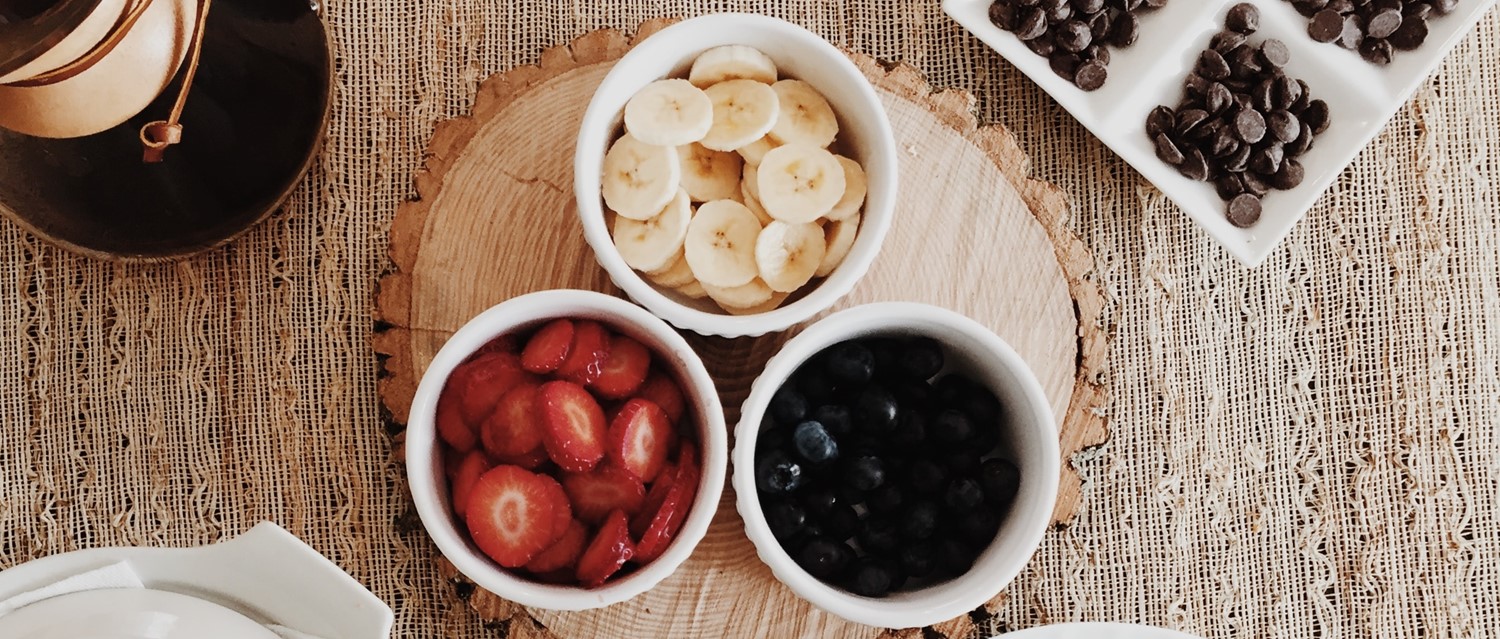
1 medium fruit, such as an apple, an orange, a pear or a banana.
2 small fruits, such as kiwis, satsumas or plums.
A few slices of a larger fruit, such as pineapple or mango.
A large handful of grapes or berries.
3 heaped tablespoons of peas, sweetcorn or carrots.
A dessert bowl of salad.
150 ml of fruit juice or smoothie (maximum of one per day).
30 g of dried fruits.
3 heaped tablespoons of beans or lentils (maximum of one per day).
Fats and oils
1 teaspoon of butter
2 teaspoons of low-fat spread
1 teaspoon of oil (regardless of type of oil)
Tips for sensible portions
Eating sensible portion sizes doesn't have to mean going hungry. Small changes can make a big difference in helping you achieve your healthy eating goals, whether that's weight loss, weight gain or eating a more balanced diet.
Use smaller dinnerware
How we perceive the amount we're eating plays a big role in how satisfied we feel. "Evidence suggests that size of plates, spoons and glasses can unconsciously influence how much food someone eats. For example, using large plates can make food appear smaller - often leading to overeating," explains Perrow.
You could try reducing the size of your plates, bowls and even serving spoons to reduce the amount you're putting on to your plate, and thus prevent overindulging. You can also try portion control dishes which have printed designs to guide portion sizes. "Most people feel just as full having eaten from a smaller dish as from a large one," she says.
Eating out
Just because you're in a restaurant, doesn't mean you have to eat a huge portion. "If you are eating out, you can always ask for a half portion or take half home with you for another day. This will save you a lot of calories and help prevent overeating. Alternatively, you could share a meal with someone or order a starter and side instead of a main dish," says Perrow.
"Other tips include ordering a side salad or vegetables, asking for sauces and dressings to be served separately and avoiding buffet-style, all-you-can-eat restaurants where it's very easy to overindulge."
Mindful eating
Eating mindlessly whilst scrolling on our phones, watching TV or on our commute makes it easier to eat too much and keep eating even once satisfied. This can also cause us to eat too quickly.
"As your brain can take around 20 minutes to register that you are full after eating, slowing down can reduce your total intake," Perrow explains. "Health experts recommend taking smaller bites and chewing every mouthful at least five or six times before swallowing."
You can also be more mindful of your diet as a whole by using a food diary. "Writing down all food and drink intake can increase awareness of the type and amount of foods you're consuming," she says. In studies, keeping a food diary was found to boost overall weight loss.
Don't eat from the container
Ever caught yourself reaching into a big bag of crisps or sweets without even thinking about it? "Jumbo-size packages or food served from large containers encourage overeating and less awareness of appropriate portion sizes," says Perrow.
It's easy to keep eating when the bottom of the bag seems further away. Pouring a portioned amount of your snack into a bowl reduces the chance of going back for more. This also applies to family meals, especially if you've made extra to have another day. Sticking to a set portion makes it less likely that you'll polish off the leftovers afterwards.
The same goes for condiments. It's easy to overdo it on the ketchup or hummus if you're serving straight from the bottle or tub, says Perrow. "Measure these out as you would anything else. A heaped tablespoon of peanut butter, for example, may end up being two tablespoons, doubling your intake from 95 calories to 190 calories."
Patientval för Hälsosam kost

Kost och näring
Varför dessertmage faktiskt kan vara verklig
Struggling to finish what's on your plate, you sit back contently in your chair. The waiter appears with a dessert menu and, as your full stomach presses into your waistband, you hear yourself say "yes please" - but why? It turns out that dessert stomach - the phenomenon of having room for a sweet treat after you’re done with your main - may be backed by science. Here we look at what it is and what you can do about avoiding the pudding temptation.
av Amberley Davis
Kost och näring
9 matbyten för en läcker och hälsosam julmiddag
Att vara hälsosam kanske inte alltid är det första du tänker på på juldagen. Men vad sägs om att göra några näringsrika matbyten så att din julmiddag blir lika god, men hemligt hälsosammare?
av Victoria Raw
Om författarenVisa fullständig biografi

Milly Evans
Editor
Milly writes on a range of health topics, with a particular interest in health inequality and sexual health.
Om recensentenVisa fullständig biografi

Dr Sarah Jarvis
Klinisk konsult
MA (Cantab), BM, BCh (Oxon), DRCOG, FRCGP, MBE
Efter att ha utbildat sig i medicin vid Cambridge och Oxford blev Dr Sarah Jarvis MBE allmänläkare.
Artikelhistorik
Informationen på denna sida är granskad av kvalificerade kliniker.
Artikeln finns också på Engelska, Tyska, Spanska, Franska, Italienska, Portugisiska, Hindi, Hebreiska, Arabiska, och Svenska.
17 Jan 2020 | Senaste versionen

Fråga, dela, anslut.
Bläddra i diskussioner, ställ frågor och dela erfarenheter inom hundratals hälsorelaterade ämnen.

Känner du dig sjuk?
Bedöm dina symtom online gratis
Anmäl dig till Patientens nyhetsbrev
Din veckovisa dos av tydliga, pålitliga hälsoråd - skrivna för att hjälpa dig känna dig informerad, självsäker och i kontroll.
Genom att prenumerera accepterar du våra Sekretesspolicy. Du kan avsluta prenumerationen när som helst. Vi säljer aldrig dina uppgifter.
Mer om kost och näring
- 12 pålitliga dieter för dina nyårsmål
- 9 hälsofördelar med chiafrön
- En hybridmetod för att äta: din guide till pegan-dieten
- Är kolhydrater verkligen dåliga för dig?
- Är pumpafrön bra för dig?
- Kan kost påverka din ADHD?
- Ät dig till ett friskt hjärta: läckra receptidéer för varje måltid
- Hur tarmbakterier påverkar humör, fokus och hjärnhälsa
- Hur man äter hälsosammare under de kallare månaderna
- Hur man fastar säkert under Ramadan
- Hur du håller ditt barn hälsosamt ätande i högstadiet
- Hantera hälsotillstånd under Ramadan
- De bästa livsmedlen för tarmhälsa - och varför du behöver dem
- Vitamin C: fördelar, källor och brist
- Vilka är fördelarna med probiotika för bebisar?
- Vad är den koreanska kosten?
- Varför får vi abstinenssymptom från socker?
- Varför odla din egen mat för din hälsa?
- Varför är keso den nya diettrenden?
- Varför du inte behöver avgifta dig