Sanningen om fettet i din kost
Granskad av Dr Sarah JarvisSenast uppdaterad av Amberley DavisSenast uppdaterad 22 feb 2024
Uppfyller patientens redaktionella riktlinjer
- Ladda nerLadda ner
- Dela
- Language
- Diskussion
- Ask Patient
- Ljudversion
- Lägg till i föredragna källor på Google
Dietary fat has received its share of bad press, but not all fat is bad for us. We delve into this important food group, separating the healthy from the unhealthy, and fact from fiction.
Videoval för KostVideobibliotek
What is fat?
What we call fat is actually the family name for a whole host of individual fatty acids. These are split into two groups - saturated and unsaturated - depending on key aspects of their structure.
Saturated fats
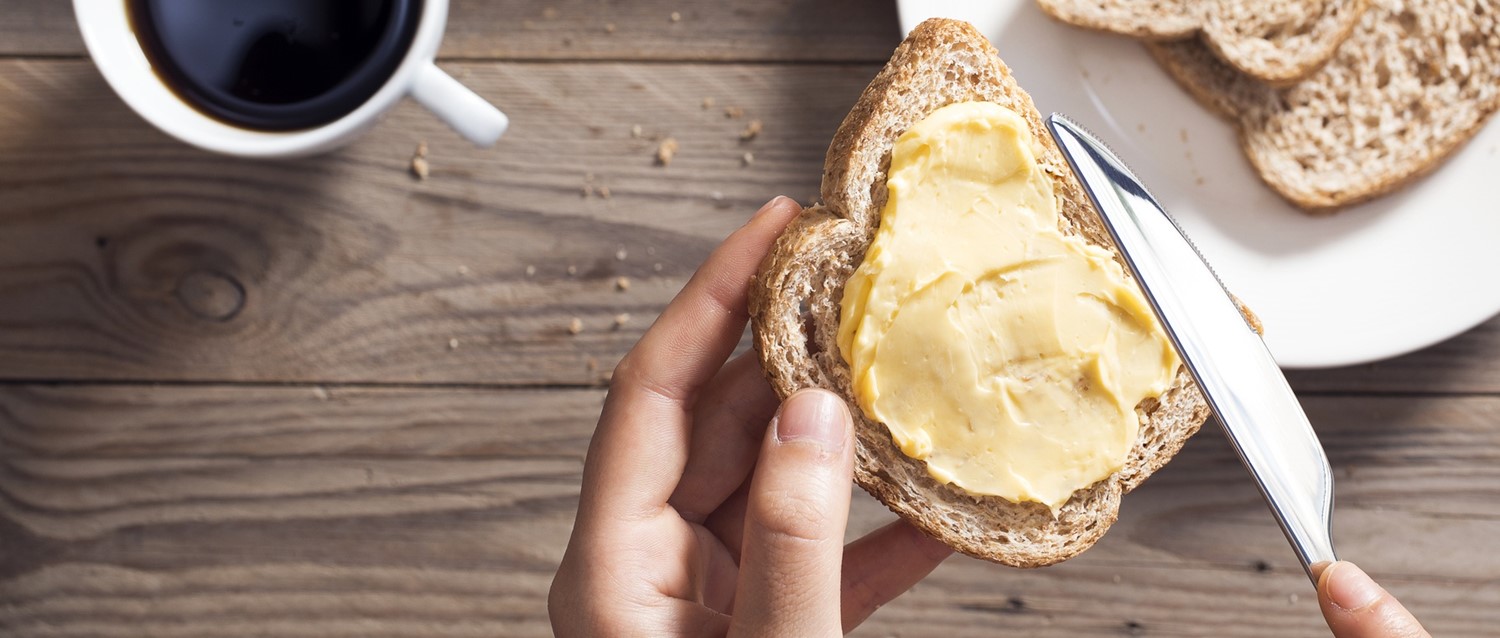
Saturated fats are straight, dense chains of molecules and this characteristic makes them typically solid at room temperature. Saturated fats are less healthy for your heart as they push up LDL kolesterol levels - the 'bad' cholesterol that can build up in your arteries and cause problems.
You can find saturated fats in animal products, such as:
Butter.
Cream.
Lard.
Ost.
Fatty meats - including lamb, pork and beef.
Processed meats - including sausages, bacon and burgers.
Saturated fats are also in vegetable products, such as:
Coconut fat.
Palm oil.
Processed treats are contributing a large amount of saturated fat to a typical Western diet:
Cakes.
Kex.
Pies.
Bakverk.
Godis.
Unsaturated fats
Unsaturated fats are less dense and are liquid at room temperature. Unsaturated fats are believed to be healthier options. Studies have shown that they can reduce your cholesterol levels and protect against cardiovascular disease1.
They are split into monounsaturated fats and polyunsaturated fats, and include:
Nötter.
Frön.
Avokado.
Oily fish.
Olive, rapeseed, and other vegetable oils - but not palm and coconut oils.
Trans fats
A third group, trans fats, only exist in tiny amounts in a few natural foods, such as:
Ruminant meat - such as meat from cows, sheep, and goats.
Dairy products.
However, in the 1970s, large amounts of trans fats were manufactured by changing the structure of unsaturated fats to force them to be solid at room temperature. These were then added to a range of processed foods, such as:
Margarine.
Cakes.
Kex.
In the last few decades, efforts have been made to minimise trans fats in products, due to concerns about their negative effect on blood cholesterol levels and heart disease risk.
Intakes of trans fats in the UK have now reduced to half the maximum limit2. In the UK, there is no legal requirement to list trans fats on labels but you can check product ingredient lists for 'hydrogenated fats/oils' which may contain trans fats. Takeaway foods are also a source, as the high temperature heating of vegetable oil boosts the trans fat content.
Is dietary fat healthy?
There is no need to fear dietary fat as it's essential for health. Fat provides energy, helps to keep us warm, cushions our vital organs, protects our body cells and acts as a carrier for fat-soluble vitamins, such as A, D, E and K. More than half of the brain is fat3 and our cognitive development and brain functions rely on essential fatty acids that cannot be made by our bodies.
However, fats are a rich source of calories, making them easy to overeat. As an example, one 50 g cube of cheddar cheese has the same calories as two medium bananas. Also, several high-fat foods, such as biscuits, cakes, confectionery, desserts, and ice cream, are high in sugar too.
Which types of fats are the healthiest?
We should try to focus on unsaturated fats, while limiting our consumption of saturated and trans fats.
Professor of nutritional immunology, Philip Calder from the University of Southampton, says: "Fats affect the way that cells and tissues in the body work. Some, like omega-3s - which are unsaturated - are better for us because they promote optimal cell and tissue function. Ultimately, this relates to improved wellbeing and less risk of disease."
According to Professor Calder, his top choice would be omega-3s from oily fish, although: "Plant omega-3s from nuts, especially walnuts, and monounsaturated fats like those in olive oil, are important too."
Should we avoid some fats?
Apart from artificial trans fats, there's no need to cut out any particular fats from the diet - but we should limit our saturated fat consumption.
The effect of saturated fats on cholesterol and heart disease has been under debate in recent years4. The confusion may have arisen because scientists now know that individual saturated fatty acids have different effects on the body and are not one entity as previously believed5.
However, in 2019 the UK's Scientific Advisory Committee on Nutrition found that6:
Too much saturated fat increases your chances of cardiovascular disease, coronary heart disease, and high blood pressure.
The average person's intake of saturated fat is too high - and should be reduced to no more than 10% of their total dietary energy.
Saturated fats should be replaced with unsaturated fats, carbohydrates, or proteins.
How to eat the right fats
The best way to do this is to rebalance our fats towards plant sources, choose lean meats, poultry and oily fish, and keep high-calorie fatty foods to a minimum.
Sian Porter, spokesperson for the British Dietetic Association, says: "In the UK we eat too much of the saturated fats found in cakes, biscuits, pies, pastries, confectionery, and fatty meats so we need to cut down these foods."
She adds: "As for cooking, it depends on what you’re making but, in the main, try to use small amounts of unsaturated fats such as olive oil and rapeseed oil.
"Poor storage and constant reuse can change the fatty acids into harmful forms so always store your oils away from sunlight in a cool, dark place and replace regularly.
Butter, ghee, and coconut fat are fine to use occasionally in small amounts if you like the taste but there's no evidence that adding them to your diet offers any benefits."
Vidare läsning
Patientval för Kost
Kost och näring
Vad är Volumetrics-dieten, och borde du prova den?
I grunden handlar Volumetrics-dieten om att äta mer mat med färre kalorier, så att du känner dig mättare längre. Denna idé kan låta tilltalande, men precis som många dieter som lovar mycket, har den sina fallgropar. Även om den erbjuder vissa hälsofördelar, kanske Volumetrics-metoden inte är det bästa valet för ditt långsiktiga välbefinnande.
av Victoria Raw
Kost och näring
Vad är en lågkolhydratdiet och är den hälsosam?
När det gäller hälsosam kost är varje livsmedelsgrupp viktig. Detta inkluderar kolhydrater, den högenergigrupp som driver allt vi gör, från att andas till att springa. Men eftersom livsmedel rika på kolhydrater ger mycket energi, har lågkolhydratdieter antagits av personer som önskar uppnå betydande viktminskning.
av Heather Ainsworth
Om författarenVisa fullständig biografi
Uppdaterad av

Amberley Davis
Seniorförfattare
BA (Hons), CPD
Amberley är en senior skribent hos Patient och har skrivit omfattande om en rad olika hälso- och välbefinnandeämnen.
Författad av

Dr Carrie Ruxton, PhD, Barnnutrition
Dietist och hälsoförfattare
PhD, Barnnutrition
Dr Carrie Ruxton kvalificerade sig som dietist vid Queen Margaret University, Edinburgh, innan hon tog en doktorsexamen i barnnutrition.
Om recensentenVisa fullständig biografi

Dr Sarah Jarvis
Klinisk konsult
MA (Cantab), BM, BCh (Oxon), DRCOG, FRCGP, MBE
Efter att ha utbildat sig i medicin vid Cambridge och Oxford blev Dr Sarah Jarvis MBE allmänläkare.
Artikelhistorik
Artikeln finns också på Engelska, Tyska, Spanska, Franska, Italienska, Portugisiska, Hindi, Hebreiska, Arabiska, och Svenska.
Next review due: 22 Feb 2027
22 feb 2024 | Senaste versionen
16 Feb 2018 | Ursprungligen publicerad
Författad av:
Dr Carrie Ruxton, PhD, Barnnutrition
Dela dina tankar eller erfarenheter med andra i vår patientgemenskaper.
Anmäl dig till Patientens nyhetsbrev
Din veckovisa dos av tydliga, pålitliga hälsoråd - skrivna för att hjälpa dig känna dig informerad, självsäker och i kontroll.
Genom att prenumerera accepterar du våra Sekretesspolicy. Du kan avsluta prenumerationen när som helst. Vi säljer aldrig dina uppgifter.