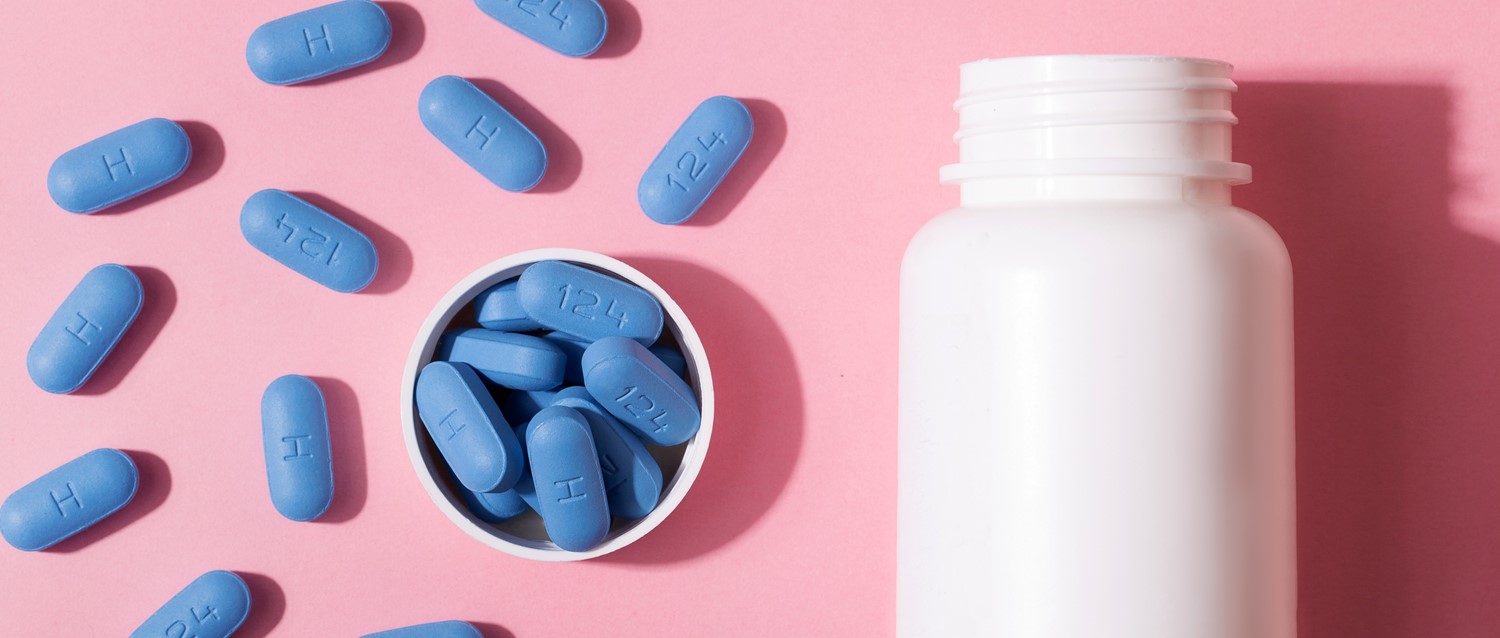
Vem bör ta HIV-förebyggande läkemedlet PrEP?
Granskad av Dr Krishna Vakharia, MRCGPFörfattad av Lydia SmithUrsprungligen publicerad 13 jan 2023
Uppfyller patientens redaktionella riktlinjer
- Ladda nerLadda ner
- Dela
- Language
- Diskussion
- Ask Patient
- Ljudversion
- Lägg till i föredragna källor på Google
Pre-expositionsprofylax (PrEP) är en medicin för att förhindra utvecklingen av HIV. Den är avsedd för personer som inte har HIV, men som har en hög risk att utveckla tillståndet. Men vad är det, hur fungerar det och vem bör ha tillgång till det?
Explore PrEP for HIV prevention
Get expert healthcare advice from the comfort of home. Complete a quick online consultation, available 24/7, with your request reviewed by a UK-registered clinician. Next day delivery available on eligible treatments.

What is PrEP and how does it prevent HIV?
PrEP is a medication that prevents HIV transmission. When taken as prescribed - usually a pill taken daily - it’s almost 100% effective. It works by helping the body to produce antibodies which prevent HIV from replicating inside the body. Essentially, the drug stops the virus from crossing into the healthy cells and reproducing.
While it's possible to take so-called 'events-based PrEP' - when you take it as and when needed - daily dosing is generally considered more reliable.
Different PrEP delivery methods such as injectables and implants are also being researched. In 2021, the World Health Organisation recommended a new option called the vaginalring for women at substantial risk of HIV acquisition1.
Who should take PrEP?
Adam Freedman, senior policy and campaigns officer at the National AIDS Trust, says anyone who feels at risk of getting HIV could consider taking PrEP. It may be suitable for you if you are HIV negative or have sex in a variety of situations where kondomer are not easily or always used.
"That said, there are higher rates of HIV among certain demographics, including gay and bisexual and other men who have sex with men, migrants, Black Africans, Black Caribbeans, and transgender people," he says. "Uptake of PrEP has been higher among white gay and bisexual men, which has led to a corresponding drop in new diagnoses," Freedman adds.
"However, uptake has been much lower among other groups. That’s why it’s so important to make PrEP more accessible for everyone who needs it."
Evidence from the UK PROUD study reported that PrEP reduced the risk of HIV infection by 86% for men who have sex with men2. In 2021, however, NICE recommended promoting PrEP to several higher-risk groups, including HIV negative men who have condomless kön with other men and HIV-negative heterosexual men and women having condomless sex with partners who are HIV positive. It also suggested promoting PrEP among HIV-negative trans women at elevated risk of developing HIV through condomless sex3.
How to access PrEP
PrEP is available for free from sexual health clinics in England, Scotland, Wales and Northern Ireland.
"PrEP is available on the NHS, meaning everyone has the right to access it. If you want to start taking it, your first port of call should be your local sexual health clinic," says Freedman. "Lots of people choose to buy PrEP on the internet, which, while legal and typically safe, can be expensive. As we see it, no one should be forced to pay over-the-odds for a treatment which they’re legally entitled to receive from the NHS."
Why are people having problems accessing PrEP?
The UK Government pledged to end new cases of HIV infection by 2030, by scaling up HIV testing and increasing access to PrEP among at-risk communities. However, researchers have warned this ambition may be under threat because access to PrEP in England is far lower than it should be.
Of 1,120 people who tried to get an appointment to get PrEP between October 2021 and July 2022, around two-thirds (68%) encountered problems. More than one third (35%) waited 12 weeks to be seen, and 57% waited more than 12 weeks4. Long waiting times, lack of appointments, and a training shortfall are all part of the problem, made worse by the COVID-19 pandemic and funding cuts5.
If you need PrEP or would like more information about it, it’s important to go to your sexual health clinic without delay.
Vidare läsning
2. UK Proud study: Examining the impact on gay men of Pre-exposure Prophylaxis.
3. NICE: NICE recommends offering PrEP to people at high risk of HIV for first time.
4. BMJ: HIV: Two in three people have trouble getting PrEP, finds survey.
5. National AIDS Trust: Government intend to cut PrEP funding by a third in England.
Patientval för HIV och AIDS

Sexuell hälsa
Vad man inte ska säga till någon med HIV
We've come a long way in developing treatment and prevention techniques but attitudes towards HIV-positive people are still lagging behind. What do people living with HIV wish people would stop saying?
av Milly Evans
Sexuell hälsa
HIV hos kvinnor: vad du bör veta
Since the first HIV/AIDS ad campaigns in the 1980s, the narrative of HIV has often left women out of the story. Yet worldwide, around 4,900 young women aged 15-24 years become infected with HIV every week. What practises are spreading HIV in women? And what can be done to tackle this epidemic?
av Amberley Davis
Om författarenVisa fullständig biografi
Författad av

Lydia Smith
Featureförfattare
BA, MA, MSc
Lydia Smith är en prisbelönt journalist och featureförfattare som har skrivit mycket om kvinnors hälsa och mental hälsa. Hon studerar för närvarande en MSc i psykologi.
Om recensentenVisa fullständig biografi

Dr Krishna Vakharia, MRCGP
Medicinsk chef för hälsa, Optum UK
MBChB, MRCGP(2013), BMedSci (hons), DFSRH, DRCOG, PGDipDerm (Distn)
Dr Krishna Vakharia är en NHS-läkare. Hon är också en regelbunden examinator för den postgraduate Diplom i Praktisk Dermatologi vid Cardiff University samt Chief Medical Officer för hälsa på Optum UK.
Artikelhistorik
Artikeln finns också på Engelska, Tyska, Spanska, Franska, Italienska, Portugisiska, Hindi, Hebreiska, Arabiska, och Svenska.
13 jan 2023 | Ursprungligen publicerad
Författad av:
Lydia SmithGranskad av
Dr Krishna Vakharia, MRCGP
Dela dina tankar eller erfarenheter med andra i vår patientgemenskaper.
Anmäl dig till Patientens nyhetsbrev
Din veckovisa dos av tydliga, pålitliga hälsoråd - skrivna för att hjälpa dig känna dig informerad, självsäker och i kontroll.
Genom att prenumerera accepterar du våra Sekretesspolicy. Du kan avsluta prenumerationen när som helst. Vi säljer aldrig dina uppgifter.