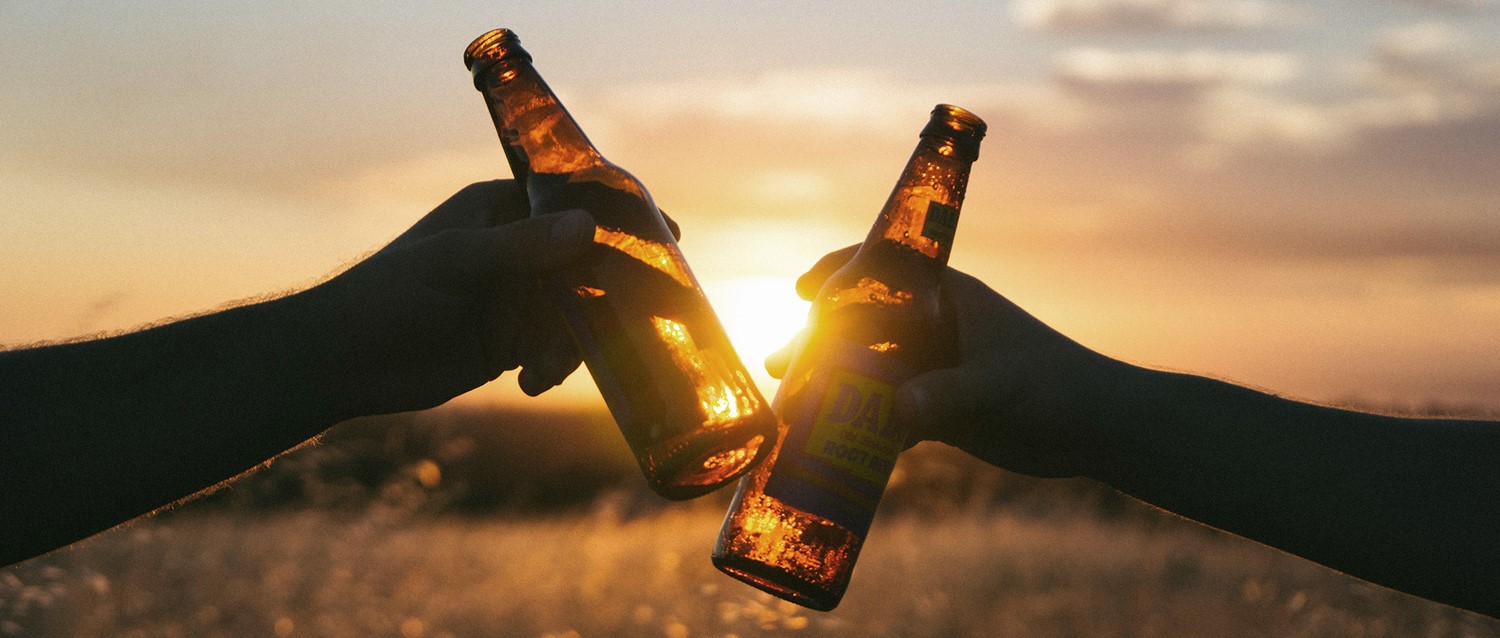
Kan medvetet drickande förbättra din mentala hälsa?
Granskad av Dr Sarah JarvisFörfattad av Lydia SmithUrsprungligen publicerad 27 Dec 2017
Uppfyller patientens redaktionella riktlinjer
- Ladda nerLadda ner
- Dela
- Language
- Diskussion
- Ask Patient
- Ljudversion
- Lägg till i föredragna källor på Google
It's a feeling many of us have experienced after too many drinks the night before: stomach-churning anxiety, tinged with regret and despair. Feeling anxious or down is a common side effect of a hangover, not to mention the headaches, tiredness and digestive problems.
But many young people are now shunning alkohol in favour of going teetotal, with campaigns like Dry January reinforcing the idea further. More than a quarter of 16- to 24-year-olds do not drink, compared to a fifth of the broader adult population, in part, due to concerns over their health and finances.
And now, some people are practising a new concept called 'mindful drinking'.
Videoval för AlkoholrådVideobibliotek
The idea behind mindful drinking is to change your relationship with alcohol and learn to drink what you want to, instead of what you think is socially acceptable. For example, you might order a large red wine after a stressful day - but it might be better go for a small, or give booze a miss entirely.
Many practitioners of mindful drinking have credited the concept with helping to keep their mentala hälsa in check.
Helen Morris, 32, started mindful drinking a couple of years ago when she realised alcohol wasn't making her happy, so she decided to re-evaluate her relationship with it.
"I'd been drinking regularly on a social basis for many years, but had recently been suffering with depression, ångest och panikattacker," she says. "I made the link between my declining mental health and drinking and decided to cut down to see if it made a difference."
"I started by limiting myself to two drinks when I went out, and only drinking at the weekends, then eventually only on special occasions," she adds.
After trial and error, Helen eventually cut out drinking alcohol entirely - which she says has dramatically improved her mental health. "I no longer have panic attacks, mood swings or prolonged anxiety and overall I feel much better equipped to deal with everyday life."
Alcohol and mental health
Although alcohol might make us feel relaxed in the short term, it can help contribute to feelings of depression and anxiety. This is because regular long-term drinking interferes with neurotransmitters in the brain, which are needed for good mental health.
"To get a bit sciencey: the reason you feel good after one or two drinks is because alcohol suppresses activity in the prefrontal cortex - the part of your brain that controls inhibition," says Rosamund Dean, author of Mindful Drinking: How Cutting Down Can Change Your Life.
"However, the prefrontal cortex also controls things like problem solving, decision making and social behaviour, which is why you might wake up with a head full of regrets the next day.
“Dopamine is the neurotransmitter that is responsible for cravings. When you have an alcoholic drink (or any addictive substance - drugs work the same way), the dopamine that is released makes you feel relaxed. But it’s an artificial stimulation of your 'reward centre', rather than an authentic burst of joy, like a laugh with a good friend or a hug with someone you love.
"And unfortunately, heavy drinking has been shown to deplete dopamine levels to the extent that the drinker needs more and more alcohol to get the same buzz. Dopamine depletion is associated with tiredness, lack of concentration, forgetfulness, anxiety, sömnlöshet, low motivation and full-on depression."
Cutting down
Around one in four of us drink more alcohol than the recommended maximum of 14 units a week - which is around six pints of ordinary-strength beer or six glasses of wine.
According to Professor Sir Ian Gilmore, chair of the Alcohol Health Alliance, there are many signs which may lead people to think about cutting down.
"If you think that your drinking is having a negative impact on your relationships or your ability to work, or that it could be exacerbating any existing health conditions, you may wish to think about reducing how much you drink," he says.
"In addition, if you drink every day and find it hard to abstain, this could also be a sign that you should think about cutting down."
Going cold turkey isn't necessarily the answer, but moderation can make a big difference - which is where drinking mindfully could help.
How to practise mindful drinking
There are several ways to do it: plan ahead and find bars that serve interesting non-alcoholic drinks, don't panic and take your time to decide what you want to drink.
Think twice and assess your mood before drinking alcohol - if you're not feeling great, it might be better to give it a miss rather than add a hangover on top.
Don't let anyone force you into drinking - if you're not in the mood, don't drink.
There are even groups you can join for mindful drinking, such as Club Soda, a UK-based 'mindful drinking movement' that offers courses and even mindful pub crawls.
"For many, mindful drinking is about moderating their drinking habits. For example, choosing lower-alcohol drinks, drinking fewer drinks each day, not drinking on weekdays, doing a longer sober sprint, or even going completely alcohol-free," says Laura Willoughby, co-founder of Club Soda.
"Just remember one thing - drinking alcohol is never compulsory. Mindful drinking is all about deciding what is right for you, today, at this moment."
Patientval för Alkoholråd

Hälsosamt liv
Hur du kontrollerar ditt drickande på en julfest med jobbet
From kissing our colleagues to criticising the boss, more than 1 in 4 people in the UK have regretted something they did at a work Christmas party. Drinking too much alcohol is the main issue, so how can we control our drinking when we feel pressured?
av Amberley Davis
Hälsosamt liv
Varningssignaler för ett alkoholproblem
This month, thousands of Britons will have a month off the booze in the name of Dry January. For some, however, this time of the year raises deeper self-analysis and the big question - do you have a drinking problem?
av Ross Davies
Om författarenVisa fullständig biografi
Författad av

Lydia Smith
Featureförfattare
BA, MA, MSc
Lydia Smith är en prisbelönt journalist och featureförfattare som har skrivit mycket om kvinnors hälsa och mental hälsa. Hon studerar för närvarande en MSc i psykologi.
Om recensentenVisa fullständig biografi

Dr Sarah Jarvis
Klinisk konsult
MA (Cantab), BM, BCh (Oxon), DRCOG, FRCGP, MBE
Efter att ha utbildat sig i medicin vid Cambridge och Oxford blev Dr Sarah Jarvis MBE allmänläkare.
Artikelhistorik
Artikeln finns också på Engelska, Tyska, Spanska, Franska, Italienska, Portugisiska, Hindi, Hebreiska, Arabiska, och Svenska.
27 Dec 2017 | Ursprungligen publicerad
Författad av:
Lydia SmithGranskad av
Dr Sarah Jarvis
Dela dina tankar eller erfarenheter med andra i vår patientgemenskaper.
Anmäl dig till Patientens nyhetsbrev
Din veckovisa dos av tydliga, pålitliga hälsoråd - skrivna för att hjälpa dig känna dig informerad, självsäker och i kontroll.
Genom att prenumerera accepterar du våra Sekretesspolicy. Du kan avsluta prenumerationen när som helst. Vi säljer aldrig dina uppgifter.