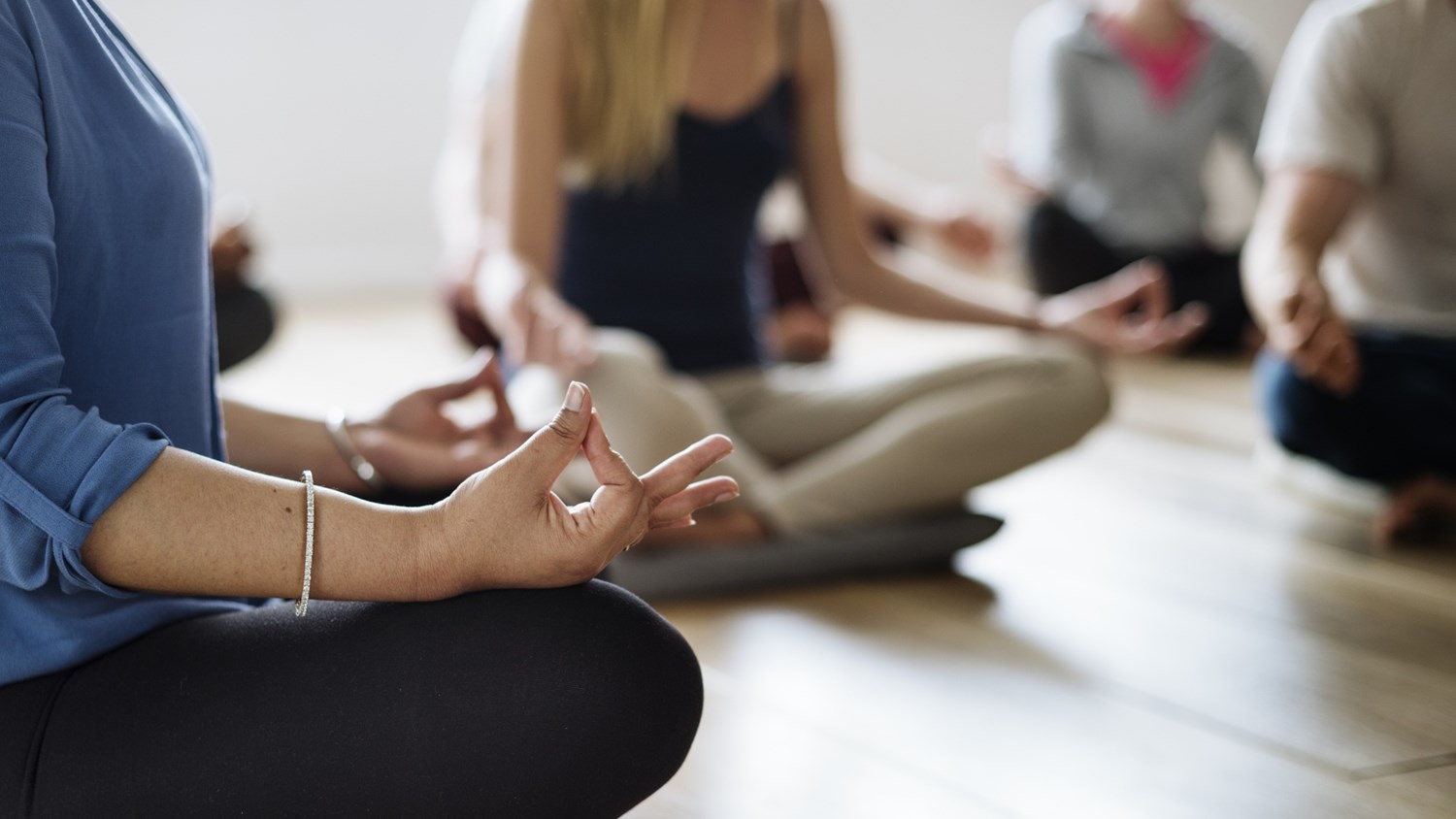
Relaxation exercises
Peer reviewed by Dr Hannah Gronow, MBACPLast updated by Dr Jan Sambrook, MRCGPLast updated 20 Sept 2017
Meets Patient’s editorial guidelines
- DownloadDownload
- Share
- Language
- Discussion
- Audio Version
- Add to preferred sources on Google
Muscular relaxation exercises and deep breathing are two ways to help people to relax and combat symptoms of anxiety. They may also help to ease symptoms of depression. They can be used together with mindfulness techniques which have been shown to help with anxiety and depression.

Why do relaxation exercises?
Some people relax with sport, exercise, listening to music, watching TV or reading a book, etc. However, some people find it helpful to follow specific relaxation exercises. This leaflet gives a summary of two commonly used routines - deep breathing exercises and muscular relaxation exercises. These techniques are particularly useful to combat the two common physical symptoms of anxiety - over-breathing and muscular tension. There is some evidence that they may also help to ease symptoms of depression. If you get into the habit of practicing mindfulness as well, the combination may be even more effective.
These exercises will be more effective the more you practise them. Take a few minutes each day and work through the exercises. As you practise them you are likely to find that your muscles are more relaxed more of the time and that you are breathing more deeply. Once you have learned them, you can then use them in everyday life whenever you feel tense or anxious.
Deep-breathing exercises
Many people have a tendency to breathe faster than normal when they are anxious. Sometimes this can make you feel a little dizzy, which makes you more anxious and you breathe even faster, which can make you more anxious, etc. If you practise deep breathing when you are relaxed, you should be able to do this when you feel tense or anxious to help you to relax.
Try the following for 2-3 minutes. Practise this every day until it comes naturally to you and you may find that it reduces your background anxiety. You will then be able to do it routinely in any stressful situation:
Breathe slowly and deeply in through your nose, and out through your mouth in a steady rhythm. Try to make your breath out twice as long as your breath in. To do this, you may find it helpful to count slowly 'one, two' as you breathe in, and 'one, two, three, four' as you breathe out.
Mainly use your lower chest muscle (your diaphragm) to breathe. Your diaphragm is the big muscle under the lungs. It pulls the lungs downwards which expands the airways to allow air to flow in. When we become anxious we tend to forget to use this muscle and often use the muscles at the top of the chest and our shoulders instead. Each breath is more shallow if you use these upper chest muscles. So, you tend to breathe faster and feel more breathless and anxious if you use your upper chest muscles rather than your diaphragm.
You can check if you are using your diaphragm by feeling just below your breastbone (sternum) at the top of your tummy (abdomen). If you give a little cough, you can feel the diaphragm push out here. If you hold your hand here you should feel it move in and out as you breathe.
Try to relax your shoulders and upper chest muscles when you breathe. With each breath out, consciously try to relax those muscles until you are mainly using your diaphragm to breathe.
Muscular relaxation
Planned times for regular positive relaxation
Find a quiet warm place where you won't be disturbed. Choose a time of day when you do not feel pressured to do anything else. Lie down on your back, or sit in a well-supported chair if you find that more comfortable. Once you have learned the exercises, close your eyes while you do them. You are going to work on each of your muscle groups. With each group of muscles, first tense the muscles as much as you can, then relax them fully. Breathe in when you tense the muscles and breathe out when you relax.
To start with, concentrate on your breathing for a few minutes. Breathe slowly and calmly, using the breathing techniques shown above. Each time you breathe out say words to yourself such as 'peace' or 'relax'. Then start the muscle exercises, working around the different muscle groups in your body.
Hands - clench one hand tightly for a few seconds as you breathe in. You should feel your forearm muscles tense; then relax as you breathe out. Repeat with the other hand.
Arms - bend an elbow and tense all the muscles in the arm for a few seconds as you breathe in; then relax as you breathe out. Repeat the same with the other arm.
Shoulders - raise your shoulders as high as you can as you breathe in; then relax as you breathe out.
Neck - press your head back as hard as is comfortable and roll it slowly from side to side; then relax.
Face - try to frown and lower your eyebrows as hard as you can for a few seconds; then relax. Then raise your eyebrows (as if you were startled) as hard as you can; then relax. Then clench your jaw for a few seconds; then relax.
Chest - take a deep breath and hold it for a few seconds; then relax and go back to normal breathing.
Stomach - tense the stomach muscles as tightly as possible; then relax.
Buttocks - squeeze the buttocks together as much as possible; then relax.
Legs - with your legs flat on the floor, bend your feet and toes towards your face as hard as you can; then relax. Then bend them away from your face for a few seconds; then relax.
Then repeat the whole routine 3-4 times. Each time you relax a group of muscles, notice how they feel when relaxed compared to when they are tense. There may be groups of muscles that feel particularly tense, often the shoulders or jaw muscles. Make sure they feel properly relaxed by the time you have finished. If you practise these exercises every day you will find that they reduce your overall level of tension.
Everyday life
Obviously, you cannot do all of the above when out and about. However, the principle of full tension followed by relaxation of a group of muscles can help to ease anxiety in everyday situations. Therefore, in situations when you feel tension or anxiety rising, try either of the following:
Twist your neck around each way as far as it is comfortable, then relax.
Fully tense your shoulder and back muscles for several seconds, then relax.
Patient picks for Anxiety
Mental health
How to tackle poor body image in older women
We're often told that with age comes confidence and that as we grow older, we will feel more self-assured and comfortable in our own skin. In reality, though, women of all ages can struggle with poor body image, particularly as we age.
by Lydia Smith
Mental health
The link between anxiety and insomnia
Not being able to sleep, whether it's not being able to fall asleep or waking up throughout the night, is incredibly frustrating - but the feeling of anxiety that often accompanies it can be debilitating too. Insomnia is often attributed to anxiety, as many of us brood on worries in the quiet of night. In turn, sleeplessness makes us exhausted, irritable and foggy, which can make anxiety during the day worse. So what is the relationship between the two - and which triggers the other?
by Lydia Smith
About the authorView full bio

Dr Jan Sambrook, MRCGP
General Practitioner, Medical Author
MBChB, MRCGP
Dr Jan Sambrook qualified from the University of Sheffield in 1992.
About the reviewerView full bio

Dr Hannah Gronow, MBACP
General Practitioner
MB, ChB, MBACP
Hannah qualified as a GP in 1997. She joined EMIS (Patient) as a peer reviewer in August 2006.
Article history
The information on this page is peer reviewed by qualified clinicians.
Article also available in English, German, Spanish, French, Italian, Portuguese, Hindi, Hebrew, Arabic, and Swedish.
20 Sept 2017 | Latest version
Join the conversation
Share your thoughts or experiences with others in our patient communities.

Ask, share, connect.
Browse discussions, ask questions, and share experiences across hundreds of health topics.

Feeling unwell?
Assess your symptoms online for free
Sign up to the Patient newsletter
Your weekly dose of clear, trustworthy health advice - written to help you feel informed, confident and in control.
By subscribing you accept our Privacy Policy. You can unsubscribe at any time. We never sell your data.
More in mental health
- 5 benefits of reading
- Art therapy: creative ways to boost your mental health
- Can exercise really help with depression?
- Can hair transplants improve mental health?
- Do holidays help or hinder depression?
- Does breastfeeding prevent postnatal depression?
- Eating dark chocolate may reduce odds of depression
- Exam time: stress-relieving toys and gadgets
- How to cope with anxiety after cancer
- How to say no to a Christmas invite
- How to tackle poor body image in older women
- How to talk to children about death
- The surprising ways stress can affect your body
- What is psychodynamic therapy?
- What to do if you get the urge to self-harm
- What you need to know about parenting with a mental health issue
- When should you stop taking antidepressants?
- When to take a mental health day at work - and how to talk to your boss
- Why is therapy so exhausting?
- Why walking your dog can boost your mental health