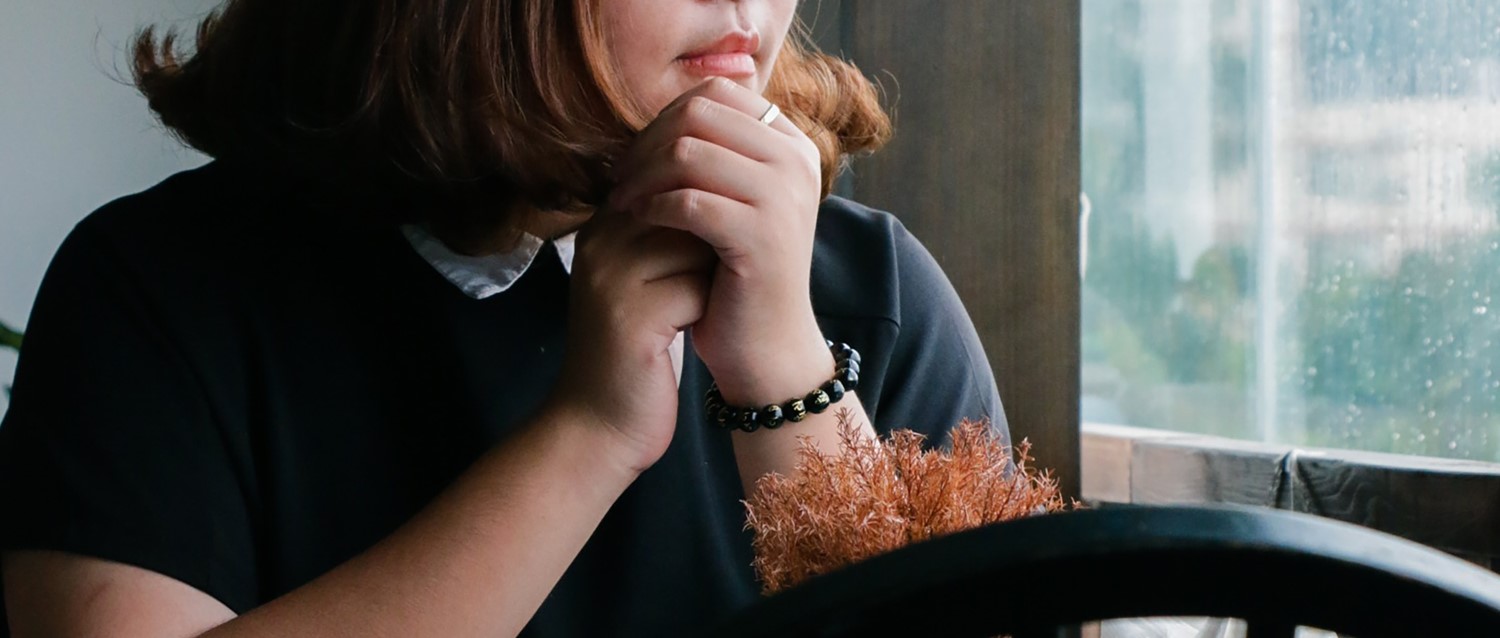
Vad är skillnaden mellan oordnat ätande och en ätstörning?
Granskad av Dr Sarah JarvisFörfattad av Emily Jane BashforthUrsprungligen publicerad 8 Nov 2021
Uppfyller patientens redaktionella riktlinjer
- Ladda nerLadda ner
- Dela
- Language
- Diskussion
- Ask Patient
- Ljudversion
- Lägg till i föredragna källor på Google
It can be difficult to differentiate between disordered eating and a full-blown eating disorder (ED). This is especially the case since we live in a diet culture where talk of weight loss, 'clean eating' and fitness is rife. However, it's important we are able to identify a toxic relationship with food and know where to seek help early before things get worse.
Stöd för psykisk hälsa för vuxna och barn
Online-KBT och psykologisk terapi för vuxna och barn i åldern 8–17 år. Onebrights ackrediterade kliniker hjälper personer som upplever ångest, depression och andra känslomässiga utmaningar.
What is disordered eating?
Dr Omara Naseem is a senior psychologist who describes disordered eating as 'symptoms of an ätstörning which are at the subclinical level for diagnosis'.
This does not mean they aren't harmful or can be safely ignored. Symptoms of disordered eating still warrant attention, as early intervention is the key to stopping disordered habits becoming entrenched.
Disordered eating can include:
Limiting food intake.
Binge eating - eating a very large amount of food at once and feeling out of control of eating.
Purging - making yourself sick or misusing laxermedel.
Disordered habits are not limited to food, though, as someone might also engage in:
Cutting out food groups.
Extreme dieting.
Fasting.
Using diet teas.
Detoxes.
Cleanses.
Dr Naseem says disordered eating often represents the development of ED symptoms. These can wrongly be viewed as someone being 'healthy'.
"Preoccupation with food, and weight and body shape are the first physiological signs of undereating and often manifest in disordered eating," she says.
What is an eating disorder?
"Eating disorders are complex mental illnesses with the highest mortality rate of any mental health disorder," says Dr Naseem.
The peaks for an eating disorder to occur are in ungdom and young adulthood. However, eating disorders can develop before and after these timeframes too.
Ätstörningar do not discriminate. They affect all genders, ages, sexualities, races, socio-economic classes and people from all backgrounds.
There are four main categories of eating disorder:
Binge eating disorder.
Other specified feeding or eating disorder (OSFED).
Dr Naseem stresses that OSFED is no less serious than the other categories of eating disorders. It simply means that its symptoms don't fit the categories of anorexia nervosa, bulimia nervosa or binge eating disorder.
OSFED includes atypical anorexia nervosa, atypical bulimia nervosa, purging disorder and night eating syndrome. In older diagnostic systems, the term 'eating disorder not otherwise specified' (EDNOS) was used instead of OSFED.
Dr Naseem says it is very common for people to move between different eating disorder diagnoses over time.
"I want to highlight that all eating disorders are serious. I also want people to know that eating disorders aren't solely - or even mainly - about food. People with eating disorders often feel a lot of pain, sadness and worry. Recovery is about addressing other issues in their life also, and helping them develop coping strategies beyond controlling their food. However, there are effective treatments for all disorders."
When does disordered eating become an eating disorder?
"In my view, disordered eating would always warrant attention," says Dr Naseem.
"When disordered eating starts to interfere with daily life, this is an early warning sign of the development of an eating disorder. Disordered eating can lead to people withdrawing from situations, feeling preoccupied and having trouble concentrating. They may also have compulsive or rigid behaviours and show emotional distress."
In some cases, a person might have continued or rapid weight loss. However, this will not always happen, as eating disorders are not weight disorders and weight may be within normally accepted limits. A person does not have to be a set weight in order to have an ED, contrary to the misconceptions.
To be diagnosed with an eating disorder, a person must have symptoms that meet a certain threshold. The main purpose of a diagnosis is to create appropriate treatment plans, rather than to give people a label.
Dr Naseem explains that eating disorders should be diagnosed by GPs, trained eating disorder doctors, psychiatrists and psychologists.
How common is disordered eating?
It's rare nowadays to turn on the TV and not see an advert for a diet plan. Likewise, it's difficult to open a social media app and not see photoshopped images or influencers promoting weight loss products. We live in a diet culture, and Dr Naseem believes this has contributed to disordered eating becoming 'normalised'.
"I believe a rise in fitness and clean eating trends has led to a normalisation of disordered behaviours. This has undoubtedly skewed how people view healthy eating and body image ideals. It's important people know that 'health' looks different for everyone."
With social media often perpetuating harmful messages, people might not always realise they have a disordered relationship with food. Stereotypes around eating disorders can also lead to people believing they aren't 'sick enough'.
Does disordered eating always turn into an eating disorder?
"Disordered eating does not always develop into an eating disorder," Dr Naseem says.
She explains how vital early intervention is so people can get well again before their symptoms escalate and worsen. The sooner a person notices problematic behaviours and takes action, the faster they can make a full recovery.
What is the treatment process for a diagnosed eating disorder?
Treatment for an eating disorder depends on the diagnosis.
Dr Naseem says currently, the NHS will treat eating disorders in accordance with NICE guidelines in different ways.
Restrictive eating disorders are treated using the Maudsley model of anorexia nervosa treatment for adults - also known as MANTRA. They might also use kognitiv beteendeterapi (CBT).
Binge eating and bulimic disorders are treated with cognitive behavioural therapy.
OSFED is treated according to which symptoms are the most prominent in alignment with the most appropriate treatment model.
All approaches will incorporate dietetic input and medical monitoring.
However, if more intensive treatment is required, there are other options such as:
Daycare options involving meal support and psychological groups.
Occupational therapy input.
Family therapy input.
Inpatient stays in specialised eating disorder units for intensive hospital treatment.
Dr Naseem says it is not uncommon for someone to have a stepped care approach or a mixture of inpatient, to daycare, to outpatient (therapy once a week) treatment.
If you are struggling with food, where can you get support?
"If you are struggling with food, you should contact your GP. They should be the first port of call. Your GP can refer you to your local ED service and also perform appropriate health checks."
There are, however, long waiting lists for NHS treatment. Therefore, for immediate help, private therapy might be an option.
You can also reach out to eating disorder charity Beat, who offer free guidance and resources, and help in finding support.
Patientval för Ätstörningar

Mentalt välbefinnande
Ätstörningar hos idrottare: hur kan vi hantera dem?
Eating disorders are serious, complicated mental illnesses. They can affect anyone, regardless of age, gender, race, sexuality, background or occupation. However, there is evidence to suggest that athletes are disproportionately affected, with many arguing that eating disorder behaviours are actually encouraged in sport.
av Emily Jane Bashforth

Mentalt välbefinnande
Hur man hjälper en vän med en ätstörning
Trying to talk to someone you suspect has an eating disorder can be a daunting prospect. But this tricky conversation can be an essential first step to getting them the specialist support they need. Once they have confided in you, there's a lot you can do to support them too.
av Danny Chadburn
Om författarenVisa fullständig biografi
Författad av
Emily Jane Bashforth
Featureförfattare
NCTJ
Emily är en featureförfattare hos Patient och skriver artiklar om en mängd olika ämnen relaterade till hälsa och välbefinnande.
Om recensentenVisa fullständig biografi
Dr Sarah Jarvis
Klinisk konsult
MA (Cantab), BM, BCh (Oxon), DRCOG, FRCGP, MBE
Efter att ha utbildat sig i medicin vid Cambridge och Oxford blev Dr Sarah Jarvis MBE allmänläkare.
Artikelhistorik
Artikeln finns också på Engelska, Tyska, Spanska, Franska, Italienska, Portugisiska, Hindi, Hebreiska, Arabiska, och Svenska.
8 Nov 2021 | Ursprungligen publicerad
Författad av:
Emily Jane BashforthGranskad av
Dr Sarah Jarvis
Dela dina tankar eller erfarenheter med andra i vår patientgemenskaper.
Anmäl dig till Patientens nyhetsbrev
Din veckovisa dos av tydliga, pålitliga hälsoråd - skrivna för att hjälpa dig känna dig informerad, självsäker och i kontroll.
Genom att prenumerera accepterar du våra Sekretesspolicy. Du kan avsluta prenumerationen när som helst. Vi säljer aldrig dina uppgifter.