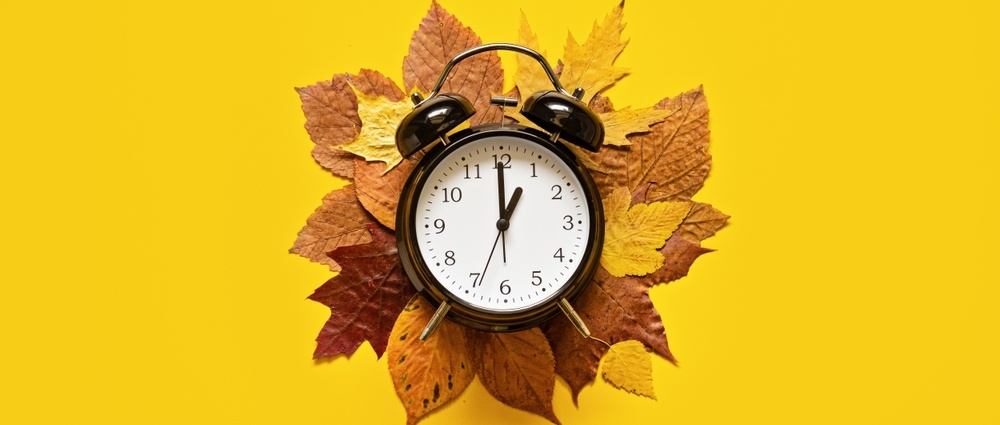
Sommartid: Varför tidsomställningen kan påverka vår hälsa
Granskad av Dr Colin Tidy, MRCGPSenast uppdaterad av Lynn StephenSenast uppdaterad 15 okt 2025
Uppfyller patientens redaktionella riktlinjer
- Ladda nerLadda ner
- Dela
- Language
- Diskussion
- Ask Patient
- Ljudversion
- Lägg till i föredragna källor på Google
Dagarna blir kallare och kortare, vilket betyder att hösten har anlänt i Storbritannien. Snart kommer klockorna att ställas tillbaka en timme för att markera slutet på sommartiden. Även om detta ger oss en extra timme i sängen, kan tidsomställningen påverka vår hälsa.
Stöd för psykisk hälsa för vuxna och barn
Online-KBT och psykologisk terapi för vuxna och barn i åldern 8–17 år. Onebrights ackrediterade kliniker hjälper personer som upplever ångest, depression och andra känslomässiga utmaningar.
Why do our clocks change?
In Britain, the clocks will move back by one hour at 2am on Sunday 26th October. We change the clocks to make better use of natural daylight in the morning.
Between March and October - during Daylight Saving Time - an hour of daylight is borrowed from the morning and added to the end of the day. At the end of October, we push the clocks back and return to standard time or Greenwich Mean Time.
The United States, Canada, Australia and New Zealand - as well as European countries such as France, Germany, Italy, Poland and Spain - also change their clocks.
Every year, the clock change causes a discussion about whether we should continue the practice. Some people welcome the change as it marks the start of a new season, but others argue that it’s an inconvenience.
However, some researchers suggest that changing the clocks can have a serious effect on our health because of the disruption to our circadian rhythms.
Circadian rhythms are physical, mental and behavioural changes that follow a 24-hour cycle, regulating things such as alertness, sleepiness och appetite. These processes tend to be aligned with the cycle of day and night.
How does the clocks changing affect health?
According to research, moving our clocks forward or back by an hour can disturb these natural rhythms - leading to several health issues.
Increase in mood disorders
Research has linked the clocks changing to an increase in mood disorders such as depression eller säsongsbunden affektiv störning. When the clocks go forward in the spring, it means we have darker mornings and lighter evenings.
Less morning light can lower levels of the mood-boosting hormone serotonin, which can affect how you feel emotionally - especially if you already have a mental health issue such as depression.
Research has also linked the clocks going back to mood disorders. A US study found an 11% increase in depressive episodes during the switch from daylight saving to standard time.
Disrupted sleep
The clocks changing can also affect our sleep schedules, which in turn can affect our mood and ability to concentrate. The shift may mean we go to bed and wake up earlier or later than usual - and the disruption could lead to sömnlöshet or interrupted sleep.
Although these issues are usually temporary - lasting a few days or weeks - it can make us feel tired and foggy.
This trötthet may also lead to accidents. A study of 732,000 car accidents over two decades found that the annual switch to Daylight Saving Time is associated with a 6% increase in fatal car crashes that week.
Increased chance of cardiovascular disease
The disruption to our circadian rhythms may also be linked to heart disease, according to some studies - although the exact reason why is unknown.
A study review found that the chance of heart attacks increased “modestly but significantly” after the shift to daylight saving time in the spring but not in winter clock change.
According to the researchers, the abrupt change to the ‘sleep-wake cycle’ has been linked to inflammation and imbalances in the nervous system.
Another study found that moving into daylight saving time is associated with a higher chance of hjärt-kärlsjukdom, mental health issues and immune-related disorders.
How to manage the clocks changing
Get fresh air
Getting outside and exercising frequently are both useful ways to help you reset your internal body clock. Going for a walk first thing after you wake up may help you adjust to the day after the clocks change.
Avoid caffeine
Stimulants such as koffein can keep you awake and throw off the natural balance between sleep and wakefulness. If you are having trouble sleeping at night, it may help to avoid kaffe after midday.
Limit light before bed
Artificial light exposure at night can interfere with your circadian rhythm. Try to avoid using electronic devices that emit blå ljuset - such as phones and laptops - in the lead-up to bedtime.
Keep naps short and early in the afternoon
When you’re feeling tired, it’s tempting to have a nap - but longer naps or napping later in the day can mean you struggle to sleep at night. If you do have a nap, keep it short at around 20 minutes.
Follow a consistent sleep schedule
Sticking to a bedtime or morning wake-up time can help your body adjust to a stable circadian rhythm. Get your bedroom ready for a good night’s sleep by making it dark and comfortable. Try to relax before bed, for example, by having a bath or reading a book.
Seek help if you’re struggling with your mental health
If you’re experiencing depression, ångest or another mentala hälsa problem, it’s important to speak to your doctor for advice. You can also själv remittera dig till samtalsstöd on the NHS.
Patientval för Depression
Mentalt välbefinnande
Hur man pratar med människor om sin mentala hälsa
Seeking help is often the first step towards getting and staying well, but talking about a mental health problem isn't always easy. It's normal to feel nervous about speaking about your health to a trusted friend or family member - and approaching your doctor or employer for help can seem overwhelming.
av Lawrence Higgins
Mentalt välbefinnande
Vad är 'god mental hälsa'?
Vi vill alla må bra, både mentalt och fysiskt. Men vad det innebär att må bra - särskilt när det gäller mental hälsa - varierar för var och en av oss. Vi behöver alla olika saker för att känna oss på topp.
av Lynn Stephen
Om författarenVisa fullständig biografi
Uppdaterad av

Lynn Stephen
Innehållsutvecklare
MA (Hons)
Lynn joined Patient in 2023 and her role includes checking all the professional leaflets, patient information leaflets and medicine leaflets, to ensure consistency of spelling, grammar, reference material and brand style, working with the medical authors and clinical director to coordinate the authoring and peer reviewing of the leaflets.
Författad av

Lydia Smith
Featureförfattare
BA, MA, MSc
Lydia Smith är en prisbelönt journalist och featureförfattare som har skrivit mycket om kvinnors hälsa och mental hälsa. Hon studerar för närvarande en MSc i psykologi.
Om recensentenVisa fullständig biografi

Dr Colin Tidy, MRCGP
Allmänläkare, Medicinsk Författare
MBBS, MRCGP, MRCP (Paediatrics), DCH
Dr Colin Tidy är en NHS-läkare, baserad i Oxfordshire.
Artikelhistorik
Artikeln finns också på Engelska, Tyska, Spanska, Franska, Italienska, Portugisiska, Hindi, Hebreiska, Arabiska, och Svenska.
Nästa granskning ska göras senast: 15 okt 2028
15 okt 2025 | Senaste versionen
23 okt 2023 | Ursprungligen publicerad
Författad av:
Lydia Smith
Dela dina tankar eller erfarenheter med andra i vår patientgemenskaper.
Enkel tillgång till pålitliga behandlingar och hälsotjänster online.
Common conditions
Get help with common conditions through the NHS, without a GP appointment.





Anmäl dig till Patientens nyhetsbrev
Din veckovisa dos av tydliga, pålitliga hälsoråd - skrivna för att hjälpa dig känna dig informerad, självsäker och i kontroll.
Genom att prenumerera accepterar du våra Sekretesspolicy. Du kan avsluta prenumerationen när som helst. Vi säljer aldrig dina uppgifter.