Forskare utvecklar metod för spermaseparation för könsselektion
Granskad av Natalie HealeyFörfattad av Milly EvansUrsprungligen publicerad 14 Aug 2019
Uppfyller patientens redaktionella riktlinjer
- Ladda nerLadda ner
- Dela
- Language
- Diskussion
- Ask Patient
- Ljudversion
- Lägg till i föredragna källor på Google
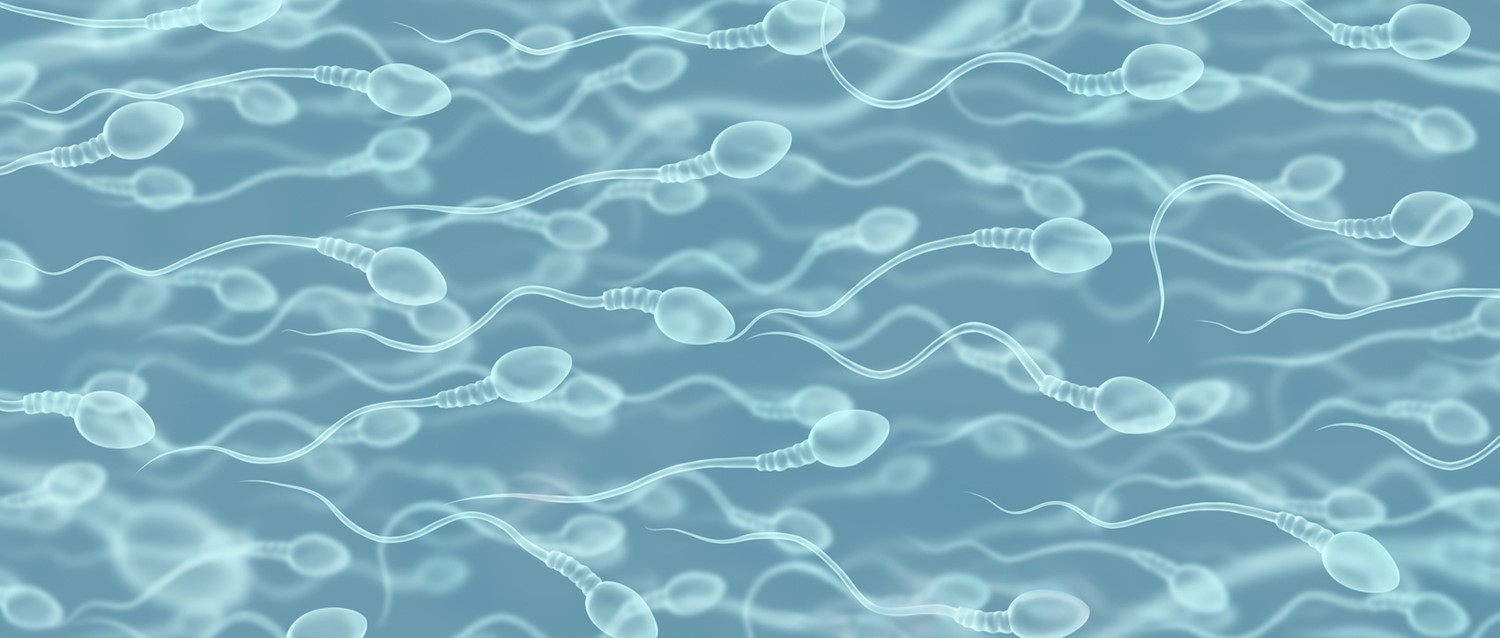
Forskare har utvecklat en reversibel kemisk behandling för att separera X- och Y-spermier för att välja avkommans kön.
The research, published in PLOS Biology, found that the simple, reversible chemical treatment could dramatically alter the 50:50 male and female offspring ratio so that sex selection would be possible. The study was carried out on mice but is likely widely applicable to other mammals too.
Most cells from male mammals contain both an X and Y chromosome. However, during the development of sperm, the X and Y chromosomes are split into different cells so that a sperm cell will carry one or the other. Sperm carrying an X chromosome will produce daughters and those carrying a Y chromosome will develop into sons.
Researchers were able to distinguish between the two types of sperm because of the difference in gene expression. The Y chromosome carries few genes whereas the X chromosome carries many. They found that almost 500 genes are only active in X-bearing sperm, including a pair of receptors called Toll-like receptor 7 and 8 (TLR7/8) which were used in the experiment.
The researchers treated mouse sperm with a chemical which bound to the receptors and slowed sperm movement, without affecting their ability to fertilise. The procedure was fully reversed by removing the chemical.
Using in vitro fertilisation (IVF) with the fastest swimmers (the Y chromosome sperm) resulted in mice litters which were 90% male. Using the slower swimmers (those carrying the X chromosome) resulted in litters which were 81% female.
Thus far, no markers specific to X- or Y-sperm have been found, according to Dr James Turner, leader of the Sex Chromosome Biology lab at the Francis Crick Institute.
"The discovery of a protein that marks only X-sperm is really surprising, so the top priority will be to reproduce this finding, and to understand why this protein proves the exception to the rule."
Compared to other sex selection procedures, this method is far cheaper, simpler and less risky. It could greatly simplify the process of sex selection for IVF or artificial insemination. Sex selection in humans is illegal in the UK.
Co-author of the research at Hiroshima University, Japan, Masayuki Shimada, acknowledged that, despite its usefulness in agriculture, sex selection is a still widely debated and contested subject in humans. "The differential expression of receptor genes by the two sex chromosomes provides the basis for a novel and potentially highly useful method for separating X and Y sperm and we have already succeeded in the selective production of male or female in cattle and pigs by this method," he explained. "Nonetheless, use of this method in human reproductive technology is speculative at the moment, and involves significant ethical issues unaffected by the utility of this new technique."
"This paper is very interesting because it highlights inherent physiological differences between X and Y chromosome bearing sperm in the laboratory," said Professor Allan Pacey, Professor of Andrology at the University of Sheffield.
"However, to date, the experiments have only been performed on the sperm from laboratory mice and we don't know if this effect would be seen in the sperm from other animals, such as cattle (where producing more females is important for dairy herds) or in humans where would-be parents may desire a child of a specific sex (although that is currently unlawful in the UK). However, the data does suggest that sperm are far more complex cells than we've previously been aware of and that we still have a lot more to learn about them."
This study was published in PLOS Biology.
Patientval för Fertilitet
Sexuell hälsa
Påverkar hormonell preventivmedel fertiliteten efter att du slutar ta den?
Många av oss använder preventivmedel i flera år för att få mer kontroll över våra liv och bestämma om och när vi vill bli gravida. Men om du har bestämt dig för att börja försöka få barn kan det lämna många frågor obesvarade. Finns det vanligtvis en fördröjning i att din fertilitet återkommer? Och finns det något du kan göra för att få den att komma tillbaka snabbare?
av Lydia Smith

Sexuell hälsa
Skydda din mentala hälsa under fertilitetsbehandling
Infertility is estimated to affect more than one in seven couples in the UK. The physical demands on your body during fertility treatment are well documented, but the crippling effect it can have on your mental health is not often talked about.
av Karen Gordon
Om författarenVisa fullständig biografi
Författad av

Milly Evans
Redaktör
Milly skriver om en rad olika hälsoteman, med ett särskilt intresse för ojämlikhet inom hälsa och sexuell hälsa.
Om recensentenVisa fullständig biografi

Natalie Healey
Frilansjournalist
BSc (Hons) Biomedicinsk vetenskap
Hon är en hälsojournalist baserad i London som har skrivit om vetenskap och medicin i flera år. Hon är tidigare redaktionschef på Patient.
Artikelhistorik
Artikeln finns också på Engelska, Tyska, Spanska, Franska, Italienska, Portugisiska, Hindi, Hebreiska, Arabiska, och Svenska.
14 Aug 2019 | Ursprungligen publicerad
Författad av:
Milly EvansGranskad av
Natalie Healey
Dela dina tankar eller erfarenheter med andra i vår patientgemenskaper.
Enkel tillgång till pålitliga behandlingar och hälsotjänster online.
Common conditions
Get help with common conditions through the NHS, without a GP appointment.





Anmäl dig till Patientens nyhetsbrev
Din veckovisa dos av tydliga, pålitliga hälsoråd - skrivna för att hjälpa dig känna dig informerad, självsäker och i kontroll.
Genom att prenumerera accepterar du våra Sekretesspolicy. Du kan avsluta prenumerationen när som helst. Vi säljer aldrig dina uppgifter.