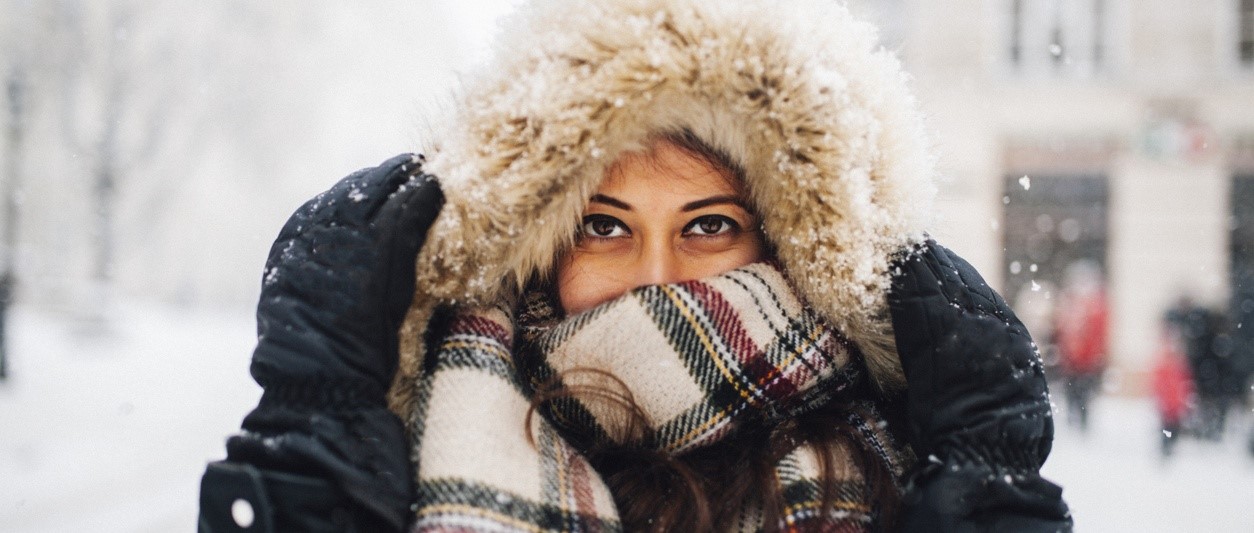
Why do women feel the cold more than men?
Granskad av Dr Sarah JarvisFörfattad av Ross DaviesUrsprungligen publicerad 14 Jan 2024
Uppfyller patientens redaktionella riktlinjer
- Ladda nerLadda ner
- Dela
- Language
- Diskussion
- Ljudversion
- Lägg till i föredragna källor på Google
Ever wondered why the battle over the thermostat often constitutes a battle of the sexes? Research suggests the answer to that age-old question is simple - women feel the cold more than men.
I den här artikeln:
Videoval för General women's health
As we find ourselves once again in the icy depths of winter, it's more likely that women will be feeling the cold more than men and itching to turn the thermostat up.
Fortsätt läsa nedan
Blood flow
According to Mike Tipton, professor of human and applied physiology at the University of Portsmouth, research points to the differences in skin blood flow between men and women, which affects body temperature.
"We have conducted studies where we have taken men and women into a warm environment, and then cooled that environment," explains Tipton. "What you'll find is that women have a much more sensitive vascular response to the cold, which means they shut down their blood flow sooner, tighter and for longer than men.
"The reason for this is that women's bodies have a more sensitive response to the cold. The female sex hormone oestrogen also contributes to making the blood vessels more sensitive to cold."
Cold hands and feet
Tillbaka till innehållThis, adds Tipton, makes women much more susceptible to lower temperatures, as well as sudden changes in temperature, such as draughts. It also means women tend to have colder hands and feet - the temperature of both being an important determinant in how hot or cold people feel.
"Hand and foot temperature are maintained by blood flow, so if the blood flow is shut down - as is found in women - then skin temperature falls. This reates the sensation of cold hands and cold feet, determining your overall level of comfort perception in the cold. This means you can have people who have a reasonable chest temperature or back temperature, but if they've got cold hands, they'll feel cold."
Fortsätt läsa nedan
Body fat
Tillbaka till innehållAnother aspect to take into account is that women, on average, have around 10% more body fat than men. This protects their vital organs from the cold, but insulates the skin from the body's heat.
"Because women have more body fat, which doesn't have much in the way of blood supply, it insulates the skin, so their skin temperatures tend to be lower," says Tipton. "It's a bit like having more loft insulation in your house."
Evolution
Tillbaka till innehållThe answer to the thermal difference between men and women is most probably rooted in evolution, says Dr Sarah Jarvis, GP and clinical consultant for Patient.info.
"Humans evolved in the tropics, and dying from too much heat was much more of a risk than succumbing to hypothermia," she says. "In those days, men were out getting hot and sticky hunting and gathering while women stayed at home looking after the children.
"That meant men needed highly evolved ways of avoiding overheating, which is where sweating comes in. Men were doing more exercise, which helped keep them warm. Women were also smaller, meaning they had a higher surface area-to-volume ratio - and the surface of your body is where you lose heat from."
As with most things, however, there are exceptions to the rule. For instance, a man who has suffered a non-freezing cold injury - extended exposure to wet conditions just above freezing - is likely to feel the cold as much as a woman, perhaps even more so. On the other hand, a women experiencing the menopaus is likely to report hot flushing, even in a cool environment.
Furthermore, if a man and a woman were matched together, of the same height, weight and amount of fat stored beneath their skin, "many of the differences in the ability to regulate body temperature disappear," says Tipton. Of course, genetic variation dictates that this is rare.
"This is very much an academic argument though," he says. "In the real world, males tend to be much bigger and more muscular, while women are smaller. These factors all make a difference when it comes to thermal sensitivity. That's why Raynaud's is nine times more common in women than it is in men."
Fortsätt läsa nedan
Staying warm
Tillbaka till innehållNo matter your biological sex, we will all at some point this winter feel the chill. So, how best to stay warm?
"Wear layers rather than a single layer of thick clothes," advises Jarvis. "Layers trap warm air and provide better insulation. If your hands and feet get cold, wrap up your whole body rather than just the cold bits. Cold hands and feet are often due to the body's attempts to reduce energy loss in order to keep core temperature up.
"Also, don't be tempted to sit right in front of the radiator when you come in. If you have Raynaud's, it can lead to increased pain as circulation returns and can contribute to chilblains."
On some occasions, an intolerance to the cold - and heat - may indicate an underlying cause.
One of the most common causes of cold intolerance is underaktiv sköldkörtel, points out Jarvis, as is anaemia. People with fibromyalgi can also feel unduly cold, while those with Raynaud's can develop painful shutting down of the circulation in fingers, toes and other peripheries in response to cold.
"If you haven't been diagnosed with any of these conditions, and have newly become more heat or cold intolerant, it's worth seeing your GP."
Patientval för General women's health
Kvinnors hälsa
What is abnormal uterine bleeding and when should I worry?
Although some women get their period like clockwork, a period that's a little early or late, or occasionally a bit heavier or lighter is not unusual or alarming. You can also bleed in between periods and sometimes after sex - here we look at when to worry and what to do.
by Dr Claudia Berty, MRCGP

Kvinnors hälsa
What's the link between hair relaxers and fibroids?
If you use chemical hair relaxers to straighten your hair, you may not be aware that the possible health effects go beyond your hair and scalp. If you have a womb, the chemicals in relaxers can cause growths known as fibroids - and these can trigger health issues that range from the uncomfortable to the serious.
by Dr Gabrielle Macaulay, MBBS
Fortsätt läsa nedan
Om författarenVisa fullständig biografi

Ross Davies
Freelance Journalist
Ross Davies is a freelance journalist.
Om recensentenVisa fullständig biografi

Dr Sarah Jarvis
SEO-chef
MA (Cantab), BM, BCh (Oxon), DRCOG, FRCGP, MBE
Efter att ha utbildat sig i medicin vid Cambridge och Oxford blev Dr Sarah Jarvis MBE allmänläkare.
Artikelhistorik
Informationen på denna sida är granskad av kvalificerade kliniker.
14 Jan 2024 | Ursprungligen publicerad
Författad av:
Ross DaviesGranskad av
Dr Sarah Jarvis

Fråga, dela, anslut.
Bläddra i diskussioner, ställ frågor och dela erfarenheter inom hundratals hälsorelaterade ämnen.

Känner du dig sjuk?
Bedöm dina symtom online gratis
Anmäl dig till Patientens nyhetsbrev
Din veckovisa dos av tydliga, pålitliga hälsoråd - skrivna för att hjälpa dig känna dig informerad, självsäker och i kontroll.
Genom att prenumerera accepterar du våra Sekretesspolicy. Du kan avsluta prenumerationen när som helst. Vi säljer aldrig dina uppgifter.