Autosomal recessive spastic ataxia of Charlevoix-Saguenay
Senast uppdaterad 3 Apr 2025
Uppfyller patientens redaktionella riktlinjer
- Ladda nerLadda ner
- Dela
- Language
- Diskussion
- Ask Patient
- Ljudversion
- Lägg till i föredragna källor på Google
Autosomal recessive spastic ataxia of Charlevoix-Saguenay, more commonly known as ARSACS, is a condition affecting muscle movement. People with ARSACS typically have abnormal tensing of the muscles (spasticity), problems with balance and coordination (cerebellar ataxia), and reduced sensation and weakness in the arms and legs (peripheral neuropathy).
Videoval för Genetiska tillståndVideobibliotek
Beskrivning
Autosomal recessive spastic ataxia of Charlevoix-Saguenay, more commonly known as ARSACS, is a condition affecting muscle movement. People with ARSACS typically have abnormal tensing of the muscles (spasticity), problems with balance and coordination (cerebellar ataxia), and reduced sensation and weakness in the arms and legs (peripheral neuropathy).
Additional muscle problems that can occur in ARSACS include muscle wasting (amyotrophy), involuntary eye movements (nystagmus), and difficulty swallowing (dysphagia) and speaking (dysarthria). Other features of ARSACS involve high-arched feet (pes cavus), a spine that curves to the side (scoliosis), yellow streaks of fatty tissue in the light-sensitive tissue at the back of the eye (hypermyelination of the retina), urinary tract problems, intellectual disability, hearing loss, and recurrent seizures (epilepsy).
An unsteady walking style (gait) is the first symptom of ARSACS. Walking problems usually begin between the ages of 12 months and 18 months, as toddlers are learning to walk. These movement problems worsen over time, with increased spasticity and ataxia of the arms and legs. In some cases spasticity goes away, but this apparent improvement is thought to be due to the wasting away (atrophy) of nerves in the arms and legs. Most affected individuals require wheelchair assistance by the time they are in their thirties or forties.
While this condition was named after the area in which it was first seen, the Charlevoix-Saguenay region of Quebec, Canada, ARSACS has been identified in individuals worldwide.
Inheritance patterns
The source lists the following possible inheritance patterns: Autosomal recessive. More than one pattern can apply in different cases.
Related genes
Other names
ARSACS
Charlevoix-Saguenay spastic ataxia
Spastic ataxia of Charlevoix-Saguenay
Spastic ataxia, Charlevoix-Saguenay type
Related patient information and medicines
Patient information leaflet
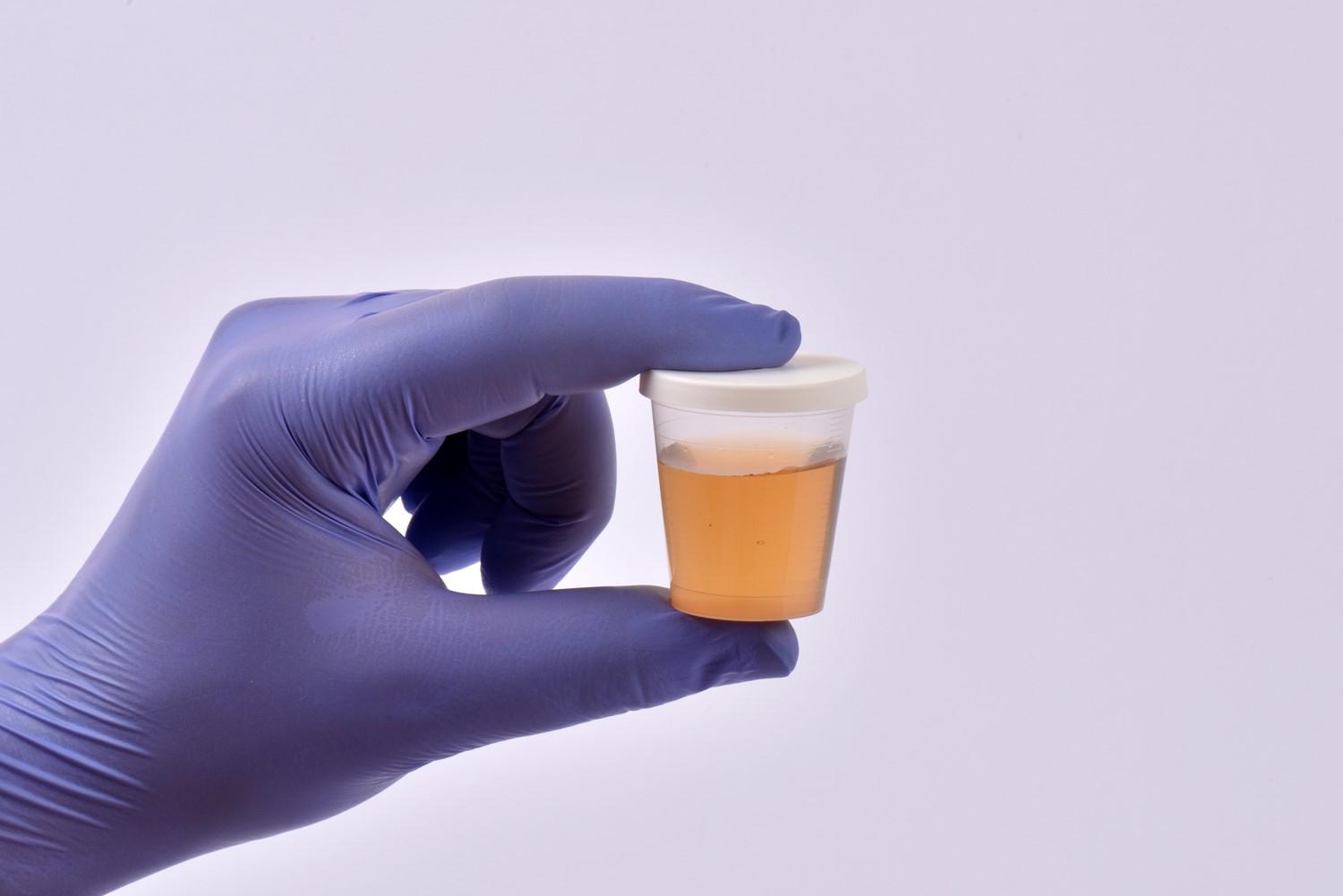
Mellansamling av urinprov
A midstream specimen of urine (MSU or MSSU) is usually tested to look for infection, although in some cases, illness other than infection might be diagnosed based partly on what is seen in an MSU. What is the purpose of a midstream specimen of urine test. To confirm the diagnosis of a urine infection The usual symptoms of a urine infection are.

Patient information leaflet
Glykogenlagringssjukdomar
Glykogenlagringssjukdomar are a group of inherited diseases. They result from a problem with one of the proteins (known as enzymes) involved in the conversion of glucose to glycogen, or the breakdown of glycogen back into glucose. They mostly tend to affect your liver and muscles. Glucose is stored in your muscles and liver as a substance called.

Patient information leaflet
Pagets sjukdom i ben
Paget's disease of bone affects the structure of parts of one or more bones. In most cases it causes no symptoms and does not need treatment. Symptoms develop in some cases and pain in the affected part of bone is the most common symptom. A... There is a slow but constant turnover of bone. What is Paget's disease of bone. Paget's disease of bone.

Patient information leaflet
Vanliga problem med livmoderhalsen
There are many different conditions that can affect the neck of the womb (cervix), ranging from mild inflammation to cervical cancer. Some conditions affecting the cervix are more common than others; some are more serious than others. They can all cause different symptoms, such as abnormal bleeding or discharge from your vagina, or may not cause.

Patient information leaflet
Ehlers-Danlos syndrom
Den Ehlers-Danlos syndromes (EDS) are a group of conditions that affect the stretchiness and strength of supporting tissues in the body, including skin, joints, blood vessels and internal organs. The Ehlers Danlos syndromes (EDS) are a group of conditions which are usually (although not always) inherited from parents. EDS affects connective tissue.

Patient information leaflet
Koarktation av aorta
Koarktation av aorta is a type of congenital heart disease where there is a narrowing in part of the aorta, the main artery that leaves the left side of the heart. Normal heart detail Cross-section diagram of a normal heart PatientPicksPlaceholder Heart - lung circulation heart - lung circulation What is coarctation of the aorta. Congenital.
Vidare läsning och referenser
- Autosomal recessive spastic ataxia of Charlevoix-Saguenay; MedlinePlus, National Library of Medicine.
- Engert JC, Berube P, Mercier J, Dore C, Lepage P, Ge B, Bouchard JP, Mathieu J, Melancon SB, Schalling M, Lander ES, Morgan K, Hudson TJ, Richter A. ARSACS, a spastic ataxia common in northeastern Quebec, is caused by mutations in a new gene encoding an 11.5-kb ORF. Nat Genet. 2000 Feb;24(2):120-5. doi: 10.1038/72769.
- Gagnon C, Desrosiers J, Mathieu J. Autosomal recessive spastic ataxia of Charlevoix-Saguenay: upper extremity aptitudes, functional independence and social participation. Int J Rehabil Res. 2004 Sep;27(3):253-6. doi: 10.1097/00004356-200409000-00013.
- Gagnon C, Lessard I, Lavoie C, Cote I, St-Gelais R, Mathieu J, Brais B. An exploratory natural history of ataxia of Charlevoix-Saguenay: A 2-year follow-up. Neurology. 2018 Oct 2;91(14):e1307-e1311. doi: 10.1212/WNL.0000000000006290. Epub 2018 Aug 29.
- Grieco GS, Malandrini A, Comanducci G, Leuzzi V, Valoppi M, Tessa A, Palmeri S, Benedetti L, Pierallini A, Gambelli S, Federico A, Pierelli F, Bertini E, Casali C, Santorelli FM. Novel SACS mutations in autosomal recessive spastic ataxia of Charlevoix-Saguenay type. Neurology. 2004 Jan 13;62(1):103-6. doi: 10.1212/01.wnl.0000104491.66816.77.
- Ouyang Y, Segers K, Bouquiaux O, Wang FC, Janin N, Andris C, Shimazaki H, Sakoe K, Nakano I, Takiyama Y. Novel SACS mutation in a Belgian family with sacsin-related ataxia. J Neurol Sci. 2008 Jan 15;264(1-2):73-6. doi: 10.1016/j.jns.2007.07.022. Epub 2007 Aug 22.
- Richter AM, Ozgul RK, Poisson VC, Topaloglu H. Private SACS mutations in autosomal recessive spastic ataxia of Charlevoix-Saguenay (ARSACS) families from Turkey. Neurogenetics. 2004 Sep;5(3):165-70. doi: 10.1007/s10048-004-0179-y. Epub 2004 May 20.
- Takiyama Y. Autosomal recessive spastic ataxia of Charlevoix-Saguenay. Neuropathology. 2006 Aug;26(4):368-75. doi: 10.1111/j.1440-1789.2006.00664.x.
- Takiyama Y. Sacsinopathies: sacsin-related ataxia. Cerebellum. 2007;6(4):353-9. doi: 10.1080/14734220701230466. Epub 2007 Feb 28.
- Vogel AP, Rommel N, Oettinger A, Stoll LH, Kraus EM, Gagnon C, Horger M, Krumm P, Timmann D, Storey E, Schols L, Synofzik M. Coordination and timing deficits in speech and swallowing in autosomal recessive spastic ataxia of Charlevoix-Saguenay (ARSACS). J Neurol. 2018 Sep;265(9):2060-2070. doi: 10.1007/s00415-018-8950-4. Epub 2018 Jul 2.
Artikelhistorik
Artikeln finns också på Engelska, Tyska, Spanska, Franska, Italienska, Portugisiska, Hindi, Hebreiska, Arabiska, och Svenska.
3 Apr 2025 | Senaste versionen
1 Apr 2008 | Ursprungligen publicerad
Dela dina tankar eller erfarenheter med andra i vår patientgemenskaper.
Enkel tillgång till pålitliga behandlingar och hälsotjänster online.
Common conditions
Get help with common conditions through the NHS, without a GP appointment.





Anmäl dig till Patientens nyhetsbrev
Din veckovisa dos av tydliga, pålitliga hälsoråd - skrivna för att hjälpa dig känna dig informerad, självsäker och i kontroll.
Genom att prenumerera accepterar du våra Sekretesspolicy. Du kan avsluta prenumerationen när som helst. Vi säljer aldrig dina uppgifter.