Complete plasminogen activator inhibitor 1 deficiency
Senast uppdaterad 18 aug 2020
Uppfyller patientens redaktionella riktlinjer
- Ladda nerLadda ner
- Dela
- Language
- Diskussion
- Ask Patient
- Ljudversion
- Lägg till i föredragna källor på Google
Complete plasminogen activator inhibitor 1 deficiency (complete PAI-1 deficiency) is a disorder that causes abnormal bleeding. In people with this disorder, bleeding associated with injury can be excessive and last longer than usual.
Videoval för Genetiska tillståndVideobibliotek
Beskrivning
Complete plasminogen activator inhibitor 1 deficiency (complete PAI-1 deficiency) is a disorder that causes abnormal bleeding. In people with this disorder, bleeding associated with injury can be excessive and last longer than usual.
Individuals with complete PAI-1 deficiency may experience prolonged nosebleeds, excessive bleeding after medical or dental procedures, easy bruising, and significant bleeding into the joints or soft tissues after even a minor injury. Internal bleeding after an injury, especially bleeding around the brain (intracranial hemorrhage), can be life-threatening. Affected females may have excessive bleeding associated with menstruation (menorrhagia) and abnormal bleeding in pregnancy and childbirth.
In addition to bleeding problems, some people with complete PAI-1 deficiency develop scar tissue in the heart (cardiac fibrosis), which can lead to heart failure.
Inheritance patterns
The source lists the following possible inheritance patterns: Autosomal recessive. More than one pattern can apply in different cases.
Related genes
Other names
Complete PAI-1 deficiency
Congenital plasminogen activator inhibitor type 1 deficiency
Homozygous PAI-1 deficiency
Hyperfibrinolysis due to PAI1 deficiency
PAI-1 deficiency
PAI-1D
PAI1 deficiency
Plasminogen activator inhibitor type 1 deficiency
Plasminogen inhibitor-1 deficiency
Quantitative PAI-1 deficiency
Related patient information and medicines
Patient information leaflet
Gikt
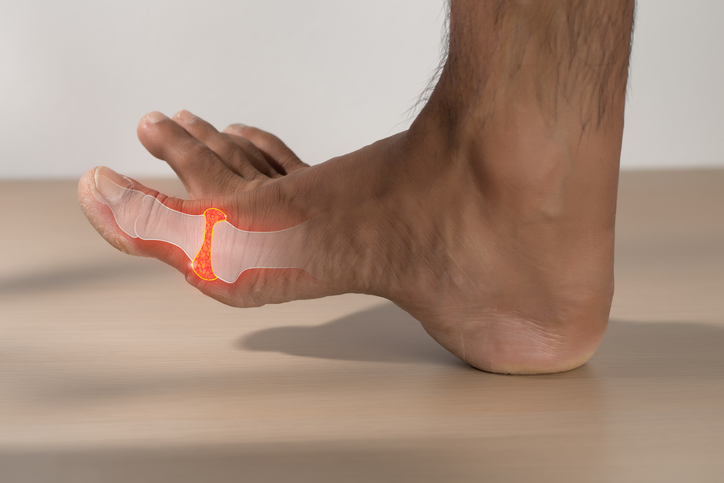
However, in most people with gout, their kidneys do not pass out enough uric acid och den blood level may rise. They are said to be 'under-excreters' of uric acid. Their kidneys usually work otherwise normally. Eating a normal balanced diet should not have much effect on the uric acid level. However, in some people, the build-up of uric acid may.
Patient information leaflet
Leversvikt
Releasing bile, which passes into the gut (bowel) to help break d... How common is liver failure. Acute liver failure is very uncommon: In England , there were 688 liver transplants, 28 in Scotland, 69 in Wales and 24 in Northern Ireland performed in the year April 2021 to April 2022. The number of transplants increased by 11% from the previous.
Patient information leaflet
Vitamin B12-brist och perniciös anemi
What is vitamin B12 deficiency. Vitamin B12 deficiency occurs when a person has insufficient vitamin B12. Vitamin B12, also known as cobalamin, is a vitamin that plays a crucial role in various bodily functions. It’s an essential nutrient that the body needs but cannot produce on its own, so it must be obtained through diet or supplements. Vitamin.

Patient information leaflet
Diabetisk njursjukdom
Diabetisk njursjukdom is a complication that occurs in some people with diabetes. It can progress to kidney failure in some cases. Treatment aims to prevent or delay the progression of the disease. Also, it aims to reduce the risk of developing cardiovascular diseases such as heart attack and stroke which are much more common than average in.

Patient information leaflet
Angioödem
Some people develop angio-oede. Some people develop an urticarial rash and angio-oedema. Some people develop a very severe reaction called anaphylaxis Anaphylaxis. This usually includes an urticarial rash, angio-oedema, and other symptoms. Other symptoms may be dangerous, such as low blood pressure, severe breathing problems, and collapse..

Patient information leaflet
Parkinsons sjukdom
Treatment often provides good relief of symptoms for several... What is Parkinson's disease. Parkinson's disease is a progressive neurological degeneration of certain cells (called dopaminergic cells) within a specific part of the brain (substantia nigra). The deficiency of dopamine leads to a movement disorder with Parkinson's disease symptoms..
Vidare läsning och referenser
- Complete plasminogen activator inhibitor 1 deficiency; MedlinePlus, National Library of Medicine.
- Fay WP, Parker AC, Condrey LR, Shapiro AD. Human plasminogen activator inhibitor-1 (PAI-1) deficiency: characterization of a large kindred with a null mutation in the PAI-1 gene. Blood. 1997 Jul 1;90(1):204-8.
- Flevaris P, Vaughan D. The Role of Plasminogen Activator Inhibitor Type-1 in Fibrosis. Semin Thromb Hemost. 2017 Mar;43(2):169-177. doi: 10.1055/s-0036-1586228. Epub 2016 Aug 24.
- Heiman M, Gupta S, Lewandowska M, Shapiro AD. Complete Plasminogen Activator Inhibitor 1 Deficiency. 2017 Aug 3 [updated 2023 Feb 23]. In: Adam MP, Bick S, Mirzaa GM, Wallace SE, Amemiya A, editors. GeneReviews(R) [Internet]. Seattle (WA): University of Washington, Seattle; 1993-2026. Available from http://www.ncbi.nlm.nih.gov/books/NBK447152/
- Heiman M, Gupta S, Shapiro AD. The obstetric, gynaecological and fertility implications of homozygous PAI-1 deficiency: single-centre experience. Haemophilia. 2014 May;20(3):407-12. doi: 10.1111/hae.12313. Epub 2013 Nov 22.
- Jankun J, Skrzypczak-Jankun E. Plasminogen activator inhibitor with very long half-life (VLHL PAI-1) can reduce bleeding in PAI-1-deficient patients. Cardiovasc Hematol Disord Drug Targets. 2013 Aug;13(2):144-50. doi: 10.2174/1871529x11313020007.
- Mehta R, Shapiro AD. Plasminogen activator inhibitor type 1 deficiency. Haemophilia. 2008 Nov;14(6):1255-60. doi: 10.1111/j.1365-2516.2008.01834.x.
- Minowa H, Takahashi Y, Tanaka T, Naganuma K, Ida S, Maki I, Yoshioka A. Four cases of bleeding diathesis in children due to congenital plasminogen activator inhibitor-1 deficiency. Haemostasis. 1999;29(5):286-91. doi: 10.1159/000022514.
- Takahashi Y, Tanaka T, Minowa H, Ookubo Y, Sugimoto M, Nakajima M, Miyauchi Y, Yoshioka A. Hereditary partial deficiency of plasminogen activator inhibitor-1 associated with a lifelong bleeding tendency. Int J Hematol. 1996 Jul;64(1):61-8. doi: 10.1016/0925-5710(96)00460-4.
- Yasar Yildiz S, Kuru P, Toksoy Oner E, Agirbasli M. Functional stability of plasminogen activator inhibitor-1. ScientificWorldJournal. 2014;2014:858293. doi: 10.1155/2014/858293. Epub 2014 Oct 15.
- Zhang ZY, Wang ZY, Dong NZ, Bai X, Zhang W, Ruan CG. A case of deficiency of plasma plasminogen activator inhibitor-1 related to Ala15Thr mutation in its signal peptide. Blood Coagul Fibrinolysis. 2005 Jan;16(1):79-84. doi: 10.1097/00001721-200501000-00013.
Artikelhistorik
Artikeln finns också på Engelska, Tyska, Spanska, Franska, Italienska, Portugisiska, Hindi, Hebreiska, Arabiska, och Svenska.
18 aug 2020 | Senaste versionen
1 Oct 2017 | Ursprungligen publicerad
Dela dina tankar eller erfarenheter med andra i vår patientgemenskaper.
Enkel tillgång till pålitliga behandlingar och hälsotjänster online.
Common conditions
Get help with common conditions through the NHS, without a GP appointment.





Anmäl dig till Patientens nyhetsbrev
Din veckovisa dos av tydliga, pålitliga hälsoråd - skrivna för att hjälpa dig känna dig informerad, självsäker och i kontroll.
Genom att prenumerera accepterar du våra Sekretesspolicy. Du kan avsluta prenumerationen när som helst. Vi säljer aldrig dina uppgifter.