Distal hereditary motor neuropathy, type II
Senast uppdaterad 4 mars 2025
Uppfyller patientens redaktionella riktlinjer
- Ladda nerLadda ner
- Dela
- Language
- Diskussion
- Ask Patient
- Ljudversion
- Lägg till i föredragna källor på Google
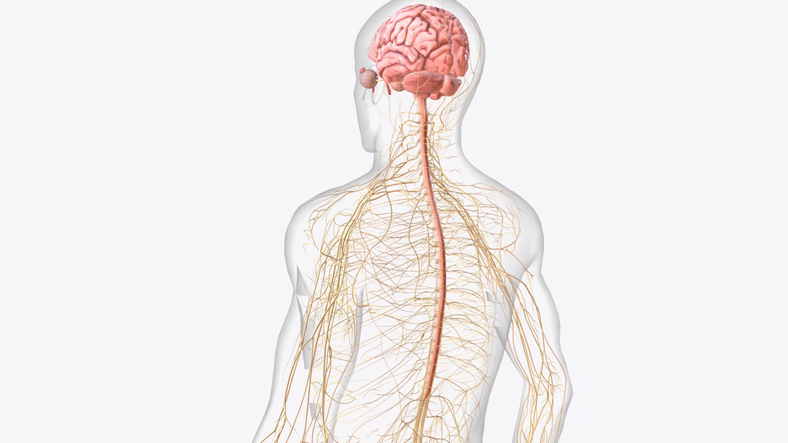
Distal hereditary motor neuropathy, type II is a progressive disorder that affects nerve cells (neurons) in the brain and spinal cord. This condition specifically affects motor neurons, which are specialized cells that control muscle movement. Damage to motor neurons results in muscle weakness that worsens over time. Distal hereditary motor neuropathy, type II weakness primarily affects movement in the legs.
Beskrivning
Distal hereditary motor neuropathy, type II is a progressive disorder that affects nerve cells (neurons) in the brain and spinal cord. This condition specifically affects motor neurons, which are specialized cells that control muscle movement. Damage to motor neurons results in muscle weakness that worsens over time. Distal hereditary motor neuropathy, type II weakness primarily affects movement in the legs.
The signs and symptoms of distal hereditary motor neuropathy, type II often begin in adolescence to mid-adulthood. The initial symptoms of the disorder are cramps or weakness in the muscles of the big toe and, later, the entire foot. During the next 5 to 10 years, affected individuals experience a gradual loss of muscle tissue (atrophy) in the lower legs, which can lead to problems with walking (gait disturbance) and high arches (pes cavus). Over time, the lower legs may become paralyzed. The thigh muscles may also undergo muscle atrophy, although this generally occurs later and is less severe than the muscle atrophy in the lower legs.
Some individuals with distal hereditary motor neuropathy, type II can also experience weaken the muscles in the hands and forearms. This weakening is less severe than the weakening in the lower limbs and does not usually lead to paralysis. In rare cases, affected individuals experience hearing loss.
People with distal hereditary motor neuropathy, type II can have exaggerated reflexes (hyperreflexia) or other minor disturbances in the nerves used to detect sensations (sensory neuropathy). Sensory neuropathy is uncommon in people with distal hereditary motor neuropathy, type II and is typically a feature of a disorder calledCharcot-Marie-Tooth disease. These two disorders have overlapping features and can also share a genetic
Inheritance patterns
The source lists the following possible inheritance patterns: Autosomal dominant. More than one pattern can apply in different cases.
Related genes
Other names
Distal hereditary motor neuronopathy, type II
HMN II
HMN2
HMND2
Related patient information and medicines

Patient information leaflet
Perifer neuropati
Peripheral neuropathy means damage to one or more of your peripheral nerves. There are many different conditions that can lead to peripheral neuropathy. If not treated, the symptoms then gradually start to move towards the centre of your body as the neuropathy worsens. If motor nerves are damaged, this is known as motor neuropathy. If autonomic.

Patient information leaflet
Muskeldystrofi
There are different types of muscular dystrophy, which vary as to how severe they are, ranging from very mild to severe. ...lar dystrophy muscle weakness in types of dystrophy muscle weakness in types of dystrophy Duchenne muscular dystrophy (DMD) Duchenne muscular dystrophy (DMD) is the most common and most severe type av MDIn the US, a gene.

Patient information leaflet
Palliativ vård
End of life care is a term used to cover the issues you need to think about and plan for, when you are approaching death. In September 2021 the National Institute for Health and Care Excellence (NICE) issued new quality standards about what everyone should be able to expect from end of life care. This ... For example, a person who is told they.

Patient information leaflet
Glykogenlagringssjukdomar
Glykogenlagringssjukdomar are a group of inherited diseases. They result from a problem with one of the proteins (known as enzymes) involved in the conversion of glucose to glycogen, or the breakdown of glycogen back into glucose. They mostly tend to affect your liver and muscles. Most people with a glycogen storage disorder respond well to.

Patient information leaflet
Fotfall
Foot drop, which is also sometimes called a dropped foot, is a condition in which it is difficult to lift up the front part of the foot. As a result the forefoot and toes tend to catch or drag on the floor when walking. Cauda equina syndro... (This is compression of the nerves in the tail of the spinal cord, usually caused by a 'slipped' disc or.
Patient information leaflet
Motorneuronsjukdom
Motor neurone disease (MND) is a neurological condition causes a progressive weakness och wasting of many of the muscles in the body. There are various types of motor neurone disease. This leaflet is mainly about amyotrophic lateral sclerosis (ALS), which is the most common type of motor neurone disease. Although there is no cure for motor neurone.
Vidare läsning och referenser
- Distal hereditary motor neuropathy, type II; MedlinePlus, National Library of Medicine.
- Benquey T, Pion E, Cossee M, Krahn M, Stojkovic T, Perrin A, Cerino M, Molon A, Lia AS, Magdelaine C, Francou B, Guiochon-Mantel A, Malinge MC, Leguern E, Levy N, Attarian S, Latour P, Bonello-Palot N. A National French Consensus on Gene List for the Diagnosis of Charcot-Marie-Tooth Disease and Related Disorders Using Next-Generation Sequencing. Genes (Basel). 2022 Feb 9;13(2):318. doi: 10.3390/genes13020318.
- Frasquet M, Rojas-Garcia R, Argente-Escrig H, Vazquez-Costa JF, Muelas N, Vilchez JJ, Sivera R, Millet E, Barreiro M, Diaz-Manera J, Turon-Sans J, Cortes-Vicente E, Querol L, Ramirez-Jimenez L, Martinez-Rubio D, Sanchez-Monteagudo A, Espinos C, Sevilla T, Lupo V. Distal hereditary motor neuropathies: Mutation spectrum and genotype-phenotype correlation. Eur J Neurol. 2021 Apr;28(4):1334-1343. doi: 10.1111/ene.14700. Epub 2021 Jan 10.
- Hu Z, Chen L, Zhang J, Li T, Tang J, Xu N, Wang X. Structure, function, property, and role in neurologic diseases and other diseases of the sHsp22. J Neurosci Res. 2007 Aug 1;85(10):2071-9. doi: 10.1002/jnr.21231.
- Irobi J, Van Impe K, Seeman P, Jordanova A, Dierick I, Verpoorten N, Michalik A, De Vriendt E, Jacobs A, Van Gerwen V, Vennekens K, Mazanec R, Tournev I, Hilton-Jones D, Talbot K, Kremensky I, Van Den Bosch L, Robberecht W, Van Vandekerckhove J, Van Broeckhoven C, Gettemans J, De Jonghe P, Timmerman V. Hot-spot residue in small heat-shock protein 22 causes distal motor neuropathy. Nat Genet. 2004 Jun;36(6):597-601. doi: 10.1038/ng1328. Epub 2004 May 2.
- Shen X, Zhang J, Zhan F, Tian W, Jiang Q, Luan X, Zhang X, Cao L. Heterogeneous Clinical Phenotypes of dHMN Caused by Mutation in HSPB1 Gene: A Case Series. Biomolecules. 2022 Sep 27;12(10):1382. doi: 10.3390/biom12101382.
- Tazir M, Nouioua S. Distal hereditary motor neuropathies. Rev Neurol (Paris). 2024 Dec;180(10):1031-1036. doi: 10.1016/j.neurol.2023.09.005. Epub 2024 May 3.
- Tedesco B, Cristofani R, Ferrari V, Cozzi M, Rusmini P, Casarotto E, Chierichetti M, Mina F, Galbiati M, Piccolella M, Crippa V, Poletti A. Insights on Human Small Heat Shock Proteins and Their Alterations in Diseases. Front Mol Biosci. 2022 Feb 25;9:842149. doi: 10.3389/fmolb.2022.842149. eCollection 2022.
- Xie Y, Lin Z, Pakhrin PS, Li X, Wang B, Liu L, Huang S, Zhao H, Cao W, Hu Z, Guo J, Shen L, Tang B, Zhang R. Genetic and Clinical Features in 24 Chinese Distal Hereditary Motor Neuropathy Families. Front Neurol. 2020 Dec 14;11:603003. doi: 10.3389/fneur.2020.603003. eCollection 2020.
Artikelhistorik
Artikeln finns också på Engelska, Tyska, Spanska, Franska, Italienska, Portugisiska, Hindi, Hebreiska, Arabiska, och Svenska.
4 mars 2025 | Senaste versionen
1 Mar 2025 | Ursprungligen publicerad
Dela dina tankar eller erfarenheter med andra i vår patientgemenskaper.
Enkel tillgång till pålitliga behandlingar och hälsotjänster online.
Common conditions
Get help with common conditions through the NHS, without a GP appointment.





Anmäl dig till Patientens nyhetsbrev
Din veckovisa dos av tydliga, pålitliga hälsoråd - skrivna för att hjälpa dig känna dig informerad, självsäker och i kontroll.
Genom att prenumerera accepterar du våra Sekretesspolicy. Du kan avsluta prenumerationen när som helst. Vi säljer aldrig dina uppgifter.