Ornithine transcarbamylase deficiency
Senast uppdaterad 11 Sept 2020
Uppfyller patientens redaktionella riktlinjer
- Ladda nerLadda ner
- Dela
- Language
- Diskussion
- Ask Patient
- Ljudversion
- Lägg till i föredragna källor på Google
Ornithine transcarbamylase deficiency is an inherited disorder that causes ammonia to accumulate in the blood. Ammonia, which is formed when proteins are broken down in the body, is toxic if the levels become too high. The nervous system is especially sensitive to the effects of excess ammonia.
Videoval för Genetiska tillståndVideobibliotek
Beskrivning
Ornithine transcarbamylase deficiency is an inherited disorder that causes ammonia to accumulate in the blood. Ammonia, which is formed when proteins are broken down in the body, is toxic if the levels become too high. The nervous system is especially sensitive to the effects of excess ammonia.
Ornithine transcarbamylase deficiency can become evident at any age. The most severe form occurs in the first few days of life. This neonatal-onset form of the disorder usually affects males; it is very rare in females. An infant with the neonatal-onset form of ornithine transcarbamylase deficiency may be lacking in energy (lethargic) or unwilling to eat, and have a poorly-controlled breathing rate or body temperature. Infants with this disorder may be described as "floppy" and can experience seizures or coma. Complications from ornithine transcarbamylase deficiency may include developmental delay and intellectual disability. Progressive liver damage may also occur.
In some affected individuals, signs and symptoms of ornithine transcarbamylase deficiency may be less severe, and may not appear until later in life. The late-onset form of the disorder occurs in both males and females. People with late-onset ornithine transcarbamylase deficiency may experience episodes of altered mental status, such as delirium, erratic behaviour, or a reduced level of consciousness. Headaches, vomiting, aversion to protein foods, and seizures can also occur in this form of the disorder.
Inheritance patterns
The source lists the following possible inheritance patterns: X-linked recessive. More than one pattern can apply in different cases.
Related genes
Other names
Ornithine Carbamoyltransferase Deficiency Disease
Related patient information and medicines

Patient information leaflet
Gastrointestinal malabsorption
Gastrointestinal malabsorption syndrome means a failure to fully absorb digested foods from the gut (bowel) into your body. There are many different causes. Prolonged intestinal malabsorption may cause problems because of a lack of carbohydrates, proteins, fats, minerals and vitamins that are essential to keep you healthy. The treatment will.

Patient information leaflet
Anemi
Anemi means that you have fewer red blood cells than normal or you have less haemoglobin than normal in each red blood cell. In either case, a reduced amount of oxygen is carried around in the bloodstream. Anaemia types and causes Iron-deficiency anaemia Lack of iron is the most common type of anaemia in the UK. This is called iron-deficiency.
Patient information leaflet
Zinkbrist, överskott och tillskott
As well as many chemical reactions in our bodies, zink is needed for: Our immune systems to work well to fight off infection. Healing of wounds. Growing. Building the proteins and molecules which are the basis of all our cells. Taste, smell and good vision. What are the causes of zinc deficiency. A poor diet Zinc deficiency is more common in.
Patient information leaflet
Makrocytos och makrocytär anemi
Macrocytosis refers to red blood cells which are larger than normal. It does not cause any symptoms in itself. Macrocytosis symptoms You may also find relevant information in our other separate leaflet called What is blood. What is blood. Macrocytosis can exist without anaemia. Macrocytosis itself does not cause any symptoms but can be a sign of.
Patient information leaflet
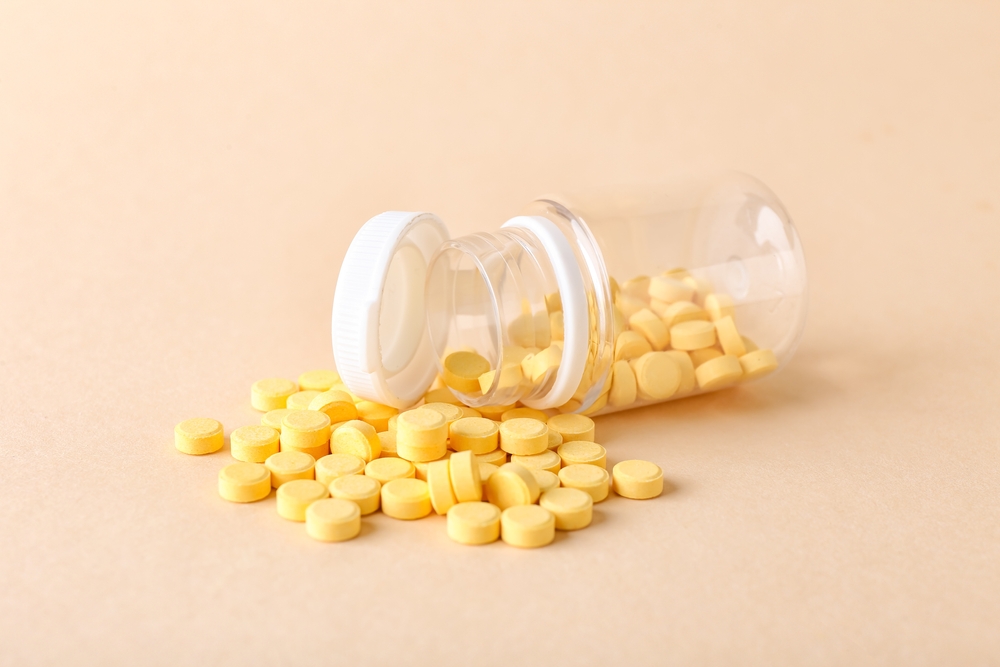
Folsyrebrist
A normal balanced diet contains enough folic acid. However, a folic acid deficiency may cause anaemia and sometimes other symptoms. What is folic acid deficiency. Folic acid deficiency is a lack of folic acid in the blood. Folic acid (also known as folate) is a B vitamin and is needed to make new cells in your body, including red blood cells. Your.

Patient information leaflet
Kan jag ta svart cohosh och folsyra tillsammans?
Black cohosh is primarily broken down by liver enzymes (specifically the CYP450 system), while folsyra is a water-soluble B vitamin that follows a separate metabolic route. They do not interfere with each other's a... Using other medicines Taking multiple medicines. Our Interaktionskontroll för läkemedel helps you check whether your prescriptions,.
Vidare läsning och referenser
- Ornithine transcarbamylase deficiency; MedlinePlus, National Library of Medicine.
- Brassier A, Gobin S, Arnoux JB, Valayannopoulos V, Habarou F, Kossorotoff M, Servais A, Barbier V, Dubois S, Touati G, Barouki R, Lesage F, Dupic L, Bonnefont JP, Ottolenghi C, De Lonlay P. Long-term outcomes in Ornithine Transcarbamylase deficiency: a series of 90 patients. Orphanet J Rare Dis. 2015 May 10;10:58. doi: 10.1186/s13023-015-0266-1.
- Caldovic L, Abdikarim I, Narain S, Tuchman M, Morizono H. Genotype-Phenotype Correlations in Ornithine Transcarbamylase Deficiency: A Mutation Update. J Genet Genomics. 2015 May 20;42(5):181-94. doi: 10.1016/j.jgg.2015.04.003. Epub 2015 May 19.
- Choi JH, Lee BH, Kim JH, Kim GH, Kim YM, Cho J, Cheon CK, Ko JM, Lee JH, Yoo HW. Clinical outcomes and the mutation spectrum of the OTC gene in patients with ornithine transcarbamylase deficiency. J Hum Genet. 2015 Sep;60(9):501-7. doi: 10.1038/jhg.2015.54.
- Helman G, Pacheco-Colon I, Gropman AL. The urea cycle disorders. Semin Neurol. 2014 Jul;34(3):341-9. doi: 10.1055/s-0034-1386771. Epub 2014 Sep 5.
- Simpson KL, MacLeod EL, Kakajiwala A, Gropman AL, Ah Mew N. Urea Cycle Disorders Overview. 2003 Apr 29 [updated 2025 Jul 3]. In: Adam MP, Bick S, Mirzaa GM, Wallace SE, Amemiya A, editors. GeneReviews(R) [Internet]. Seattle (WA): University of Washington, Seattle; 1993-2026. Available from http://www.ncbi.nlm.nih.gov/books/NBK1217/
Artikelhistorik
Artikeln finns också på Engelska, Tyska, Spanska, Franska, Italienska, Portugisiska, Hindi, Hebreiska, Arabiska, och Svenska.
11 Sept 2020 | Senaste versionen
1 Oct 2017 | Ursprungligen publicerad
Dela dina tankar eller erfarenheter med andra i vår patientgemenskaper.
Enkel tillgång till pålitliga behandlingar och hälsotjänster online.
Common conditions
Get help with common conditions through the NHS, without a GP appointment.





Anmäl dig till Patientens nyhetsbrev
Din veckovisa dos av tydliga, pålitliga hälsoråd - skrivna för att hjälpa dig känna dig informerad, självsäker och i kontroll.
Genom att prenumerera accepterar du våra Sekretesspolicy. Du kan avsluta prenumerationen när som helst. Vi säljer aldrig dina uppgifter.