neutrophil cytosolic factor 1
Senast uppdaterad 17 apr 2023
Uppfyller patientens redaktionella riktlinjer
- Ladda nerLadda ner
- Dela
- Language
- Diskussion
- Ljudversion
- Lägg till i föredragna källor på Google
The NCF1 gene provides instructions for making a protein called neutrophil cytosolic factor 1 (also known as p47-phox). This protein is one part (subunit) of a group of proteins that forms an enzyme complex called NADPH oxidase (NOX), which plays an essential role in the immune system. NOX is primarily active in immune system cells called phagocytes. These cells catch and destroy foreign invaders such as bacteria and fungi. NOX is also thought to regulate the activity of immune cells called neutrophils. These cells play a role in adjusting the inflammatory response to optimize healing and reduce injury to the body.
Normal function
The NCF1 gene provides instructions for making a protein called neutrophil cytosolic factor 1 (also known as p47-phox). This protein is one part (subunit) of a group of proteins that forms an enzyme complex called NADPH oxidase (NOX), which plays an essential role in the immune system. NOX is primarily active in immune system cells called phagocytes. These cells catch and destroy foreign invaders such as bacteria and fungi. NOX is also thought to regulate the activity of immune cells called neutrophils. These cells play a role in adjusting the inflammatory response to optimize healing and reduce injury to the body.
The presence of foreign invaders stimulates phagocytes and triggers the assembly of NOX. This enzyme participates in a chemical reaction that converts oxygen to a toxic molecule called superoxide. Superoxide is used to generate several other compounds, including hydrogen peroxide (a strong disinfectant) and hypochlorous acid (the active ingredient in bleach). These highly reactive, toxic substances are known as reactive oxygen species (ROS). Phagocytes use these substances to kill foreign invaders, preventing them from reproducing in the body and causing illness.
NOX plays a role in other cell types as well, such as blood vessel cells. Abnormal blood flow in blood vessels can trigger these cells to make more NOX, which stimulates the production of ROS. These compounds can influence blood pressure and other biological processes.
Conditions referring to this gene or chromosome
Other names
NCF1_HUMAN
p47-phox
p47phox
SH3PXD1A
Related patient information and medicines
Patient information leaflet
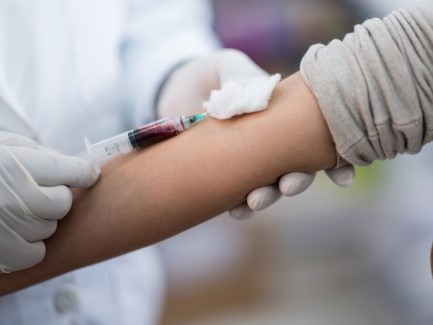
Blodprov
Millions of red blood cells are made each day. Red cells contain a chemical called haemoglobin. This binds to oxygen and takes oxygen from the lungs to all parts of the body. White cells (leukocytes) There are different types of white cells which are called neutrophils (polymorphs), lymphocytes, eosinophils, monocytes and basophils. They are part.
Patient information leaflet
Polycythaemia rubra vera
This binds to oxyge... White cells (leukocytes). There are different types of white cells, which are called neutrophils (polymorphs), lymphocytes, eosinophils, monocytes and basophils. They are part of the immune system. Their main role is to defend the body against infection. What is polycythaemia rubra vera. Polycythaemia rubra vera (PRV) is a.

Patient information leaflet
Immunsystemet
This leaflet gives a brief overview of the immune system and how it works. A person with a weak immune system might have difficulty fighting off infections. In autoimmun... If pathogens manage to get through these barriers, they encounter special white blood cells present in your bloodstream. There are different types of white cells, called.

Patient information leaflet
Kronisk myeloisk leukemi
Kronisk myeloisk leukemi (KML) is sometimes called chronic myelogenous leukaemia, chronic granulocytic leukaemia, eller chronic myelocytic leukaemia. What is chronic myeloid leukaemia. CML develo... The abnormal stem cell multiplies and the cells that are made from the abnormal stem cells mature and develop into near-normal white cells - mainly.
Patient information leaflet
Barndomsleukemier
One drop of blood contains about five million re... Red cells contain a chemical called haemoglobin. This binds to oxygen and takes oxygen from the lungs to all parts of the body. White cells (leukocytes). There are different types of white cells, which are called neutrophils (polymorphs), lymphocytes, eosinophils, monocytes and basophils. They.

Patient information leaflet
Blodproppstester
Blodproppstester are used to diagnose and assess bleeding problems and to monitor people who take warfarin or other anticoagulant medicines. You may be advised to have blood clotting tests: If you have a suspected bleeding disorder. For example, if you bleed a lot after cuts, or if you bruise easily. If you have certain liver diseases that can.
Vidare läsning och referenser
- neutrophil cytosolic factor 1; MedlinePlus, National Library of Medicine.
- Babior BM, Lambeth JD, Nauseef W. The neutrophil NADPH oxidase. Arch Biochem Biophys. 2002 Jan 15;397(2):342-4. doi: 10.1006/abbi.2001.2642.
- Chanock SJ, Roesler J, Zhan S, Hopkins P, Lee P, Barrett DT, Christensen BL, Curnutte JT, Gorlach A. Genomic structure of the human p47-phox (NCF1) gene. Blood Cells Mol Dis. 2000 Feb;26(1):37-46. doi: 10.1006/bcmd.2000.0274.
- Del Campo M, Antonell A, Magano LF, Munoz FJ, Flores R, Bayes M, Perez Jurado LA. Hemizygosity at the NCF1 gene in patients with Williams-Beuren syndrome decreases their risk of hypertension. Am J Hum Genet. 2006 Apr;78(4):533-42. doi: 10.1086/501073. Epub 2006 Jan 31.
- Jurkowska M, Bernatowska E, Bal J. Genetic and biochemical background of chronic granulomatous disease. Arch Immunol Ther Exp (Warsz). 2004 Mar-Apr;52(2):113-20.
- Kannengiesser C, Gerard B, El Benna J, Henri D, Kroviarski Y, Chollet-Martin S, Gougerot-Pocidalo MA, Elbim C, Grandchamp B. Molecular epidemiology of chronic granulomatous disease in a series of 80 kindreds: identification of 31 novel mutations. Hum Mutat. 2008 Sep;29(9):E132-49. doi: 10.1002/humu.20820.
- Lassegue B, Griendling KK. NADPH oxidases: functions and pathologies in the vasculature. Arterioscler Thromb Vasc Biol. 2010 Apr;30(4):653-61. doi: 10.1161/ATVBAHA.108.181610. Epub 2009 Nov 12.
- Roesler J, Curnutte JT, Rae J, Barrett D, Patino P, Chanock SJ, Goerlach A. Recombination events between the p47-phox gene and its highly homologous pseudogenes are the main cause of autosomal recessive chronic granulomatous disease. Blood. 2000 Mar 15;95(6):2150-6.
- Roos D, de Boer M, Koker MY, Dekker J, Singh-Gupta V, Ahlin A, Palmblad J, Sanal O, Kurenko-Deptuch M, Jolles S, Wolach B. Chronic granulomatous disease caused by mutations other than the common GT deletion in NCF1, the gene encoding the p47phox component of the phagocyte NADPH oxidase. Hum Mutat. 2006 Dec;27(12):1218-29. doi: 10.1002/humu.20413.
- Roos D, Kuhns DB, Maddalena A, Bustamante J, Kannengiesser C, de Boer M, van Leeuwen K, Koker MY, Wolach B, Roesler J, Malech HL, Holland SM, Gallin JI, Stasia MJ. Hematologically important mutations: the autosomal recessive forms of chronic granulomatous disease (second update). Blood Cells Mol Dis. 2010 Apr 15;44(4):291-9. doi: 10.1016/j.bcmd.2010.01.009. Epub 2010 Feb 18.
- Stasia MJ, Li XJ. Genetics and immunopathology of chronic granulomatous disease. Semin Immunopathol. 2008 Jul;30(3):209-35. doi: 10.1007/s00281-008-0121-8. Epub 2008 May 29.
- Sumimoto H. Structure, regulation and evolution of Nox-family NADPH oxidases that produce reactive oxygen species. FEBS J. 2008 Jul;275(13):3249-77. doi: 10.1111/j.1742-4658.2008.06488.x. Epub 2008 May 30.
- Vazquez N, Lehrnbecher T, Chen R, Christensen BL, Gallin JI, Malech H, Holland S, Zhu S, Chanock SJ. Mutational analysis of patients with p47-phox-deficient chronic granulomatous disease: The significance of recombination events between the p47-phox gene (NCF1) and its highly homologous pseudogenes. Exp Hematol. 2001 Feb;29(2):234-43. doi: 10.1016/s0301-472x(00)00646-9.
Artikelhistorik
Artikeln finns också på Engelska, Tyska, Spanska, Franska, Italienska, Portugisiska, Hindi, Hebreiska, Arabiska, och Svenska.
17 apr 2023 | Senaste versionen
1 Aug 2012 | Ursprungligen publicerad
Delta i konversationen
Dela dina tankar eller erfarenheter med andra i vår patientgemenskaper.

Fråga, dela, anslut.
Bläddra i diskussioner, ställ frågor och dela erfarenheter inom hundratals hälsorelaterade ämnen.
Anmäl dig till Patientens nyhetsbrev
Din veckovisa dos av tydliga, pålitliga hälsoråd - skrivna för att hjälpa dig känna dig informerad, självsäker och i kontroll.
Genom att prenumerera accepterar du våra Sekretesspolicy. Du kan avsluta prenumerationen när som helst. Vi säljer aldrig dina uppgifter.