NFU1 iron-sulfur cluster scaffold
Senast uppdaterad 18 aug 2020
Uppfyller patientens redaktionella riktlinjer
- Ladda nerLadda ner
- Dela
- Language
- Diskussion
- Ask Patient
- Ljudversion
- Lägg till i föredragna källor på Google
Den NFU1 gene provides instructions for making a protein involved in the formation of molecules called iron-sulfur (Fe-S) clusters. These clusters are attached to certain other proteins and are required for their proper function.
Normal function
Den NFU1 gene provides instructions for making a protein involved in the formation of molecules called iron-sulfur (Fe-S) clusters. These clusters are attached to certain other proteins and are required for their proper function.
Two versions (isoforms) of the NFU-1 protein are produced from the NFU1 gene. One version is found in cellular structures called mitochondria. Mitochondria are the energy-producing centers of cells. In these structures, several proteins carry out a series of chemical steps to convert the energy in food into a form that cells can use. Many of the proteins involved in this process require Fe-S clusters to function, including protein complexes called complex I, complex II, and complex III.
Fe-S clusters are also required for another mitochondrial protein to function; this protein is involved in the modification of additional proteins that aid in energy production in mitochondria, including the pyruvate dehydrogenase complex and the alpha-ketoglutarate dehydrogenase complex. This modification is also critical to the function of the glycine cleavage system, a set of proteins that breaks down a protein building block (amino acid) called glycine when levels become too high.
The other version of the NFU-1 protein is found in the fluid-filled space inside the cell (the cytoplasm). While this protein is likely involved in Fe-S cluster formation in the cytoplasm, the role of this isoform is not well understood.
Conditions referring to this gene or chromosome
Other names
CGI-33
HIRA-interacting protein 5
HIRIP
HIRIP5
iron-sulfur cluster scaffold protein
MMDS1
Nfu
NFU1 iron-sulfur cluster scaffold homolog, mitochondrial
NFU1 iron-sulfur cluster scaffold homolog, mitochondrial isoform 1
NFU1 iron-sulfur cluster scaffold homolog, mitochondrial isoform 2
NFU1 iron-sulfur cluster scaffold homolog, mitochondrial isoform 3
NFU1_HUMAN
NifU
NifU-like C-terminal domain containing
NIFUC
Related patient information and medicines
Patient information leaflet
Kan jag ta Lion's mane och Matcha tillsammans?
It is best to drink matcha between meals rather than with them if you... Using other medicines Taking multiple medicines. Our Medicines Interaction Checker helps you check whether your prescriptions, over-the-counter medicines, and supplements are safe to take together. Simply search for your medicines to see potential interactions and what to do.
Patient information leaflet
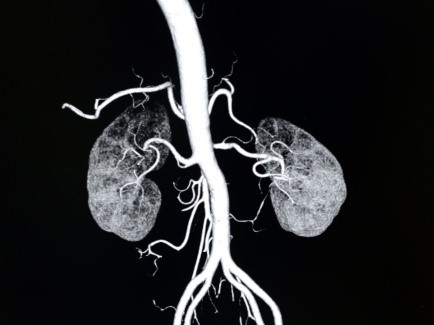
Glomerulonefrit
The glomeruli become damaged, commonly because of a problem with the body's immune system. Many people with glomerulonephritis may not notice any symptoms initially. However, salt and excess fluid can build up in the body if the glomeruli and kidneys are not working normally. This can lead to complications such as high blood pressure and, in some.
Patient information leaflet
Restless legs-syndrom
No treatment may be needed if symptom... Medication can ease symptoms if the condition is distressing. What is restless legs syndrome. Restless legs syndrome (RLS) is sometimes called Willis-Ekbom disease after the doctors who first described it. It is a condition where you have an urge to move your legs. This is usually caused by an uncomfortable.

Patient information leaflet
Trötthet
Tiredness, or fatigue, means having less energi than usual. People feel exhausted - mentally, physically or both. Tiredness is a normal part of life and more significant at particular times of life, such as having a young family, but if it persists it may warrant some investigations to check for an underlying medical problem. Everyone experiences.
Patient information leaflet
Ménières sjukdom
It causes problems with balance and hearing. Ménières sjukdom is named after a French doctor called Prosper Ménière who first described the disease in the 1860s. About 1 in a 1,000 people develop Ménière's disease. It can affect anyone at any age but it most commonly begins between the ages of 40 and 60. Generally, this condition starts in one.

Patient information leaflet
Anemi
Anemi means that you have fewer red blood cells than normal or you have less haemoglobin than normal in each red blood cell. In either case, a reduced amount of oxygen is carried around in the bloodstream. Anaemia types and causes Iron-deficiency anaemia Lack of iron is the most common type of anaemia in the UK. This is called iron-deficiency.
Vidare läsning och referenser
- NFU1 iron-sulfur cluster scaffold; MedlinePlus, National Library of Medicine.
- Cameron JM, Janer A, Levandovskiy V, Mackay N, Rouault TA, Tong WH, Ogilvie I, Shoubridge EA, Robinson BH. Mutations in iron-sulfur cluster scaffold genes NFU1 and BOLA3 cause a fatal deficiency of multiple respiratory chain and 2-oxoacid dehydrogenase enzymes. Am J Hum Genet. 2011 Oct 7;89(4):486-95. doi: 10.1016/j.ajhg.2011.08.011. Epub 2011 Sep 22.
- Invernizzi F, Ardissone A, Lamantea E, Garavaglia B, Zeviani M, Farina L, Ghezzi D, Moroni I. Cavitating leukoencephalopathy with multiple mitochondrial dysfunction syndrome and NFU1 mutations. Front Genet. 2014 Nov 20;5:412. doi: 10.3389/fgene.2014.00412. eCollection 2014.
- Mayr JA, Feichtinger RG, Tort F, Ribes A, Sperl W. Lipoic acid biosynthesis defects. J Inherit Metab Dis. 2014 Jul;37(4):553-63. doi: 10.1007/s10545-014-9705-8. Epub 2014 Apr 29.
- Navarro-Sastre A, Tort F, Stehling O, Uzarska MA, Arranz JA, Del Toro M, Labayru MT, Landa J, Font A, Garcia-Villoria J, Merinero B, Ugarte M, Gutierrez-Solana LG, Campistol J, Garcia-Cazorla A, Vaquerizo J, Riudor E, Briones P, Elpeleg O, Ribes A, Lill R. A fatal mitochondrial disease is associated with defective NFU1 function in the maturation of a subset of mitochondrial Fe-S proteins. Am J Hum Genet. 2011 Nov 11;89(5):656-67. doi: 10.1016/j.ajhg.2011.10.005.
- Rouault TA. Biogenesis of iron-sulfur clusters in mammalian cells: new insights and relevance to human disease. Dis Model Mech. 2012 Mar;5(2):155-64. doi: 10.1242/dmm.009019.
- Wachnowsky C, Wesley NA, Fidai I, Cowan JA. Understanding the Molecular Basis of Multiple Mitochondrial Dysfunctions Syndrome 1 (MMDS1)-Impact of a Disease-Causing Gly208Cys Substitution on Structure and Activity of NFU1 in the Fe/S Cluster Biosynthetic Pathway. J Mol Biol. 2017 Mar 24;429(6):790-807. doi: 10.1016/j.jmb.2017.01.021. Epub 2017 Feb 1.
Artikelhistorik
Artikeln finns också på Engelska, Tyska, Spanska, Franska, Italienska, Portugisiska, Hindi, Hebreiska, Arabiska, och Svenska.
18 aug 2020 | Senaste versionen
1 May 2015 | Ursprungligen publicerad
Dela dina tankar eller erfarenheter med andra i vår patientgemenskaper.
Enkel tillgång till pålitliga behandlingar och hälsotjänster online.
Common conditions
Get help with common conditions through the NHS, without a GP appointment.





Anmäl dig till Patientens nyhetsbrev
Din veckovisa dos av tydliga, pålitliga hälsoråd - skrivna för att hjälpa dig känna dig informerad, självsäker och i kontroll.
Genom att prenumerera accepterar du våra Sekretesspolicy. Du kan avsluta prenumerationen när som helst. Vi säljer aldrig dina uppgifter.