Why are some genetic conditions more common in particular ethnic groups?
Uppfyller patientens redaktionella riktlinjer
- Ladda nerLadda ner
- Dela
- Language
- Diskussion
- Ask Patient
- Ljudversion
- Lägg till i föredragna källor på Google
Some genetic disorders are more likely to occur among people who trace their ancestry to a particular geographic area. People in an ethnic group often share certain versions of their genes, which have been passed down from common ancestors. If one of these shared genes contains a disease-causing variant (also known as a mutation), a particular genetic disorder may be more frequently seen in the group.
Videoval för Understanding geneticsVideobibliotek
Översikt
Some genetic disorders are more likely to occur among people who trace their ancestry to a particular geographic area. People in an ethnic group often share certain versions of their genes, which have been passed down from common ancestors. If one of these shared genes contains a disease-causing variant (also known as a mutation), a particular genetic disorder may be more frequently seen in the group.
Examples of genetic conditions that are more common in particular ethnic groups are sicklecellanemi, which is more common in people of African, African American, or Mediterranean heritage; and Tay-Sachs sjukdom, which is more likely to occur among people of Ashkenazi (eastern and central European) Jewish or French Canadian ancestry. It is important to note, however, that these disorders can occur in any ethnic group.
Related patient information and medicines

Patient information leaflet
Albinism
Albinism is a rare inherited (genetic) condition which reduces the amount of of melanin pigment in the skin, hair and/or eyes. Approximately 1 in 17,000 people in Europe and the USA have one of the... Albinism can affect all races and also affects other species, such as mice. They look different from their families, friends and other members of.

Patient information leaflet
Huntingtons sjukdom
Huntington's disease is a genetically inherited condition that causes parts of the brain and nervous system to stop working properly over time. Huntington's disease is a genetically inherited condition that gradually damages brain function. Huntington's disease affects between 11 - 14 people per 100,000 in the UK, the rest of Europe and North.

Patient information leaflet
Kongenital binjurebarkshyperplasi
Congenital adrenal hyperplasia is an inherited (genetic) condition causing swelling of the adrenal glands. Congenital adrenal hyperplasia (CAH) is a condition affecting the level of cortisol, a hormone produced by the adrenal gland. It affects about 1 in 1,000 white people. It is more common in certain ethnic groups such as Ashkenazi Jewish people.
Patient information leaflet
Sicklecellanemi
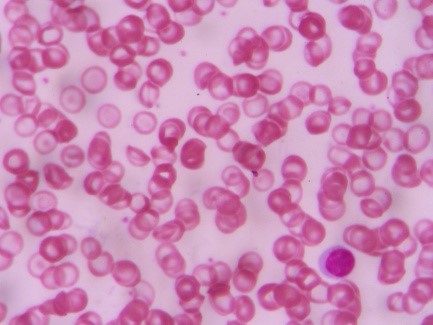
Sickle cell disease (SCD) is a serious, inherited condition affecting the blood and various organs in the body. Sickle cell disease Sickle cell disease (SCD) is a serious group of conditions which are inherited (genetic). In the UK, about 12,500 people have SCD. It is more common in people whose family origins are African, African-Caribbean or.
Patient information leaflet
Sicklecellanlag
If you inherit a gene from one of your parents, called a sickle cell gene, you have a condition called sickle cell trait. If you inherit a sickle cell gene from both parents, you get a double dose of the sickle cel... ServiceUpsellPlaceholder Who gets sickle cell trait. Anyone can have sickle cell trait but it is most common in people whose family.

Patient information leaflet
Marfans syndrom
Marfan syndrome (named after Dr Antoine Marfan, the French doctor who first described it in 1896) is a genetic disorder which people are born with and which lasts lifelong. Marfan syndrome can affect the connective tissue in different parts of your body, including your heart, blood vessels, eyes and skeleton. Marfan syndrome is rare and is thought.
Vidare läsning och referenser
- Why are some genetic conditions more common in particular ethnic groups?; MedlinePlus, National Library of Medicine.
Dela dina tankar eller erfarenheter med andra i vår patientgemenskaper.
Enkel tillgång till pålitliga behandlingar och hälsotjänster online.
Common conditions
Get help with common conditions through the NHS, without a GP appointment.





Anmäl dig till Patientens nyhetsbrev
Din veckovisa dos av tydliga, pålitliga hälsoråd - skrivna för att hjälpa dig känna dig informerad, självsäker och i kontroll.
Genom att prenumerera accepterar du våra Sekretesspolicy. Du kan avsluta prenumerationen när som helst. Vi säljer aldrig dina uppgifter.