Urine infection in pregnancy
Peer reviewed by Dr Rosalyn Adleman, MRCGPLast updated by Dr Philippa Vincent, MRCGPLast updated 10 Oct 2024
Meets Patient’s editorial guidelines
- DownloadDownload
- Share
- Language
- Discussion
- Audio Version
- Add to preferred sources on Google
In this series:Pregnancy complicationsChickenpox contact in pregnancyRubella and pregnancyHigh blood pressure in pregnancyPre-eclampsiaObstetric cholestasis
Urine infection is common in pregnancy. If left untreated some urine infections may progress to cause serious kidney infection. Treatment is with antibiotics. The aim is to cure the infection and to prevent possible complications.
At a glance
A urine infection is caused by bacteria getting into the urine, usually from the skin.
Symptoms include pain when urinating, needing to urinate more often, and sometimes a fever.
Pregnant women are more prone to urine infections and are routinely tested for them.
A kidney infection in pregnancy can lead to early labour or a low birthweight baby if untreated.
Urine infections in pregnancy are usually treated with a course of antibiotics.
See a doctor if symptoms do not improve or get worse after starting treatment.
Sign up for our free 8-week Healthy Pregnancy course!
Each week we’ll share useful information and essential tips on topics such as nutrition, exercise, mental health, symptoms to look out for, and preparing for childbirth, to help you navigate your pregnancy journey whatever stage you are at.
By subscribing you accept our Privacy Policy. You can unsubscribe at any time. We never sell your data.
Understanding the urinary tract
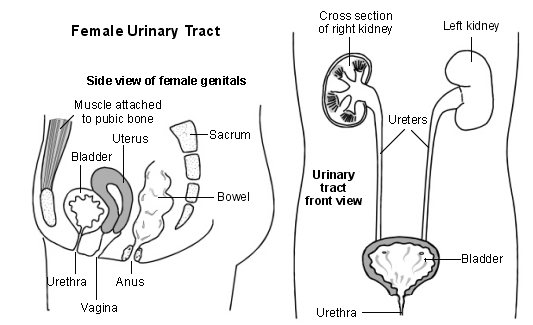
There are two kidneys, one on each side of the tummy (abdomen). They make urine which drains down tubes called ureters into the bladder. Urine is stored in the bladder. Urine is then passed out through a tube called the urethra when we go to the toilet.
Side view of female genitals and cross-section diagram of urinary tract
What is a urine infection?
A urine infection is caused by bacteria which get into the urine. Usually the bacteria have come from the skin, and travelled up the urethra into the bladder.
What are the symptoms of a urine infection?
The symptoms may depend on how far the bacteria have travelled. They include:
Asymptomatic bacteriuria. In this situation bacteria are found in the urine but are not causing any symptoms. It is only found because the urine is tested. This does not usually require treatment but asymptomatic bacteriuria does need treating in pregnancy.
Bladder infection (cystitis). This is common, both in pregnant and non-pregnant women. Typical symptoms are pain when on passing urine and passing urine more often, frequently in small amounts. There may also be other symptoms such as pain in the lower tummy (abdomen), blood in the urine, and a high temperature (fever).
Kidney infection (pyelonephritis). This is uncommon but may occur as a complication from cystitis or asymptomatic bacteriuria. It is usually a more serious infection. Some or all of the possible symptoms may occur, which include:
Pain in the side (loin) over your kidney.
Having a high temperature.
Feeling sick (nausea).
Being sick (vomiting).
Diarrhoea.
Blood in the urine.
Symptoms of cystitis as above.
Feeling generally unwell.
What causes a urine infection?
Most urine infections are caused by bacteria which come from the bowel. They cause no harm in your bowel but can cause infection if they get into other parts of the body. Some bacteria lie around the back passage (anus) after passing a stool (faeces). These bacteria can sometimes travel to the urethra and into the bladder. Some bacteria thrive in urine and multiply quickly to cause infection.
Women are more prone than men to urine infections, as their urethra is shorter and opens nearer the anus.
Pregnant women are more prone than non-pregnant women to urine infections. This is partly due to the hormonal changes of pregnancy which affect the urinary tract and tend to slow down the flow of urine. It also may be that the enlarged womb (uterus) presses on the bladder and prevents it draining as fully. If urine does not drain quickly from the bladder, germs are more able to multiply and cause an infection.
Less commonly there may be other causes of a urine infection. A catheter may be required during a hospital admission; this can make urine infections more likely.
Can a urine infection affect my pregnancy?
A kidney infection when pregnant can cause people to feel very unwell. If left untreated, it may also cause problems such as early labour and/or a baby of low birthweight.
A kidney infection is uncommon but may develop as a complication from a bladder infection (cystitis) or from a urine infection. There may be no symptoms at first (asymptomatic bacteriuria).
When is my urine checked during pregnancy?
Urine is usually tested early in pregnancy. A midwife will ask for a urine sample. Treatment is advised if any bacteria are found, even with no symptoms. If bacteria are found, regular routine urine tests are usually offered throughout the pregnancy.
A urine sample is usually tested at each of the antenatal checks. How often this is depends on how the pregnancy is progressing and whether there are any problems or complications.
Urine should also be tested if any symptoms of bladder infection (cystitis) or kidney infection develop at any stage during pregnancy.
What is the treatment for a urine infection in pregnancy?
Antibiotics
There are several different types of antibiotic that can help. The midwife will choose the type most likely to help. A seven-day course of an antibiotic is the usual treatment in pregnancy. Any symptoms will usually improve within a few days.
It is very important to complete the course of antibiotics. The antibiotics used to treat urine infections in pregnant women are safe to take in pregnancy and will not harm the baby.
A medical review should be sought if the symptoms do not go or if they get worse. Some bacteria are resistant to some antibiotics. This can be identified from tests done on the urine sample. A change of antibiotic is needed if the bacteria is found to be resistant to the first antibiotic.
Note: Treatment with an antibiotic is usually advised for pregnant women, whether or not there are symptoms. This is a little different to the treatment of bladder infection (cystitis) in non-pregnant women. Not having any treatment is an option in non-pregnant women, as cystitis often goes without treatment.
Painkillers
Paracetamol will usually ease any pain, discomfort, or high temperature (fever).
Drinking fluids
With cystitis, the traditional advice is to flush out the bladder by drinking lots of fluid. However, there is no proof that this is helpful when you have cystitis. Some doctors feel that it does not help, and drinking lots may just cause more (painful) toilet trips.
Therefore, it is difficult to give confident advice on whether to drink lots or just to drink normally with mild symptoms of cystitis. However, if there is also a fever and/or a general feeling of being "unwell", having plenty to drink helps to prevent lack of fluid in the body (dehydration).
Patient picks for Infections in pregnancy

Pregnancy
Chickenpox contact in pregnancy
If you have chickenpox when pregnant, you are likely to make a full recovery. However, serious complications occur in a small number of cases.
by Dr Toni Hazell, FRCGP
Pregnancy
Strep B in pregnancy
Group B streptococcus (GBS) is sometimes also called 'strep B' or 'Group B strep'. It is one of many germs (bacteria) that live in our bodies and usually causes no harm. GBS is not a sexually transmitted infection. If you carry group B strep during pregnancy, your baby will usually not develop any problems. However GBS can, rarely, cause serious infections in babies, including sepsis, pneumonia or meningitis. If your baby has GBS infection, early diagnosis and treatment are essential as any delay can be very serious or even fatal. If your baby becomes very unwell or develops any signs that suggest possible GBS infection, they should be treated with antibiotics straightaway.
by Dr Toni Hazell, FRCGP
Frequently asked questions
Can a urine infection harm my baby during pregnancy?
A kidney infection in pregnancy, if left untreated, can lead to serious problems such as early labour or the baby having a low birth weight. A kidney infection is an uncommon complication that can arise from a bladder infection or even a urine infection that initially had no symptoms (asymptomatic bacteriuria).
What happens if I miss a dose of antibiotics for a urine infection during pregnancy?
The article states that it is very important to complete the full course of antibiotics and that a medical review should be sought if symptoms do not improve or get worse. Antibiotics are chosen to be safe for pregnancy and will not harm the baby.
Are there any alternative treatments for urine infections in pregnancy besides antibiotics?
The primary treatment for a urine infection during pregnancy is a seven-day course of antibiotics, which are considered safe for the baby. Painkillers like paracetamol can help ease discomfort or fever. While traditional advice for cystitis suggests drinking lots of fluids, there is no clear proof this is helpful, and some doctors believe it may not be beneficial.
What should I do if my symptoms don't improve after starting antibiotics for a urine infection in pregnancy?
If your symptoms do not go away or if they get worse after starting antibiotics, you should seek a medical review. This is important because some bacteria can be resistant to certain antibiotics, and a change in medication might be necessary based on urine test results.
Why is it important to treat a urine infection even if I don't have symptoms during pregnancy?
During pregnancy, if bacteria are found in your urine, even without symptoms (asymptomatic bacteriuria), treatment is advised. This is because these infections, if left untreated, could potentially lead to more serious complications like a kidney infection, which can affect both you and the baby.
Further reading and references
- Antenatal care; NICE guidance (August 2021)
- Urinary tract infection (lower) - women; NICE CKS, February 2025 (UK access only)
- Urological infections; European Association of Urology (2022 -updated 2024)
About the authorView full bio

Dr Philippa Vincent, MRCGP
General Practitioner, Medical Author
MB BS, Bsc, MRCGP (2000), DCH, DFSRH, DRCOG
Dr Philippa Vincent is an NHS GP working in North London.
About the reviewerView full bio

Dr Rosalyn Adleman, MRCGP
MRCGP
Dr Rosalyn Adleman, is an NHS GP working in north London.
Article history
Article also available in English, German, Spanish, French, Italian, Portuguese, Hindi, Hebrew, Arabic, and Swedish.
Next review due: 9 Oct 2027
10 Oct 2024 | Latest version
Join the conversation
Share your thoughts or experiences with others in our patient communities.

Ask, share, connect.
Browse discussions, ask questions, and share experiences across hundreds of health topics.

Feeling unwell?
Assess your symptoms online for free
Sign up to the Patient newsletter
Your weekly dose of clear, trustworthy health advice - written to help you feel informed, confident and in control.
By subscribing you accept our Privacy Policy. You can unsubscribe at any time. We never sell your data.
More in pregnancy
- Blocked nose in babies
- Chickenpox contact in pregnancy
- Cleft lip and palate
- Contraception barrier methods
- Contraceptive injection
- Genetic testing
- High blood pressure in pregnancy
- Hydrocele in infants
- Infertility treatments
- Levonorgestrel intrauterine device
- Molar pregnancy
- Necrotising enterocolitis
- Newborn screening test
- Pain relief in labour
- Postnatal depression
- Pre-eclampsia
- Pregnancy and smoking
- Pregnancy due date calculator
- Premature labour
- Rubella and pregnancy