
Vad är skillnaden mellan allergi och intolerans?
Granskad av Dr Colin Tidy, MRCGPFörfattad av Dr Sarah JarvisUrsprungligen publicerad 21 Feb 2020
Uppfyller patientens redaktionella riktlinjer
- Ladda nerLadda ner
- Dela
- Language
- Diskussion
- Ask Patient
- Ljudversion
- Lägg till i föredragna källor på Google
Missta dig inte - matallergier kan vara dödliga, och de ökar. Den minsta exponeringen för något du har en allvarlig allergi mot kan vara livshotande, så det är viktigt att vara medveten om tecknen på en allergisk reaktion mot mat.
Learn about adrenaline auto-injectors
Get expert healthcare advice from the comfort of home. Complete a quick online consultation, available 24/7, with your request reviewed by a UK-registered clinician. Next day delivery available on eligible treatments.

What is an allergy?
With food, there's a fundamental difference between allergy och intolerans. In allergy, your immunsystem (which normally helps you fight off infection) turns on your body and attacks it. This could be a local reaction - as in hösnuva- or a 'generalised' allergic reaction, affecting your whole body. Food allergies are generalised because the food is absorbed into your system. The symptoms of food intolerance, on the other hand, are more likely to centre on your gut.
What can cause an allergic reaction?
Some of the confusion around the difference between allergy and intolerance may come from the fact that there are also two kinds of generalised reactions: IgE and non-IgE reactions. IgE stands for immunoglobulin E - a type of antibody produced by your immune system. These react with specific 'antigens' - something your body recognises as an enemy causing a immune system response.
It's only IgE-mediated reactions which result in life-threatening symptoms and IgE-mediated reactions come on within minutes or even seconds.
If you have a severe (IgE-mediated) food allergy, even the tiniest exposure to something you're allergic to can bring on this reaction. For instance, if food you're eating has been prepared on a surface where nuts were previously placed, even a trace of nut could trigger an allergic reaction in someone with a nut allergy.
Non-IgE-mediated reactions still involve your immune system, but the reaction can take many hours to come on. Non-IgE-mediated allergies may be debilitating, but the symptoms are often vague and harder to link to the trigger.
What does an allergic reaction look like?
The most extreme sort of allergic reaction is called anafylaxi. Your immune system goes into overdrive and affects your whole body. It can lead to confusion, loss of consciousness and even death if not treated: the most serious consequences are much more common in small children. Symptoms come on rapidly - often within minutes - and progress with frightening speed. They include:
Wheezing and andfåddhet (as your airways swell up and narrow). As the reaction progresses, your lips can turn blue because of lack of oxygen.
Swelling of your tongue, lips and throat (which can completely block your airways) and sometimes around your eyes, hands and feet.
An intensely itchy raised 'nettle utslagen'.
Feeling light-headed or faint (as your blood pressure drops).
A feeling of 'impending doom'.
How to find out what food allergies you have
If you ever have an anaphylactic reaction, you should always seek medical advice and be referred to an allergy specialist. They may carry out blood tests for antibodies (from your immune system) to certain foods. They may also recommend patch tests. A tiny drop of liquid containing various foods you might be allergic to is placed on your skin; your skin is pricked, so the food can enter the skin; and any reaction on your skin (usually an itchy red area) signals an allergy. This should always be done in a clinic with full resuscitation equipment, because of the tiny risk of bringing on an anaphylactic reaction.
What to do when you have an allergic reaction
If you're at risk of an anaphylactic reaction, you'll need to keep an 'auto-injector' pen containing adrenaline (epinephrine) with you at all times, to be used at the first sign of anaphylaxis. Let friends and family know, and make sure they know where to find and how to use your pen in case you can't.
You should wear an allergy alert bracelet or similar, and should also be referred to a dietician. You'll need to learn how to avoid all contact with the food or foods you're allergic to, which can be a challenge if you're not cooking at home from scratch.
Many children grow out of allergy to eggs, wheat, mjölk and soya. But it's crucial not to reintroduce them into the diet except under strict medical supervision.
What is food intolerance?
Your immune system isn't involved in food intolerance, and on the whole the symptoms affect your digestive system. The main food intolerance symptoms are feeling or being sick, diarrhoea, bloating and cramping tummy pain as a reaction to certain foods. However, sometimes exposure to your food sensitivities can also leave you feeling tired or headachy although they are not life threatening.
Another important difference between allergy and intolerance is that, with intolerance, you can often tolerate a small amount of the food you're intolerant of. For instance, with laktosintolerans, you may be able to have a splash of milk in your tea but have severe cramp and diarrhoea if you have a whole glass of milk. It's never life-threatening to eat foods you're intolerant of, although it can cause miserable symptoms. Keeping foods that trigger your reaction to a minimum should control your symptoms.
Most common food intolerances
Among the most common problem foods are peanuts, other nuts, seeds (like sesame), egg, wheat flour, seafood and some fruits like strawberries and kiwis.
How to find out if you have a food intolerance
In the case of food intolerances, avoidance is advised to reduce the associated symptoms - but how do you find out if you have one?
Some people, like those suffering with nightshade intolerance, find that practicing an elimination diet helps them identify their food intolerances.
An elimination diet involves cutting out certain foods from your diet and later reintroducing them one by one, all while logging your symptoms in a food diary.
When no symptoms are experienced after eating one type of food, it's safe to assume you don't have an intolerance to it. At this point, you move onto the next food and so on. Once you start to experience food intolerance symptoms, you'll have an idea which food caused it.
Allergies vs intolerance vs autoimmune disorders
When considering the difference between allergy and intolerance, it's worth remembering that there is a third category that's often mistaken for allergy or intolerance too - autoimmune diseases.
Celiaki isn't an allergy or gluten intolerance, rather an auto-immune disorder. People with coeliac must avoid any contact with gluten for life.
Whether you suspect you have an allergy, intolerance, or autoimmune disorder, remember: don't cut out a wide range of foods without a dietician's advice - you could put yourself at risk of vitamin or mineral deficiency.
With thanks to My Weekly magazine, where this article was originally published.
Learn about adrenaline auto-injectors
Get expert healthcare advice from the comfort of home. Complete a quick online consultation, available 24/7, with your request reviewed by a UK-registered clinician. Next day delivery available on eligible treatments.
Patientval för Allergier
Allergier, blod och immunsystem
Vad är Skeeters syndrom? När ett myggbett är mer än bara en klåda
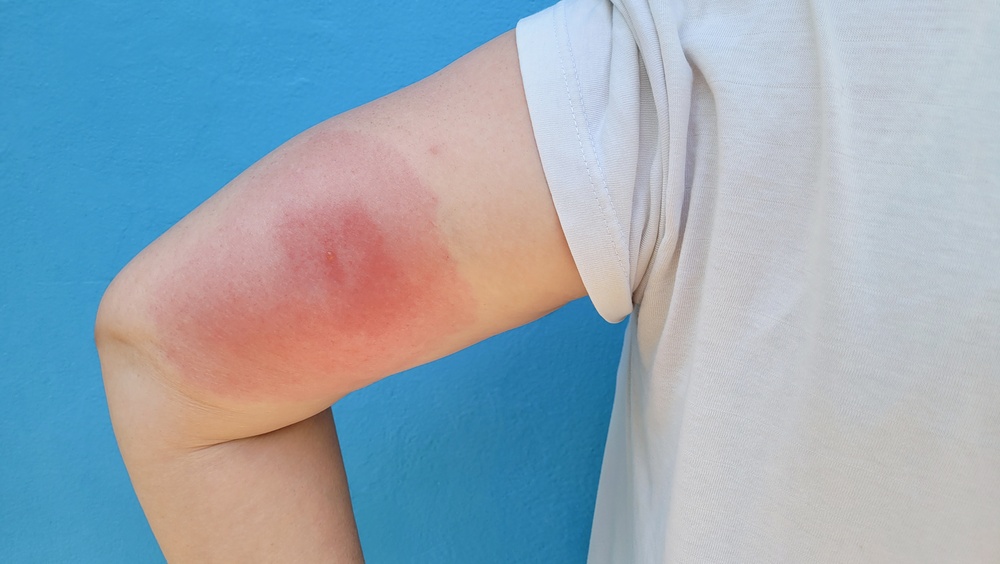
For most people, a mosquito bite is no more than an itchy nuisance. But for some people, a bite can trigger a much more dramatic reaction, with extensive swelling, redness, warmth, and itching that can last for several days. This reaction is known as Skeeter syndrome.
av Heather Ainsworth

Allergier, blod och immunsystem
Kokosallergi: kan kokosolja få din hud att klia?
Coconut is present in a large amount of products, whether that's food or haircare. While coconut allergy is very rare, it can be very distressing for those who do struggle with it. Thankfully, there are treatment options available.
av Emily Jane Bashforth
Om författarenVisa fullständig biografi
Författad av

Dr Sarah Jarvis
Klinisk konsult
MA (Cantab), BM, BCh (Oxon), DRCOG, FRCGP, MBE
Efter att ha utbildat sig i medicin vid Cambridge och Oxford blev Dr Sarah Jarvis MBE allmänläkare.
Om recensentenVisa fullständig biografi

Dr Colin Tidy, MRCGP
Allmänläkare, Medicinsk Författare
MBBS, MRCGP, MRCP (Paediatrics), DCH
Dr Colin Tidy är en NHS-läkare, baserad i Oxfordshire.
Artikelhistorik
Artikeln finns också på Engelska, Tyska, Spanska, Franska, Italienska, Portugisiska, Hindi, Hebreiska, Arabiska, och Svenska.
21 Feb 2020 | Ursprungligen publicerad
Författad av:
Dr Sarah JarvisGranskad av
Dr Colin Tidy, MRCGP
Dela dina tankar eller erfarenheter med andra i vår patientgemenskaper.
Enkel tillgång till pålitliga behandlingar och hälsotjänster online.
Common conditions
Get help with common conditions through the NHS, without a GP appointment.





Anmäl dig till Patientens nyhetsbrev
Din veckovisa dos av tydliga, pålitliga hälsoråd - skrivna för att hjälpa dig känna dig informerad, självsäker och i kontroll.
Genom att prenumerera accepterar du våra Sekretesspolicy. Du kan avsluta prenumerationen när som helst. Vi säljer aldrig dina uppgifter.