
Hur det är att upptäcka att du är autistisk som vuxen
Granskad av Dr Sarah JarvisFörfattad av Glynis KozmaUrsprungligen publicerad 25 Mar 2018
Uppfyller patientens redaktionella riktlinjer
- Ladda nerLadda ner
- Dela
- Language
- Diskussion
- Ljudversion
- Lägg till i föredragna källor på Google
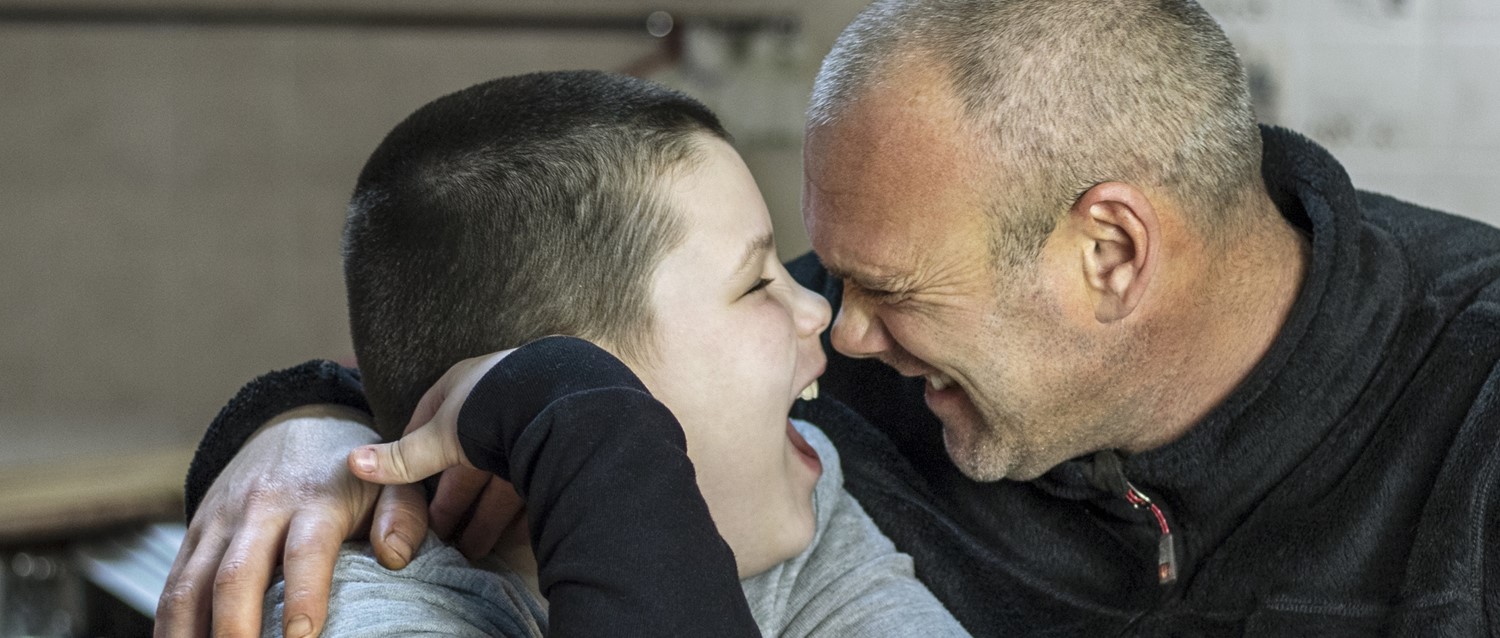
Some people with autism aren't diagnosed until adulthood. We speak to Ronnie Pinder who was diagnosed with Asperger's syndrome at the age of 45, about what he wishes everyone knew about autism spectrum disorder (ASD) and the misconceptions he wants you to stop believing.
In the UK the number of people with autism is thought to be around 1 in 100 according to the National Autistic Society (NAS). This may be an underestimation because if the condition is not diagnosed when the person is in full-time education, they may never be diagnosed as an adult.
The NAS says: "Autism is a lifelong, developmental disability that affects how a person communicates with and relates to other people, and how they experience the world around them."
When someone has autism it doesn't mean they are unintelligent or cannot learn; there are many people with autism who are very clever and have demanding, professional careers. But people with autism do tend to behave and relate to others differently. These differences can be quite subtle in some instances, which is why some people with autism are not diagnosed until adulthood. Some adults have 'slipped through the net' because thirty years ago people were less aware of the condition.
What does it mean to be on the spectrum?
Autism, or autism spectrum disorder (ASD), is a spectrum of conditions. This means that although everyone with ASD is autistic, it affects everyone differently and to a different degree. Some people with ASD find social situations very difficult because they can't read body language and facial expressions easily. This can cause confusion and difficulty in communicating. ASD can also affect sensitivity of the senses, which can be over- or under-sensitive. Everyday noises, smells, light and colours can be a source of stress for anyone with ASD, as well as any change to routine.
Aspergers syndrom
High-functioning autism, where the person is of average or above-average intelligence, can be known as Asperger's syndrome.
This is classed as a type of autism where the difficulties are less severe. Many adults with Asperger's syndrome are employed in professional careers and can be gifted, although colleagues may need to adapt their responses to avoid communication problems.
Diagnosed in adulthood
Ronnie Pinder, from York, was diagnosed three years ago when he was 45.
He explains: "I realise now that I'd had many of the signs of ASD when I was a child. I didn't appreciate I was that different to other people; in fact, I thought everyone felt the same as I did. I was quiet and introverted. I didn't socialise much and the idea of moving away from home and going to university, in a new environment, scared me. I left school and went into a series of menial jobs in retail, married very young and had a family."
How was he diagnosed? "By chance I read something online about autism and realised I seemed to fit the description. There was a link to a questionnaire which I completed. Autism became my special interest; that's another autistic trait - to become immersed in a hobby or interest. I spent two years researching autism and the more I read about it, the more I realised I fitted the profile."
Ronnie decided to seek advice from his doctor. "My GP was very supportive and referred me for specialist assessments with clinical psychologists and psychiatrists. I had to wait nearly two years to be assessed and then the assessment took many months. The result was no surprise: I was autistic."
How does Ronnie feel now? "I look back and regret not going to university and having a better career; I know I would have been capable of getting a degree but at the time very few people like me were being diagnosed or supported in higher education. However, I now combine my work in retail with publicising autism; I give talks all over the country to employers, doctors and schools, to help people understand autism. I have also discovered that my nine-year-old daughter is autistic and my condition means I can help her."
Misconceptions about autism
Ronnie is concerned about the misconceptions around autism. "Most people's knowledge of autism doesn't go beyond the film Rain Man," he explains. Here are a few myths about autism he wants everyone to stop believing:
You can tell by looking at someone whether they are autistic
No, you can't.
Autism only affects boys
No, it is five times more likely in boys but girls can have ASD too.
Autism can be cured
No - people with ASD can often learn how to communicate better, socialise and adapt their behaviour, but it's a lifelong condition.
People with ASD are less intelligent
Many people with ASD have learning difficulties, but ASD is a spectrum and everyone is different.
People with ASD cannot form close relationships
Relationships can be more challenging because people with ASD tend to misread subtle communication signals, but many autistic people have partners and children.
Patientval för Autismspektrumstörningar
Hjärna och nerver
Avslöja myter om autism
En YouGov-undersökning på uppdrag av välgörenhetsorganisationen Autistica visade att det finns en utbredd brist på förståelse och kunskap om autism i hela Storbritannien. De viktigaste resultaten visar att nästan 30 % av de vuxna i Storbritannien är osäkra på om autism kan botas och att över en tredjedel (35 %) tror att autism är en inlärningssvårighet.
av Emily Jane Bashforth

Hjärna och nerver
Hur du kan hjälpa ditt autistiska barn att hantera fyrverkerikvällen
Many autistic children enjoy Bonfire Night, but for some the unexpected loud bangs and bright lights from fireworks can cause sensory overload, and trigger anxiety, or result in physical pain. What can parents do to make their Bonfire Night autism friendly?
av Amberley Davis
Om författaren
Författad av
Glynis Kozma
Om recensentenVisa fullständig biografi

Dr Sarah Jarvis
Klinisk konsult
MA (Cantab), BM, BCh (Oxon), DRCOG, FRCGP, MBE
Efter att ha utbildat sig i medicin vid Cambridge och Oxford blev Dr Sarah Jarvis MBE allmänläkare.
Artikelhistorik
Artikeln finns också på Engelska, Tyska, Spanska, Franska, Italienska, Portugisiska, Hindi, Hebreiska, Arabiska, och Svenska.
25 Mar 2018 | Ursprungligen publicerad
Författad av:
Glynis Kozma
Granskad av
Dr Sarah Jarvis
Delta i konversationen
Dela dina tankar eller erfarenheter med andra i vår patientgemenskaper.

Fråga, dela, anslut.
Bläddra i diskussioner, ställ frågor och dela erfarenheter inom hundratals hälsorelaterade ämnen.

Känner du dig sjuk?
Bedöm dina symtom online gratis
Anmäl dig till Patientens nyhetsbrev
Din veckovisa dos av tydliga, pålitliga hälsoråd - skrivna för att hjälpa dig känna dig informerad, självsäker och i kontroll.
Genom att prenumerera accepterar du våra Sekretesspolicy. Du kan avsluta prenumerationen när som helst. Vi säljer aldrig dina uppgifter.