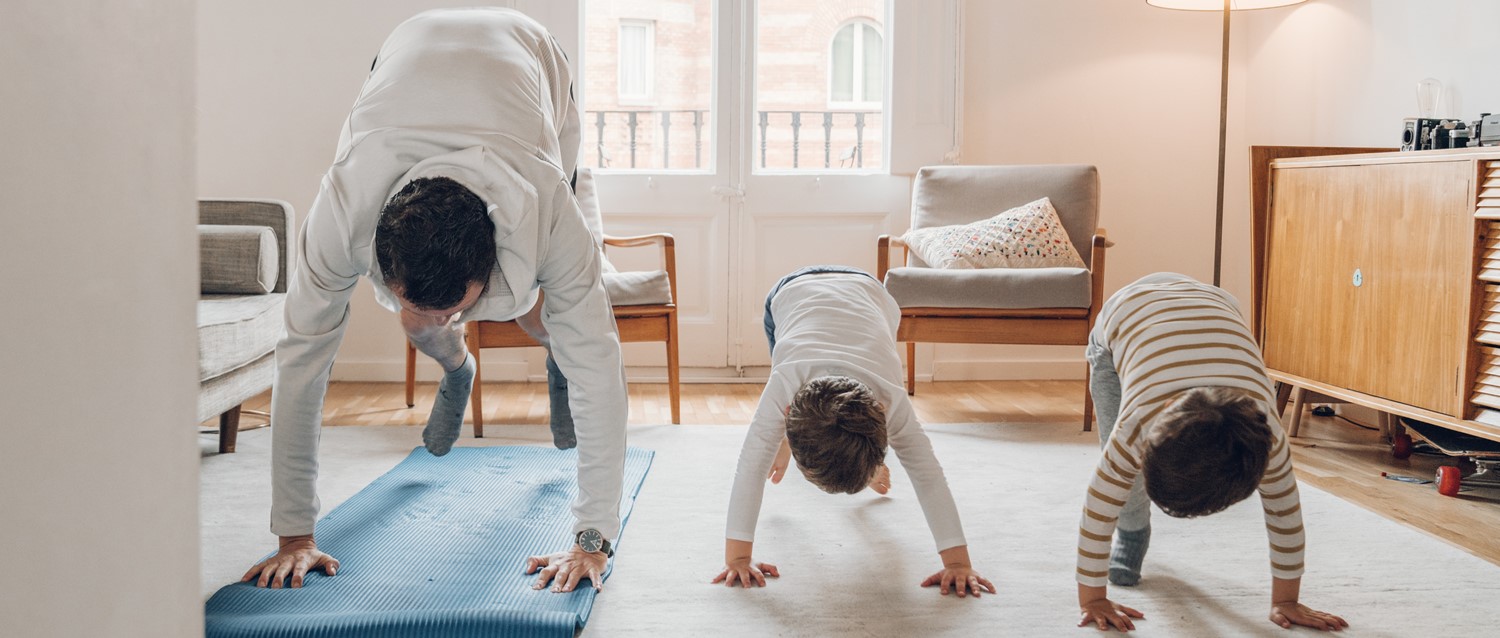
COVID-19: how to keep kids active during the coronavirus lockdown
Peer reviewed by Dr Sarah JarvisAuthored by Gillian HarveyOriginally published 15 Apr 2020
Meets Patient’s editorial guidelines
- DownloadDownload
- Share
- Language
- Discussion
- Audio Version
- Add to preferred sources on Google
Even though we're all stuck inside as a result of the coronavirus pandemic, there's no reason we should let COVID-19 stop us keeping fit. For children, making sure they can burn off energy and stay active is crucial for their well-being - and to stop them bouncing off the walls.
Use Patient's coronavirus checker tool if you have any symptoms of fever or a new cough. Until you have used the tool and been advised what action to take, please stay at home and avoid contact with other people.
When you're going through a difficult time, it can be hard to think about taking exercise - especially if you’re stuck indoors for most of the day. But for adults and children alike, keeping fit and working out can do wonders for both our physical and mental health.
"With so much uncertainty going on and everyone really anxious about the future, exercise is a fantastic way to decrease stress and take a break from everyday life," agrees Richard Goodman, who runs sports-inspired nanny agency Athlete Mannies.
But with play centres closed and parks out of bounds, how can we keep our kids, from toddlers to teenagers, active during isolation?
What counts as a good workout?
If we're used to attending classes, or counting our laps of the park, how how can we measure whether exercise we're doing in our front room or back garden is enough to keep us fit?
"It's important to get aerobic exercise, which helps to reduce the risk of cardiovascular disease, diabetes type 2 and high blood pressure among many other health benefits," advises Hannah Murphy, Director of Globe Fit. "You should be aiming to reach 55-85% of your maximum heart rate, which you can calculate by using 220 minus your age."
If you'd rather not get too technical, any exercise that gets heart pumping and has you working up a sweat is probably ticking the right boxes.
"All movement is good," adds Goodman. "Running around having fun or putting the radio on to have a dance - it doesn't matter what you do as long as you do something."
Having a routine
So, is it a good idea to set a time-slot for our kids' daily workout? Or should we be more flexible?
"It really depends on the child, and the other commitments you may have," explains Murphy. "Some children - particularly those with anxiety or special needs - may benefit from a routine. But it's not one-size-fits-all. Routines don't always fit with family life and work."
"It doesn't really matter when you choose to exercise," agrees Goodman. "Your exercise sessions need to be something you want to do, that you're going to have fun with. As long as it happens at some point, it doesn't really matter."
Improvising
If we're more used to lifting weights at the local gym, or jumping on trampolines at the leisure centre, it's hard to know what tools to use at home to enhance our workout. But this is where we can get creative - and encourage the kids to join in too.
"Hula hoops are cheap and don't take up a lot of room so they're a great thing to add to your workout," advises Murphy. "But really anything goes - you can fill up water bottles or use baked bean tins for weight resistance. Use the sofa to do push-ups. Get inventive with things around your home."
"Try things like boxing - which just needs pads or pillows and doesn't require a lot of space," suggests Goodman. "Jump rope skipping can be really motivational - especially if you team it with a YouTube video."
Many of us have also tried Joe Wicks' daily PE class on YouTube, and there are others to choose from too. "Key players from the fitness industry and even Olympic athletes are posting amazing workouts. They can be really influential role-models for kids," says Goodman.
Encouraging reluctant teens
Anyone with experience of parenting a teenager knows that it can sometimes be difficult to motivate a child of this age-group to try something new. Your teen may well be missing friends, or the routine of school or have other worries that also mean their motivation is low. But encouraging exercise is crucial for their health and well-being.
"To motivate kids of any age, the key is making it fun and engaging," says Murphy. "Asking them to do an hour-long class probably won't work. Try to stick to shorter bursts of 30 minutes. And it's got to be something they find fun. Pop dance workouts can be good - they don't always realise they're exercising! And try dancing along to videos on TikTok."
Kids who are used to playing football may be struggling without their teammates and the space of the football fields, but there are ways they can indulge their favourite pastime from the garden or living room. For example, "there's a 'keepy up' challenge currently on YouTube that your footballer could try," suggests Murphy.
For those who need additional motivation, see what their favourite celebrities are doing to keep fit during isolation.
What if you're under the weather?
Of course, there may be days when, however motivated you are, you or your children don't feel up to working out. And it's important to listen to our bodies at these times.
"I always recommend paying attention to your health and well-being," advises Goodman. "If you're starting to feel mild symptoms try to continue to move, but keep things simple. Walk around the garden to get some fresh air and keep some light level of exercise if you can."
Patient picks for Pandemic articles

COVID-19
Coping with grief during the coronavirus pandemic
If you have lost a loved one during the coronavirus pandemic, the restrictions around funerals and social contact may make the situation especially difficult. Here are some practical ways to take care of yourself, or help a grieving family member or friend.
by Abi Millar

COVID-19
COVID-19: how to manage back-to-school worries
From 8th March, pupils across England will be heading back to school. But with the pandemic still affecting our daily lives, many children have found their familiar school has undergone significant change, both in terms of rules, structure and environment.
by Gillian Harvey
About the authorView full bio
Authored by

Gillian Harvey
Freelance Writer
BA (Hons) English
Gillian is a freelance writer and columnist for a variety of national newspapers and magazines.
About the reviewerView full bio

Dr Sarah Jarvis
Clinical Consultant
MA (Cantab), BM, BCh (Oxon), DRCOG, FRCGP, MBE
After training in medicine at Cambridge and Oxford, Dr Sarah Jarvis MBE became a GP.
Article history
Article also available in English, German, Spanish, French, Italian, Portuguese, Hindi, Hebrew, Arabic, and Swedish.
15 Apr 2020 | Originally published
Authored by:
Gillian HarveyPeer reviewed by
Dr Sarah Jarvis
Join the conversation
Share your thoughts or experiences with others in our patient communities.

Ask, share, connect.
Browse discussions, ask questions, and share experiences across hundreds of health topics.

Feeling unwell?
Assess your symptoms online for free
Sign up to the Patient newsletter
Your weekly dose of clear, trustworthy health advice - written to help you feel informed, confident and in control.
By subscribing you accept our Privacy Policy. You can unsubscribe at any time. We never sell your data.