Är pumpafrön bra för dig?
Granskad av Dr Colin Tidy, MRCGPSenast uppdaterad av Victoria RawSenast uppdaterad 27 Oct 2026
Uppfyller patientens redaktionella riktlinjer
- Ladda nerLadda ner
- Dela
- Language
- Diskussion
- Ask Patient
- Ljudversion
- Lägg till i föredragna källor på Google
Pumpafrön är inte bara för Halloween. Även om de kanske påminner dig om att skära ut höstens jack-o'-lanterns, njuter många av dem året runt för deras hälsofördelar. Låt oss ta en närmare titt på vad pumpafrön har att erbjuda och se om de förtjänar en permanent plats i din kost.
What are pumpkin seeds?
Pumpkin seeds are exactly what their name suggests. They're the edible seeds found inside pumpkins - a type of round squash commonly used in cooking. While pumpkin flesh can be used in a variety of recipes, the seeds themselves have gained popularity as a nutritious snack and a tasty addition to many dishes.
Devin Brittain, Registered Dietitian, University Medical Center, LCMC Health, New Orleans, USA explains that pumpkin seeds are flat, oval-shaped and usually green in colour when their white outer shell is removed.
She says that they are also rich in various nutrients that, when consumed in moderation, provide multiple health benefits.
How healthy are pumpkin seeds?
Pumpkin seeds offer a mix of valuable vitamins, minerals, antioxidants, and fibre that all support the health of your body.
According to Brittain, these include:
Protein – helps boost energy and metabolism.
Hälsosamma fetter – including omega-6, which are good for brain health and hormone production.
Magnesium – important for heart, muscle, bone health and brain function.
Zinc – supports immunity and wound healing.
Iron – helps transport oxygen in the blood, which supports energy production and a healthy metabolism.
Copper – needed for energy production and iron metabolism.
Phosphorus – essential for bones and teeth.
Antioxidanter – support brain function, heart health, and boost your immune system.
Fiber - whole, unshelled seeds aid digestion and help keep a healthy gut.
Tryptophan - a precursor to melatonin that helps improve sleep.
B vitamins - boost energy and metabolism.
How preparation affects pumpkin seed nutrition
Pumpkin seeds can be enjoyed in many ways, though how they’re prepared can influence their nutritional value.
Brittain explains that raw seeds retain the most nutrients, especially heat-sensitive ones with certain antioxidants and healthy fats.
"Roasting - particularly at high temperatures - can reduce some of the antioxidants and slightly degrade healthy fats," she warns. "However, lightly roasting them at a lower temperature - for example, 160°C - still preserves most nutrients and will help to make antioxidants, such as flavonoids, more absorbable."
She adds that salted or flavoured seeds may contain added sodium or sugar, which could impact their health benefits. Oil-roasted seeds may be higher in calories and less healthy if processed oils are used.
"While all forms still offer nutrition, raw or lightly roasted seeds are the most nutrient-dense options," says Brittain. "Roasted is also the most commonly seen in stores and food preparation for preference in texture, taste, and food safety."
Brittain advises that raw pumpkin seeds, though mostly safe to consume, may contain harmful bacteria that can cause foodborne illness. She recommends practising proper food safety in both instances to minimise your likelihood of infection.
Recommended daily serving of pumpkin seeds
Pumpkin seeds are good for you, but they're also high in calories. For this reason, it's important to watch your portion sizes.
Brittain recommends you eat no more than 28 grams of pumpkin seeds a day. This is equivalent to 1/4 cup of shelled seeds, or around 2 tablespoons of whole seeds with the shell.
"This amount provides a good boost of protein, healthy fats, fibre, magnesium, and zinc - with around 150 – 160 calories," she says. "Whole seeds will contain more fibre than the shelled kernels."
Potential downsides to eating pumpkin seeds
Though pumpkin seeds contain a range of healthy upsides, eating too many will have some drawbacks.
Brittain says these seeds are high in fat, which means that consuming large amounts can add up to significant number of calories. This may lead to weight gain if you exceed the recommended serving size.
"Eating too many shelled pumpkin seeds may cause bloating or constipation due to their high fibre content," she says. "Flavoured or salted seeds can be high in sodium. This could be a concern for people with high blood pressure or kidney issues."
Brittain warns that although a pumpkin seed allergy is rare, it is still possible. For this reason, if you have a known seed allergy, you should avoid consuming them to prevent a potential reaction.
She advises you to moderate your pumpkin seed intake, and keep to the recommended serving sizes.
"A small daily portion is both safe and beneficial for most people," says Brittain. "Please consult your doctor or a registered dietitian for more information on specific benefits, health hazards, and concerns you may have."
Patientval för Nutrition
Kost och näring
Fullkornshjältar: Varför äta uråldriga sädesslag?
Today, there are hardly any foods we eat that haven't been modified by humans in some way. As experts discover more health benefits of the planet's most natural foods, attention has turned to a food group that hasn't been altered for thousands of years - ancient grains.
av Heather Ainsworth
Kost och näring
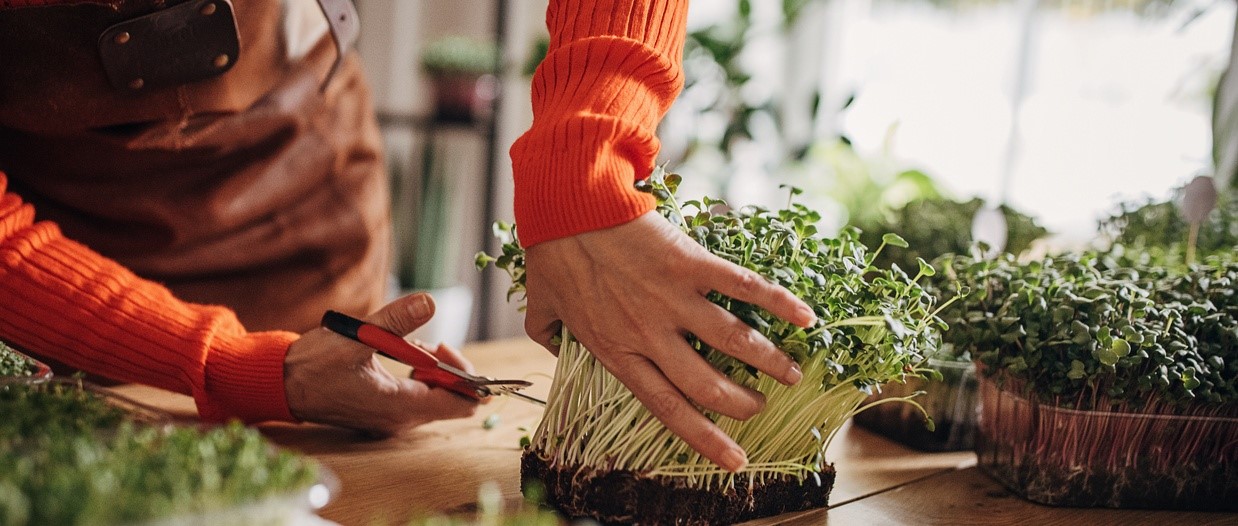
Den senaste supermaten - vad är uppståndelsen kring mikrogrönt?
Mikrogrönt är den senaste kategorin av grönsaker som får gourmetkockar, näringsforskare och personer som odlar sin egen mat att bli superentusiastiska. Vad dessa miniatyrörter och grönsaker saknar i storlek, kompenserar de med smak och hälsofrämjande kraft. Ta reda på varför du kanske vill odla ditt eget mikrogrönt, och om det är enkelt att göra.
av Amberley Davis
Om författarenVisa fullständig biografi
Uppdaterad av

Victoria Raw
Featureförfattare
BA (Hons), Engelsk litteratur
Victoria är en innehållsskribent på Patient, med särskilda intressen som sträcker sig över mental välbefinnande, samhälleliga trender och teknikens påverkan på vår hälsa.
Författad av
Victoria Raw
Featureförfattare
BA (Hons), Engelsk litteratur
Victoria är en innehållsskribent på Patient, med särskilda intressen som sträcker sig över mental välbefinnande, samhälleliga trender och teknikens påverkan på vår hälsa.
Om recensentenVisa fullständig biografi

Dr Colin Tidy, MRCGP
Allmänläkare, Medicinsk Författare
MBBS, MRCGP, MRCP (Paediatrics), DCH
Dr Colin Tidy är en NHS-läkare, baserad i Oxfordshire.
Artikelhistorik
Artikeln finns också på Engelska, Tyska, Spanska, Franska, Italienska, Portugisiska, Hindi, Hebreiska, Arabiska, och Svenska.
Next review due: 28 Oct 2029
27 Oct 2026 | Senaste versionen
13 maj 2025 | Ursprungligen publicerad
Författad av:
Victoria Raw
Dela dina tankar eller erfarenheter med andra i vår patientgemenskaper.
Enkel tillgång till pålitliga behandlingar och hälsotjänster online.
Common conditions
Get help with common conditions through the NHS, without a GP appointment.





Anmäl dig till Patientens nyhetsbrev
Din veckovisa dos av tydliga, pålitliga hälsoråd - skrivna för att hjälpa dig känna dig informerad, självsäker och i kontroll.
Genom att prenumerera accepterar du våra Sekretesspolicy. Du kan avsluta prenumerationen när som helst. Vi säljer aldrig dina uppgifter.