Fullkornshjältar: Varför äta uråldriga sädesslag?
Granskad av Dr Colin Tidy, MRCGPSenast uppdaterad av Heather AinsworthSenast uppdaterad 17 Aug 2025
Uppfyller patientens redaktionella riktlinjer
- Ladda nerLadda ner
- Dela
- Language
- Diskussion
- Ask Patient
- Ljudversion
- Lägg till i föredragna källor på Google
Today, there are hardly any foods we eat that haven't been modified by humans in some way. As experts discover more health benefits of the planet's most natural foods, attention has turned to a food group that hasn't been altered for thousands of years - ancient grains.
Videoval för NutritionVideobibliotek
What are ancient grains?
Grains are an important and nutritious food group, but while they may be grown in a field, they are usually highly refined by the time they reach our homes - whether this be in the form of pasta, bread, cereals, or flour. This means that the grains have undergone manufacturing processes that end up removing lots of their nutrients.
Whole grains, on the other hand, are left whole after they have been grown. This means that the three edible parts of the grain - the bran, germ and endosperm - are left fully intact, along with their vitamin and mineral content.
Bran - the outer shell of the grain.
Germ - the inside part that contains the starch.
Endosperm - the inside part that contains most of the nutrients.
Doctors, nutritionists, and other health experts recommend choosing whole grain products because they contain more fibre and nutrients than their white alternatives. For example, whole wheat bread and brown rice contain more fibre than white bread and white rice. In fact, four servings (70g each) of whole grains a day could lower your risk of death by around 22%1.
Yet, many products that we consider to be whole grain have been modified by humans at some point, whether through crossbreeding with other grains or genetic modification.
Modern whole grains vs ancient grains
Ancient grains are the whole grains that have never been altered, as London-based dietitian Karine Patel explains: "Ancient grains are completely unrefined, known to have remained intact and unchanged in the human diet for thousands of years."
The ancient grain family includes, but is not limited to:
Quinoa.
Millet.
Korn.
Bulgur.
Rye.
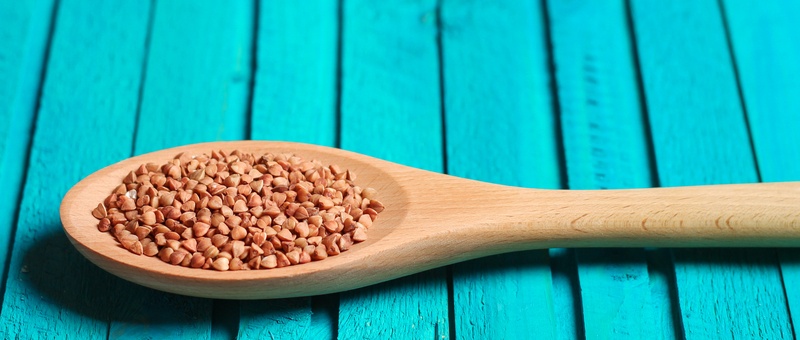
Buckwheat.
Amaranth.
Sorghum.
Teff.
Spelt.
Flax seeds.
Linseeds.
Now, emerging research suggests that ancient grains pack in even more important vitamins, fibre, and protein than our so-called modern whole grains.
For example, one cup (225g) of cooked teff – an ancient grain - contains 7g of fibre and 10g of protein, whereas the same amount of cooked brown rice - a minimally processed modern whole grain - contains 3g of fibre and 5g of protein.
The benefits of ancient grains
According to Patel, eating ancient grains - which are filled with vitamins, minerals, fiber, och protein - is associated with improved digestive health and a lower risk of several serious health conditions.
Help reduce the risk of heart disease
Modern whole grains are very heart healthy when compared to refined grains like white bread and white flour. However, it appears that ancient grains are even better at reducing the risk factors for hjärtsjukdom.
One study comparing bread made either with modern grains or ancient grains found that only the ancient varieties significantly reduced bad kolesterol, called low-density lipoprotein cholesterol (LDL), and blood sugar levels2.
Help support better insulin control in type 2 diabetes
If you're managing typ 2 diabetes, choosing grains that are richer in fibre can help prevent spikes in blood sugar and support better insulin control2. This is because fibre allows you to digest your food more slowly, which in turn slows down the rate at which sugar enters your bloodstream.
May protect against certain cancers
It's possible that unprocessed grains may protect us against certain cancers, according to the American Institute for Cancer Research. According to its study, the chances of developing tarmcancer reduced by 17% with three 90g servings of whole grains a day3.
Currently, there isn't much data on cancer and ancient grains specifically, but it's likely they have a similar - if not greater - protective effect. Whole grains may also reduce the risk of other cancers, including bröstcancer, but more research is needed3.
Help with digestion
Most varieties of ancient grains tend to be high in fibre and free from/low in gluten, which makes them easier for our bodies to digest, compared to modern wheat4. This makes ancient grains a good choice if you're prone to digestive problems such as irritabel tarm (IBS), or if you have glutenkänslighet.
How to add ancient grains to your diet
Ancient grains may be more nutritious than modern grains, but all whole grains have important health benefits. There's no need to replace modern whole wheat and corn with a fully ancient grain diet, and you'll probably find this quickly becomes too pricey.
Instead, we should aim to replace the refined grains in our diet with ancient grains and other whole grains, according to Patel. "This means replacing our usual potatoes, rice, and pasta as often as possible," says the dietitian.
Patel's tips for including ancient grains
Breakfast:
Sprinkle chia seeds or linseeds into your porridge, overnight oats, yoghurt, or breakfast cereal.
Use quinoa to make porridge, instead of refined oats.
Add chia seeds or flaxseeds to your morning smoothie.
Make pancakes with buckwheat flour instead of white flour - also gluten-free.
Replace wheat flour in a breakfast muffin with millet flour - also gluten-free.
Lunch and Dinner:
Make a risotto with barley, instead of common risotto rice like arborio and carnaroli rice.
Replace couscous with quinoa or farro in a cold feta salad.
Make a polenta with amaranth, instead of cornmeal.
Add barley to your warm winter vegetable soup.
Try rye bread in a sandwich.
All whole grains, including ancient grains, are carbohydrates. Patel reminds us that this food group should make up roughly one third of the food we eat.
If you're looking to lose weight healthily, all food groups are important, but bear in mind that ancient grains also tend to contain more calories than modern grains.
The key is to keep your portions modest - with ancient grains, you can have less and still get more nutrients and goodness.
References
Patientval för Nutrition
Kost och näring
Enkla sätt att följa en medelhavsdiet
En medelhavsdiet framkallar en bild av färsk fisk och färgglada sallader dränkta i olivolja, sköljda med ett glas rött vin - allt medan man sitter i solen förstås. Även om vi kanske inte har pålitlig solsken i Storbritannien, kan vi definitivt dra nytta av de omfattande hälsofördelarna som erbjuds av medelhavsdieten.
av Lynn Stephen
Kost och näring
10 källor till växtbaserat protein för benhälsa
Växtbaserade dieter blir allt mer populära. Människor väljer detta sätt att äta av olika anledningar - för att förbättra sin hälsa, hjälpa djur och skydda miljön. Men att byta till en växtbaserad kost kan innebära att du missar viktiga, benvänliga näringsämnen. Ett av dessa är protein.
av Victoria Raw
Om författarenVisa fullständig biografi
Uppdaterad av

Heather Ainsworth
SEO-chef
BA (Hons) Business and Marketing, IDM Cert DDM, MHFAider®
Heather är SEO-chef på Patient och utbildad i första hjälpen för psykisk hälsa. Hon är också en regelbunden hälsoförfattare och täcker ett brett spektrum av ämnen med ett särskilt intresse för mental hälsa, kvinnors hälsa och holistisk hälsa.
Författad av

Amberley Davis
Seniorförfattare
BA (Hons), CPD
Amberley är en senior skribent hos Patient och har skrivit omfattande om en rad olika hälso- och välbefinnandeämnen.
Om recensentenVisa fullständig biografi

Dr Colin Tidy, MRCGP
Allmänläkare, Medicinsk Författare
MBBS, MRCGP, MRCP (Paediatrics), DCH
Dr Colin Tidy är en NHS-läkare, baserad i Oxfordshire.
Artikelhistorik
Artikeln finns också på Engelska, Tyska, Spanska, Franska, Italienska, Portugisiska, Hindi, Hebreiska, Arabiska, och Svenska.
Nästa granskning: 17 aug 2028
17 Aug 2025 | Senaste versionen
28 Nov 2023 | Ursprungligen publicerad
Författad av:
Amberley Davis
Dela dina tankar eller erfarenheter med andra i vår patientgemenskaper.
Anmäl dig till Patientens nyhetsbrev
Din veckovisa dos av tydliga, pålitliga hälsoråd - skrivna för att hjälpa dig känna dig informerad, självsäker och i kontroll.
Genom att prenumerera accepterar du våra Sekretesspolicy. Du kan avsluta prenumerationen när som helst. Vi säljer aldrig dina uppgifter.