Can collagen supplements boost your health?
Peer reviewed by Dr Colin Tidy, MRCGPLast updated by Victoria RawLast updated 28 Sept 2025
Meets Patient’s editorial guidelines
- DownloadDownload
- Share
- Language
- Discussion
- Audio Version
- Add to preferred sources on Google
As we age, our body's natural collagen production decreases. This fact has prompted many people to consider taking collagen supplements - not only for their cosmetic benefits but for potential health improvements too.
What is collagen?
Collagen is a crucial protein your body makes to give structural support, strength and elasticity to your skin, tendons and bones.
It's basically the glue that holds your body together, and accounts for around 30% of its natural protein. Your body creates collagen by combining amino acids - glycine and proline - with other essential nutrients such as vitamin C, zinc and copper.
Collagen has many uses in medicine, surgical practices, food and cosmetics. It's considered by some a wonder ingredient, due to its range of benefits - from reducing wrinkles to enhancing bone health.
There are around 28 different types of collagen in your body. The most common types are I, II, III, IV and V.
Type I: makes up around 90% of your body's collagen. It gives strength and support to your skin, hair, bones, tendons, and ligaments.
Type II: vital for elastic cartilage - the tissue that cushions your joints.
Type III: supports your muscles, blood vessels and organs.
Type IV: forms the basement membrane - a thin layer separating your skin (epithelial) cells from the tissues underneath.
Type V: contributes to bone strength, the clear part of your eye (cornea), and organs such as muscles, liver, lungs, and placenta.
What are the different types of collagen supplements?
Interest in collagen supplements is growing, with people looking beyond mere skin benefits, and towards potential ways to support healthy ageing.
Dr David M. Brady, Chief Medical Officer, Designs for Health, Florida, USA says the type of collagen found in supplements depends on the form and source.
The three main types of collagen supplements are:
Hydrolysed collagen (collagen peptides) - from animals such as cows, pigs, chickens, and fish.
Undenatured collagen is unprocessed and extracted from chicken breastbone cartilage.
Gelatine is a gelling agent derived from cooked animal collagen.
Research suggests that hydrolysed collagen - which is broken down into an easily digestible form - may be the most effective type of supplement.
This comes in a variety of forms, including:
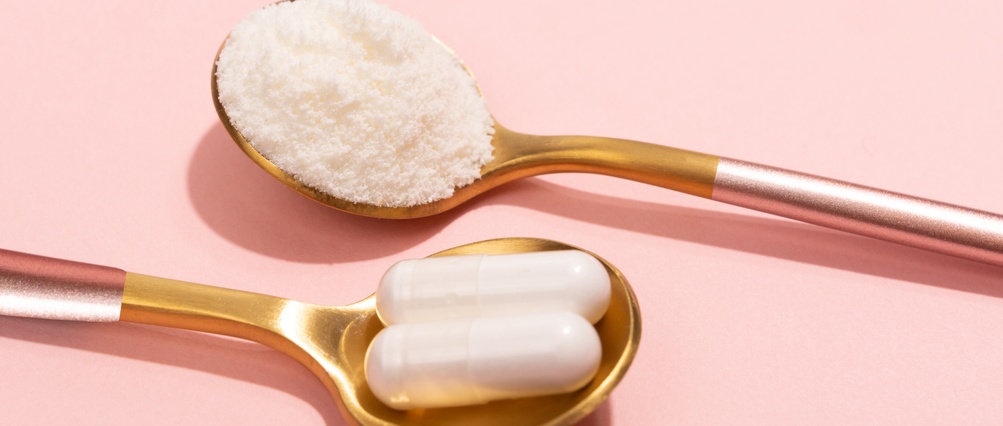
Powders.
Capsules.
Drinks.
Gummies.
Because of its low molecular weight, hydrolysed collagen can be quickly digested and absorbed into your bloodstream. You can mix it into your favourite foods and drinks, or take it on its own.
Collagen supplements are extracted from two main sources - natural materials such as animals or plants, or genetically modified organisms. Most, however, are sourced from animals.
The most common types are:
Marine collagen - from the skin, scales and bones of sea creatures such as fish, jellyfish, and sponges. It contains high amounts of types I and III.
Bovine collagen - from the skin, tendons and cartilage of cows. It too contains collagen types I and III. Although it's more affordable, your body doesn't absorb it as well as marine collagen.
Porcine collagen - from the skin and bones of pigs. A less common form, it contains collagen types I and III.
Chicken collagen - from the breastbone cartilage and skin of chickens. It contains collagen type II.
Benefits of collagen supplements
The core types of collagen found in oral supplements are I, II and III. Each plays a specific role in supporting your body's health.
Six key benefits of collagen supplements include:
Speeding up wound healing - boosts new skin growth, blood vessel formation and cell movement.
Skin elasticity - helps reduce wrinkles and improves skin firmness.
Nail health - increases growth and reduces breakages if you suffer from brittle nails.
Bone strength - could strengthen your bones and alleviate joint pain, especially after menopause.
Muscle support and repair - provides structure and support to the tissues connecting your muscles, such as tendons, ligaments, and fascia. Research suggests they could also help repair muscle damage.
There is also limited research to suggest that taking collagen supplements could lead to thicker hair growth. Currently the studies are in mice but could be significant for humans.
How much collagen should you take?
The ideal dosage for collagen supplements depends on whether you want to improve joint health, fortify bones, boost muscle strength or enhance your skin. Collagen supplements usually include a recommended daily dosage on the packaging label.
However, studies found that the following doses were safe, effective and shown to have the following benefits:
Hydrolysed collagen
1/2 a teaspoon (2.5 grams) per day may benefit joint pain, skin health, and hydration.
1 teaspoon (5 grams) per day may improve bone density if you are osteopenic and postmenopausal.
3 teaspoons (15 grams) per day may improve muscle mass with resistance training.
Undenatured collagen
Up to 40 milligrams per day may improve joint health.
Gelatine
This is not considered a standalone supplement - it's more common as a food ingredient.
Do collagen supplements work?
According to Brady, collagen supplements have been shown to support skin, nails, bone, and joint health. While studies have shown positive effects from taking collagen supplements, research is still ongoing. Many collagen supplement manufacturers usually advise taking them for at least 12 weeks to benefit from noticeable results.
"Exact dosage amounts provided by specific brands will vary. I always recommend using a product that is third party tested. This ensures you are taking what the product lists on the label, and nothing else." Jessica Garay - Registered Dietitian and Assistant Professor at Syracuse University
The most reliable way to support your body's natural collagen levels is to focus on a balanced diet rich in the nutrients it needs.
Foods that help your body produce collagen include:
Protein sources: chicken, beef, fish, pork, eggs, Greek yoghurt, cottage cheese, beans.
Vitamin C sources: citrus fruits, strawberries, potatoes, peppers, broccoli.
Gelatine products: foods made by boiling animal skin, tendons and ligaments - for example, bone broth.
Patient picks for Vitamins and supplements
Diet and nutrition
8 benefits of matcha tea
Brad Pitt drinks it instead of booze, Gwyneth Paltrow slathers it on her face, and Dean from The Apprentice calls it his favourite drink. But are there really health benefits to matcha tea? We look at what matcha tea contains and the evidence for what this may do for your body and mind.
by Victoria Raw
Senior health
The best anti-ageing supplements for your health
The term anti-ageing is written on many beauty creams and other skincare products packaging. But what does anti-ageing mean inside the body? Here, it goes beyond the appearance of our face lines, to healthy internal ageing. This means how well our cells and organs are remaining healthy and able to fight decline and disease as we grow older - so that we can live happily for as long as possible. We explore the anti-ageing supplements that help our bodies do just this, according to experts.
by Lawrence Higgins
About the authorView full bio

Victoria Raw
Feature Writer
BA (Hons), English Literature
Victoria is a content writer at Patient, with special interests spanning mental wellbeing, societal trends and the impact of technology on our health.
About the reviewerView full bio

Dr Colin Tidy, MRCGP
General Practitioner, Medical Author
MBBS, MRCGP, MRCP (Paediatrics), DCH
Dr Colin Tidy is an NHS Doctor, based in Oxfordshire.
Article history
Article also available in English, German, Spanish, French, Italian, Portuguese, Hindi, Hebrew, Arabic, and Swedish.
Next review due: 28 Sept 2028
28 Sept 2025 | Latest version
25 Jun 2024 | Originally published
Authored by:
Victoria Raw
Join the conversation
Share your thoughts or experiences with others in our patient communities.

Ask, share, connect.
Browse discussions, ask questions, and share experiences across hundreds of health topics.

Feeling unwell?
Assess your symptoms online for free
Sign up to the Patient newsletter
Your weekly dose of clear, trustworthy health advice - written to help you feel informed, confident and in control.
By subscribing you accept our Privacy Policy. You can unsubscribe at any time. We never sell your data.
More in diet and nutrition
- A vegan diet improves heart health, according to a study of identical twins
- Are fermented foods worth the hype?
- Does eating spicy food help you lose weight?
- Does your body need vitamin supplements?
- Fertility diet: what to eat when you're trying to get pregnant
- Healthy pancake recipes for your diet
- Honey may be the natural buzz you need to fuel your workouts
- How diet can reduce your risk of stroke and heart attack
- How to eat healthily on a tight budget
- How to eat well when it's hard to shop and cook
- How to make healthy roast potatoes
- How to stop binge eating
- Tadpole water - what is it, and does it actually have any health benefits?
- What are the benefits of vitamin A?
- What is inflammation and which foods reduce it?
- What is intuitive eating - and can it improve your relationship with food?
- What is the anti-inflammatory diet?
- What's the healthiest high street Christmas sandwich?
- Which pregnancy vitamins do I really need?
- Why ultra-processed foods are so addictive - and how to cut down