What are the benefits of vitamin A?
Peer reviewed by Dr Krishna Vakharia, MRCGPLast updated by Andrea DowneyLast updated 13 Feb 2024
Meets Patient’s editorial guidelines
- DownloadDownload
- Share
- Language
- Discussion
- Audio Version
- Add to preferred sources on Google
Our bodies need certain nutrients to perform day-to-day functions and without them you may start to see some health problems. One of those nutrients is vitamin A. What are the vitamin A benefits, where does it come from, and do you need to take supplements to get the right amount?
What is vitamin A?
Vitamin A is a fat-soluble vitamin that cannot be synthesised in the body, meaning we have to consume it as part of our diets.
Preformed vitamin A, also known as retinol and retinal esters, can be used in the body without undergoing any changes first. These are usually found in meat, dairy products, and fish.
"Provitamin versions, scientifically known as beta carotene, need to be converted to its active form retinol before it can be used by the body," explains Dr Deborah Lee from Dr Fox Online Pharmacy. In a nutshell, this means your body has to convert it before it can use it.
This form of vitamin A is found in most brightly coloured fruit and vegetables such as leafy greens, carrots, peppers, and tomatoes.
"Once ingested in the diet, vitamin A is absorbed into the bloodstream in the small intestine. Because it is a fat-soluble vitamin, it is best absorbed after eating a meal containing fat, but this doesn't need to be a huge amount," Dr Lee says.
"Adding nuts, avocado, or a small dash of olive oil to a meal, is all that's required."
Vitamin A benefits
Dr Lee says it has several essential functions in the body: "It plays a role in the functioning of the immune system, it stimulates and maintains cell growth, and in reproduction it is vital for successful cell division in the ovaries and testes.
"Vitamin A has been found to be intricately involved in the growth, maturation, and differentiation of many different cell lines in the body, including those in the heart, lungs, and eyes.
"In the eye it is the precursor to the production of rhodopsin, the photopigment found in the rods of the retina which enable night vision. As a result, vitamin A deficiency can cause night blindness. Vitamin A also maintains the health of the cornea and the conjunctiva - the cells and membranes that cover the front of the eye."
There you have it - eating your carrots really does help you see in the dark.
What happens if you don't eat enough vitamin A?
Dr Lee says vitamin A deficiency is rare in the UK, but some groups are more at risk.
"These include women who are pregnant or breastfeeding, and young children and toddlers. Also, those with malabsorption from a variety of causes such as cystic fibrosis, coeliac disease, Crohn's disease or chronic pancreatitis, or after intestinal surgery - including bariatric surgery," she explains.
One study found around 29% of those with Crohn's disease had low vitamin A levels compared to 15% in the control group1.
A 2019 review found patients who had undergone bariatric surgery were often deficient in a range of vitamins. Some 10-11% of those who had had a gastric bypass were lacking in vitamin A2.
Dr Lee lists a range of symptoms that can be linked to vitamin A deficiency:
Dry, itchy skin with scaling.
Delayed growth or stunted growth.
Repeated infections due to disruption of the immune system.
Keratinisation - where the skin can become hard.
Xerophthalmia - an eye condition that causes the eye to become dry and crusted.
Night blindness.
Reduced fertility.
To supplement or not to supplement?
So now we know the vitamin A benefits - and what happens when you don't eat enough vitamin A - how can you ensure you are eating enough?
The simple answer is - if you're eating a healthy, balanced diet with plenty of brightly coloured fruit and vegetables, dairy products, or meat then you're getting enough vitamin A.
How much vitamin A per day?
Vegans and vegetarians can rest assured there is enough vitamin A in fruits and vegetables to keep them healthy.
It is recommended that adult men eat around 700 micrograms of vitamin A per day, and women eat 600 micrograms. You really don't need to eat that much to get the right amount in your diet3.
Vitamin A supplements should be avoided in pregnancy as they can harm your baby's development. For this reason, liver and liver products (including fish liver oil) should be avoided in pregnancy as they have a high vitamin A content.
Foods high in vitamin A
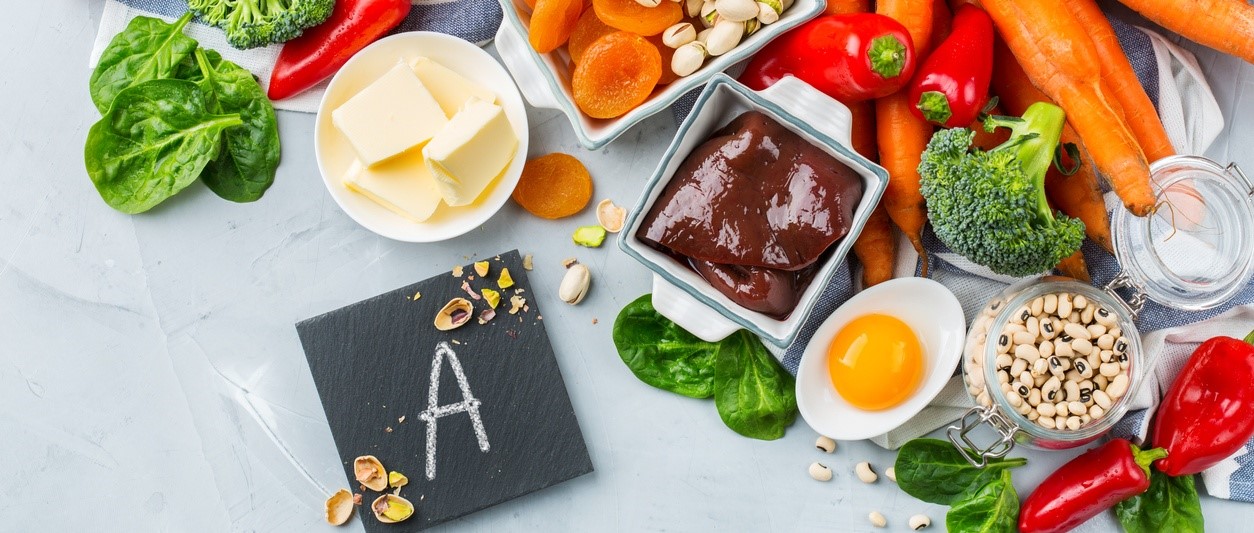
Brightly coloured fruit and vegetables - such as leafy greens, spinach, kale, broccoli, Brussels sprouts, lettuce, peppers, butternut squash, carrots, mangoes, papayas, and grapefruit.
Dairy products - these are also often fortified with vitamin A.
Meat - vitamin A is found in beef, calf, and lamb's liver.
Oily fish - such as mackerel and salmon - but also fish oil supplements.
Eggs.
Too much vitamin A
"If you eat a healthy, balanced diet, and are fit and well, there is no need to take vitamin A supplements, which could even be dangerous," Dr Lee says.
"You only need to take vitamin A supplements if you have a chronic medical condition as outlined above and have been told to do this under medical advice.
"Vitamin A supplements can cause problems as they can interact with some other types of medications," Dr Lee adds.
"For example, taking these alongside drugs such as acitretin, which is used in the treatment of psoriasis, or bexarotene, used to treat T-cell lymphoma, could lead to vitamin A toxicity, as these medicines are derived from vitamin A."
Dr Lee suggests speaking to your local pharmacist or GP before adding supplements to your diet, especially if you are on other medication.
Further Reading
Patient picks for Vitamins and supplements

Diet and nutrition
Magnesium: Health benefits and risks
Magnesium is an essential mineral that plays a role in hundreds of processes in the body. From supporting muscle and nerve function to helping maintain healthy bones, magnesium is vital for overall health. But despite its importance, many people are unsure whether they’re getting enough or whether supplements are necessary. In this article, we explore what magnesium does, the potential health benefits, and when supplementation might be appropriate.
by Josh Alderman

Diet and nutrition
What is creatine? Benefits, uses and risks
Creatine is one of the most popular sports supplements in the UK. Often associated with gym training and muscle building, creatine is widely used to support strength and performance. But it isn’t just for athletes - it’s a naturally occurring substance found in your body and in certain foods. So, what does creatine do, what are the potential creatine benefits, and are there any downsides to consider?
by Josh Alderman
About the author

Andrea Downey
About the reviewerView full bio

Dr Krishna Vakharia, MRCGP
Chief Medical Officer for Health, Optum UK
MBChB, MRCGP(2013), BMedSci (hons), DFSRH, DRCOG, PGDipDerm (Distn)
Dr Krishna Vakharia is an NHS GP. She is also a regular examiner for the postgraduate Diploma in Practical Dermatology at Cardiff University as well as being the Chief Medical Officer for health at Optum UK.
Article history
The information on this page is peer reviewed by qualified clinicians.
Article also available in English, German, Spanish, French, Italian, Portuguese, Hindi, Hebrew, Arabic, and Swedish.
13 Feb 2024 | Latest version
12 Oct 2022 | Originally published
Authored by:
Andrea Downey
Join the conversation
Share your thoughts or experiences with others in our patient communities.

Ask, share, connect.
Browse discussions, ask questions, and share experiences across hundreds of health topics.

Feeling unwell?
Assess your symptoms online for free
Sign up to the Patient newsletter
Your weekly dose of clear, trustworthy health advice - written to help you feel informed, confident and in control.
By subscribing you accept our Privacy Policy. You can unsubscribe at any time. We never sell your data.
More in diet and nutrition
- 7 easy and delicious keto breakfast ideas
- 7 light summer salad recipes for hot summer days
- 10 everyday foods high in vitamin D
- NewCan chicory root be a healthier alternative to coffee?
- UpdatedFlax seeds: a secret weapon for women's health?
- Health benefits of garlic
- Healthy pancake recipes for your diet
- How food affects your mood
- How to have a healthier barbecue
- How to have a healthy Christmas party
- How to manage food guilt over Christmas
- Is it safe for everyone to take probiotics?
- Is the food traffic light labelling system useful?
- Is your child eating too much sugar?
- Magnesium: Health benefits and risks
- Signs you’re not drinking enough water
- The 5 best probiotic foods for a healthy gut
- What is creatine? Benefits, uses and risks
- What is the carnivore diet and is it healthy?
- What you need to know about unhealthy foods