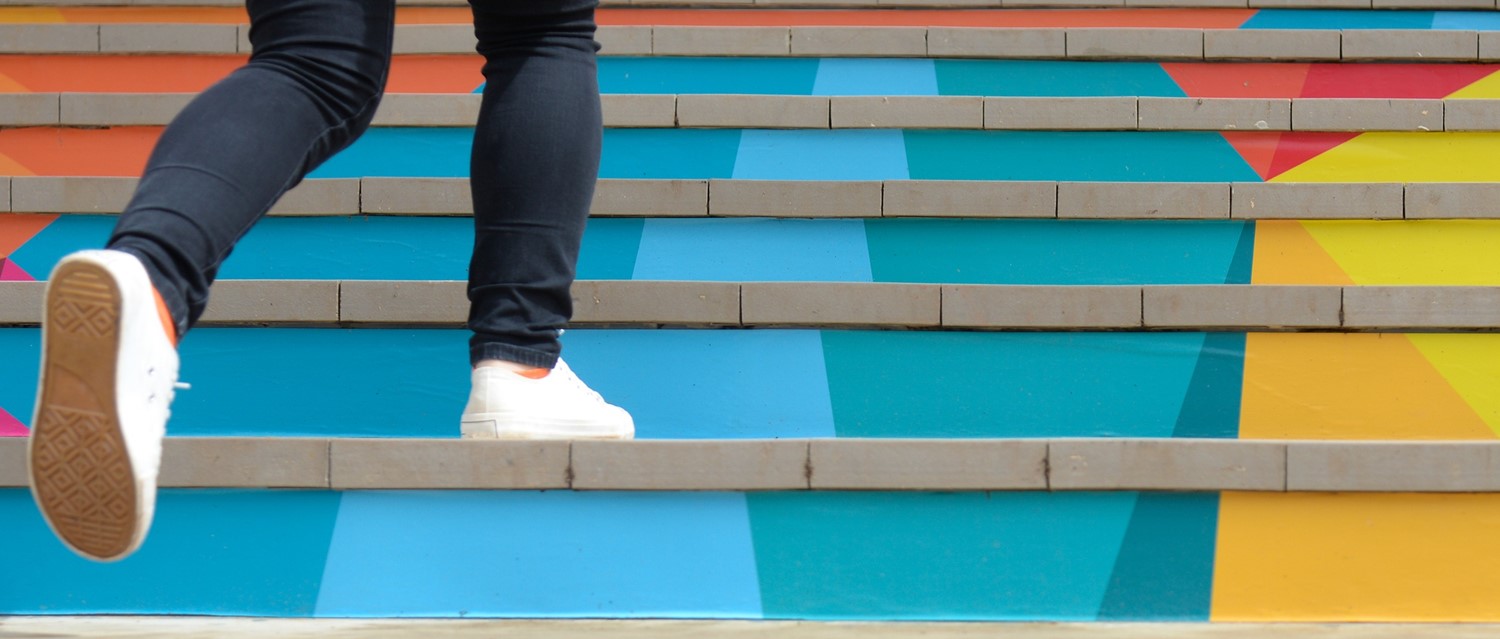
Behöver du verkligen gå 10 000 steg om dagen?
Granskad av Dr Colin Tidy, MRCGPSenast uppdaterad av Lawrence HigginsSenast uppdaterad 28 Jul 2025
Uppfyller patientens redaktionella riktlinjer
- Ladda nerLadda ner
- Dela
- Language
- Diskussion
- Ask Patient
- Ljudversion
- Lägg till i föredragna källor på Google
Are you wearing a device like a smartwatch to track your steps? If so, the goal of 10,000 steps a day may have become a bit of an obsession. But is focusing on this number the best way to improve your health? We ask an expert whether all this counting is really doing us any good.
Videoval för Träning och fysisk aktivitetVideobibliotek
In the 1960s, in the lead up to the Tokyo Olympics, the pedometer was first marketed as a fitness device. One Japanese company developed a product called 10,000 steps - translated into English. Decades later, the default setting on smart-watches and health apps is this magic number. But there's really no medical reasoning for its introduction.
Brisk walking
Of course, 10,000 steps is an easy number to remember but it's also a challenge for most people - as it equates to around five miles. And it might not be the best way to improve your health.
According to GP Dr Zoe Williams, clinical champion of physical activity at the Royal College of GPs, we need to be focusing more on speed than steps.
"What is most important is the speed at which you walk," she reveals. "You could achieve 10,000 steps but at a slow, strolling pace. This won't raise your heart rate so the health benefits would be minimal. Brisk walking - defined as at least 3 mph - is the key. Walking for around 10 minutes briskly gives health benefits."
In 2023, the largest ever study1 of its kind found that 11 minutes of brisk walking - at moderate-intensity - could prevent one in 10 early deaths worldwide. But most of us won't have a clue how fast we're walking. So how can we tell if our walking is enough to improve our health?
Williams explains: "If you walk briskly, your heart rate is faster, you breathe faster and you may feel a bit sweaty. You should still be able to hold a conversation without being out of breath. We call this moderate activity."
It can still be hard to know how much you are challenging yourself when you walk, but there is a free NHS App called Active 10 which monitors your walking and speed. Just one brisk 11-minute walk every day provides significant benefit. And if you can increase that number to three a day, you will have achieved one of the five moderately active sessions per week that is recommended for health.
Williams says: "Many people don't realise that regular brisk walking can reduce their risk of cancer by a significant amount."
So it's well worth picking up the pace.
Are 7,000 steps enough?
Research published in the Lancet2 found that the health benefits from walking tended to level off beyond 7,000 steps – although that does not mean you are not still gaining from walking further.
The research found that compared to those who walked 2000 steps per day, people who walked 7,000 steps per day had a 47% lower risk of dying from heart or blood vessel (cardiovascular) diseases and 37% of dying from cancer.
Other findings included lower risks of developing several conditions, including:
Cancer - down 6%.
Dementia - down 38%.
Depression - down 22%.
Heart disease – down 25% down.
Type 2 diabetes – down 14%.
It was also found that people were less likely to have falls.
The research found that walking even around 4,000 steps a day had several health benefits compared to walking 2,000 steps a day.
The study concluded that whilst 10,000 steps per day can still be a viable target for more active people, 7,000 steps per day is associated with meaningful improvements in health outcomes and might be a more realistic and achievable target for many.
How to be more active
One of the main reasons people give for not walking enough, according to Williams, is lack of time. But she believes exercise can be incorporated into your day-to-day life quite easily.
Start small
Small, healthy choices can add up. Some of Williams' suggestions include:
Take the stairs instead of the lift.
If you have to use an escalator, walk up it, don't stand still.
Park your car furthest away from the supermarket door - pushing your trolley is good exercise too.
If your journey to work or the school run is under a mile, then walk or cycle.
If your work is sedentary, try to fit in a quick 15-minute walk at lunchtime.
You could even encourage walking or standing meetings in your office.
"Small changes can make a significant difference over time," says Williams.
Get strong
Walking is one aspect of improving your health and fitness, but it's not the only one. Maintaining muscle strength till avoid falls and frailty in old age and help preserve bone density is also vital.
Without resistance exercise, we lose muscle mass from the age of forty and more rapidly after sixty. You may still weigh the same, but it's often fat that has replaced muscle.
Williams explains why muscle is so important: "Muscles fight inflammation in the body - systemic inflammation is the cause of many diseases, including cancer and heart disease. The more lean muscle mass someone has, the better it is for their health."
Work your muscles at home
You don't have to go to the gym to work your muscles. At home, do press ups - against the wall if that feels better - sit-ups, lunges, squats, and biceps curls using bottles of water if you don't have weights.
Daily activities, like gardening, playing with children or grandchildren outside, housework and washing the car, all count as part of a workout. For older people, Williams suggests including activities which help promote balance, such as dancing, t'ai chi and yoga.
How much exercise should you do?
The advice from the NHS is to make time for 150 minutes - 2.5 hours - of moderate exercise a week. So 30 minutes of brisk walking a day, five days a week, would reach this target. The benefits include not only a greater feeling of well-being but a reduction in your risk from cancer, heart disease, och typ 2 diabetes.
In addition, you should do resistance exercises twice a week at least for around 30 minutes, ideally every other day, so you maintain muscle strength.
Being aware of these small daily targets can make a significant difference to your long-term health.
References
2: Daily steps and health outcomes in adults: a systematic review and dose-response meta-analysis.
Patientval för Träning och fysisk aktivitet
Hälsosamt liv
Hur man gör pilates hemma
One of the great things about Pilates is that it can be done from your living room or bedroom - you don't need to go to a fancy Pilates studio providing you have plenty of space. If you are doing Pilates at home, it's important to do so safely and, if you are a beginner, you should work your way up to more advanced exercises and positions, rather than pushing yourself straightaway.
av Emily Jane Bashforth
Hälsosamt liv
De bästa formerna av träning för dem som hatar gymmet
With all the amazing advances in science and medicine, it's a great disappointment to me that nobody has yet come up with anything much more effective for weight loss than eating less and exercising more. For many of us, exercise is a chore rather than a delight. And the gym isn't for everyone. Once, I drove the 20 minutes there, got my kit out, looked at the David Lloyd sign and simply couldn't face it. I got back in my car and drove home.
av Dr Mary Harding, MRCGP
Om författaren
Uppdaterad av

Lawrence Higgins
Chefredaktör
Kandidatexamen, påbyggnadsdiplom
Lawrence har arbetat både som chefredaktör för Patient.info och som medverkande skribent. Han är också medlem i Guild of Health Writers.
Författad av

Glynis Kozma
Om recensentenVisa fullständig biografi

Dr Colin Tidy, MRCGP
Allmänläkare, Medicinsk Författare
MBBS, MRCGP, MRCP (Paediatrics), DCH
Dr Colin Tidy är en NHS-läkare, baserad i Oxfordshire.
Artikelhistorik
Artikeln finns också på Engelska, Tyska, Spanska, Franska, Italienska, Portugisiska, Hindi, Hebreiska, Arabiska, och Svenska.
Next review due: 24 Jul 2028
28 Jul 2025 | Senaste versionen
17 Jul 2018 | Ursprungligen publicerad
Författad av:
Glynis Kozma
Dela dina tankar eller erfarenheter med andra i vår patientgemenskaper.
Anmäl dig till Patientens nyhetsbrev
Din veckovisa dos av tydliga, pålitliga hälsoråd - skrivna för att hjälpa dig känna dig informerad, självsäker och i kontroll.
Genom att prenumerera accepterar du våra Sekretesspolicy. Du kan avsluta prenumerationen när som helst. Vi säljer aldrig dina uppgifter.