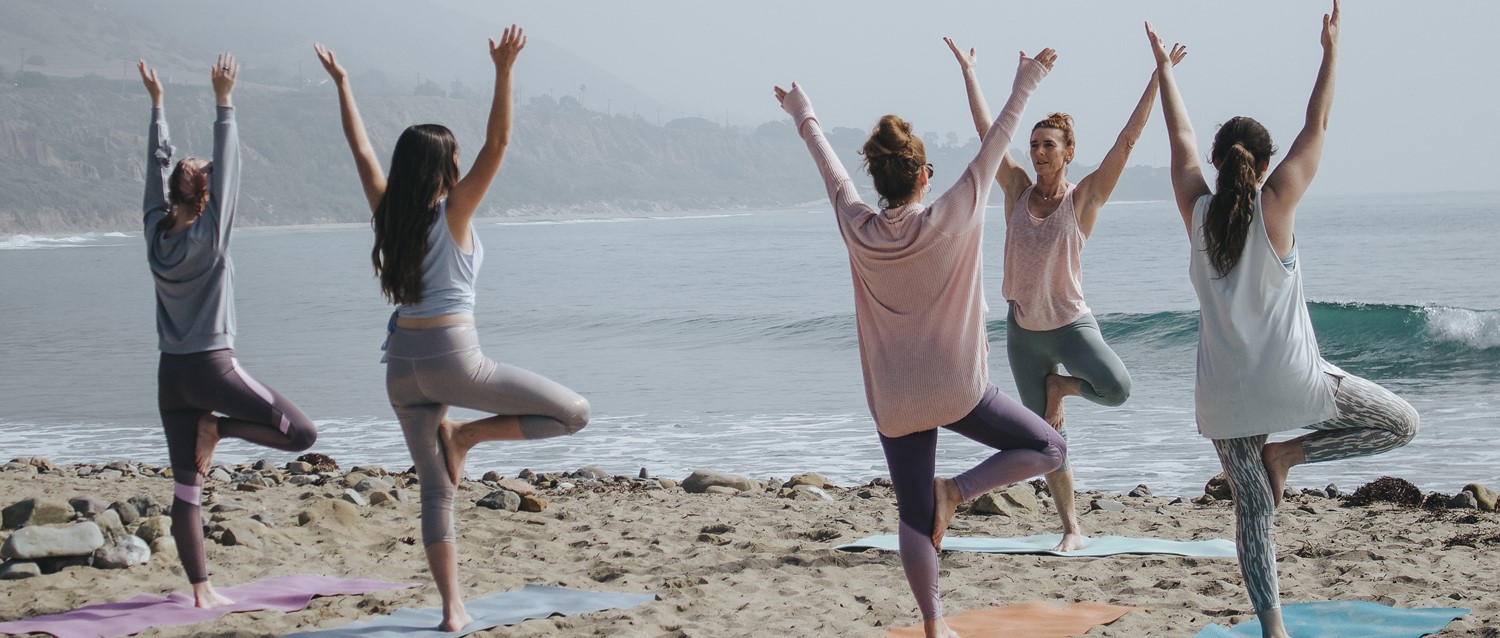
Är termen 'wellness' problematisk?
Granskad av Dr Sarah JarvisFörfattad av Lydia SmithUrsprungligen publicerad 19 Dec 2021
Uppfyller patientens redaktionella riktlinjer
- Ladda nerLadda ner
- Dela
- Language
- Diskussion
- Ask Patient
- Ljudversion
- Lägg till i föredragna källor på Google
From juice cleanses to healing crystals, wellness is everywhere. On Instagram, there are more than 54 million posts containing the hashtag 'wellness', often featuring pseudo-scientific health cures and well-being advice. But what exactly is wellness - and is it simply a marketing ploy to entice us into spending money in the name of health?
Stöd för psykisk hälsa för vuxna och barn
Online-KBT och psykologisk terapi för vuxna och barn i åldern 8–17 år. Onebrights ackrediterade kliniker hjälper personer som upplever ångest, depression och andra känslomässiga utmaningar.
What does the word wellness mean?
Wellness has become increasingly popular in recent years, particularly among social media influencers. However, the term was popularised in the 1950s by Dr Halbert Dunn, an American physician who combined the words 'wellbeing' and 'fitness'.
Writing in the Canadian Journal of Public Health in 1959, Dunn defined "high-level wellness" as: "A condition of change in which the individual moves forward, climbing toward a higher potential of functioning." Unlike good health, wellness isn't simply the absence of disease or illness, but our ability to thrive physically and mentally.
At face value, there is nothing wrong with wanting to feel good. Forskning suggests taking care of your mind and body is linked to good health, with self-care associated with less stress and a higher quality of life. However, problems arise with the way the term wellness is used.
Wellness as a marketing ploy
The global wellness market is booming and estimated to be worth more than $1.5 trillion (£1.13 trillion), surpassing the diet industry. And when there is money to be made, exploitation is a real risk.
"The term 'wellness' has become a huge money-making, marketing category for retailers," says Counselling Directory member Karen Schumann. "It seems these days, anything can be classed as wellness and sold to consumers as a quick fix or something that will make someone feel that they are working on themself.
"I think many companies are aware of the growth in mental health awareness and the increase in ångest och depression, particularly from the pandemic. They could be using this to take advantage of the vulnerability of those people."
Wellness during the pandemic
For many of us, COVID-19 has had a serious impact on our mental health and exacerbated risk factors such as unemployment, financial instability and social isolation. For those suffering and looking for a solution, there may be greater temptation to buy into wellness products in an attempt to boost mental health.
"We have social media influencers now who are ready to sell diet and beauty products under the umbrella of wellness, while not being entirely honest about whether something has worked or helped them," says Schumann. Not only is this misleading, it can be potentially damaging - particularly if people avoid seeking professional mentala hälsa support as a result.
The exploitation of wellness and self-care
Wellness may be a popular buzzword, but one of the key problems is its lack of specific meaning. It is open to interpretation and often exploited by companies to boost their own reputations at the expense of stressed-out workers.
Often, the term wellness is used to cover up and ignore structural problems in the workplace that are contributing to stress and poor mental health. Companies often promote wellness programmes and encourage employees to engage in self-care, yet do nothing to address problems such as job insecurity, overworking and unrealistic workloads.
"The word wellness appears to have become quite a buzz word at this time," says Counselling Directory member Joanne Loach. "Unfortunately, the fact that it acts as some kind of umbrella term for general health means it can lose any specific meaning. Thus when we refer to wellness as a blanket term, it fails to allow for any distinction between the different parts of the self or how well or unwell they may be."
Wellness can promote poor body image
Additionally, wellness isn't simply associated with the way we feel, but how we look. A brief search of wellness hashtags on sociala medier sites brings up thousands of images of toned bodies and wrinkle-free faces. These often unrealistic images can have a detrimental impact on our självkänsla and confidence, which can have a knock-on effect on our mental health.
Instead of promoting self-care, the wellness industry often encourages us to compare ourselves to others and fixate on our perceived flaws. This can lead to pressure to improve our appearance at any cost and risks encouraging people to engage in fad diets or unhealthy lifestyle changes, which can in turn lead to problems such as ätstörningar.
Taking wellness with a pinch of salt
That being said, it's important to note that wellness isn't necessarily all bad. "If the term encourages people to take steps towards looking after themselves in a physical or mental way, or gets them to think about their health, then perhaps that could be helpful," says Schumann.
However, it's essential to take wellness advice with a pinch of salt. Not all advice on sociala medier is legitimate - and it's easy to get sucked into money-making schemes. Therefore, it's important to be discerning.
"If there was more education for consumers about looking out for companies taking advantage of them or over promising influencers, that could help too," Schumann adds.
Patientval för Mentalt välbefinnande
Mentalt välbefinnande
Is your house haunted? The science behind sleep paralysis
Have you ever woken in the middle of the night, certain there’s someone standing at the end of your bed, but found yourself unable to move or call for help? Perhaps you’ve sensed a dark figure in the corner of your room, felt pressure on your chest, or heard strange noises that seem to come from nowhere. It might sound like the plot of a classic ghost story. But there’s a scientific explanation for these frightening experiences - sleep paralysis. With Halloween approaching, we explore what happens during sleep paralysis, why some people see or sense a presence in their bedroom, and what you can do to reduce the chances of it happening again.
av Thomas Andrew Porteus, MBCS

Mentalt välbefinnande
Kan pilates hjälpa till att lugna ditt nervsystem? 3 enkla rörelser att prova
We’re hearing a lot at the moment about the sympathetic nervous system and the important role it can play in your mental wellbeing. When it’s activated too often, it can leave you feeling stuck in a constant fight-or-flight mode. That’s why it’s so important to find ways to help calm your nervous system and bring your body back to a more relaxed state. One way you can support this is through Pilates, which can help promote relaxation, mindful movement, and a greater sense of calm.
av Victoria Raw
Om författarenVisa fullständig biografi
Författad av

Lydia Smith
Featureförfattare
BA, MA, MSc
Lydia Smith är en prisbelönt journalist och featureförfattare som har skrivit mycket om kvinnors hälsa och mental hälsa. Hon studerar för närvarande en MSc i psykologi.
Om recensentenVisa fullständig biografi

Dr Sarah Jarvis
Klinisk konsult
MA (Cantab), BM, BCh (Oxon), DRCOG, FRCGP, MBE
Efter att ha utbildat sig i medicin vid Cambridge och Oxford blev Dr Sarah Jarvis MBE allmänläkare.
Artikelhistorik
Artikeln finns också på Engelska, Tyska, Spanska, Franska, Italienska, Portugisiska, Hindi, Hebreiska, Arabiska, och Svenska.
19 Dec 2021 | Ursprungligen publicerad
Författad av:
Lydia SmithGranskad av
Dr Sarah Jarvis
Dela dina tankar eller erfarenheter med andra i vår patientgemenskaper.
Anmäl dig till Patientens nyhetsbrev
Din veckovisa dos av tydliga, pålitliga hälsoråd - skrivna för att hjälpa dig känna dig informerad, självsäker och i kontroll.
Genom att prenumerera accepterar du våra Sekretesspolicy. Du kan avsluta prenumerationen när som helst. Vi säljer aldrig dina uppgifter.