Infantile-onset spinocerebellar ataxia
Senast uppdaterad 13 nov 2023
Uppfyller patientens redaktionella riktlinjer
- Ladda nerLadda ner
- Dela
- Language
- Diskussion
- Ljudversion
- Lägg till i föredragna källor på Google
Infantile-onset spinocerebellar ataxia (IOSCA) is a progressive disorder that affects the nervous system. Babies with IOSCA develop normally during the first year of life. During early childhood, however, they begin experiencing difficulty coordinating movements (ataxia); very weak muscle tone (hypotonia); involuntary writhing movements of the limbs (athetosis); and decreased reflexes. By their teenage years affected individuals require wheelchair assistance.
Beskrivning
Infantile-onset spinocerebellar ataxia (IOSCA) is a progressive disorder that affects the nervous system. Babies with IOSCA develop normally during the first year of life. During early childhood, however, they begin experiencing difficulty coordinating movements (ataxia); very weak muscle tone (hypotonia); involuntary writhing movements of the limbs (athetosis); and decreased reflexes. By their teenage years affected individuals require wheelchair assistance.
People with IOSCA often develop problems with the autonomic nervous system, which controls involuntary body functions. As a result, they may experience excessive sweating, difficulty controlling urination, and severe constipation.
IOSCA also leads to vision and hearing problems that begin by about age 7. Children with this disorder develop weakness in the muscles that control eye movement (ophthalmoplegia). In their teenage years they experience degeneration of the nerves that carry information from the eyes to the brain (optic atrophy), which can result in vision loss. Hearing loss caused by nerve damage (sensorineural hearing loss) typically occurs during childhood and progresses to profound deafness.
Individuals with IOSCA may have recurrent seizures (epilepsy). These seizures can lead to severe brain dysfunction (encephalopathy).
Most people with IOSCA survive into adulthood. However, a few individuals with IOSCA have an especially severe form of the disorder involving liver damage and encephalopathy that develops during early childhood. These children do not generally live past age 5.
Inheritance patterns
The source lists the following possible inheritance patterns: Autosomal recessive. More than one pattern can apply in different cases.
Related genes
Other names
IOSCA
Ohaha syndrome
Ophthalmoplegia, hypotonia, ataxia, hypacusis, and athetosis
Related patient information and medicines

Patient information leaflet
Celiaki
Turner syndrome. Symptom av coeliac disease in babies inkludera: The baby failing to grow or to gain weight. Pale and bulky poo (faeces). Coeliac disease tends to be under-diagnosed. Persistent, unexplained abnormal liver function tests. Unexplained ataxia, that could be gluten ataxia. (Ataxia is a rare brain condition which causes problems with.

Patient information leaflet
Perifer neuropati
The damage means that the messages that travel between your central and peripheral nervous system are disrupted. Types of peripheral neuropathy Peripheral neuropathy can be divided into: Acute per... Hereditary diseases Certain diseases that you can inherit from your parents can cause peripheral neuropathy. Two of the most common of these are.

Patient information leaflet
Hyponatraemia
What is it hyponatraemia. Hyponatraemia can be... These include infants who are taking formula which has not been made up correctly, and elderly people who may be less likely to express thirst and who may be taking medicines which cause hyponatremi as a side-effect, or suffer from medical conditions associated with hyponatremi (eg, kidney or.
Patient information leaflet
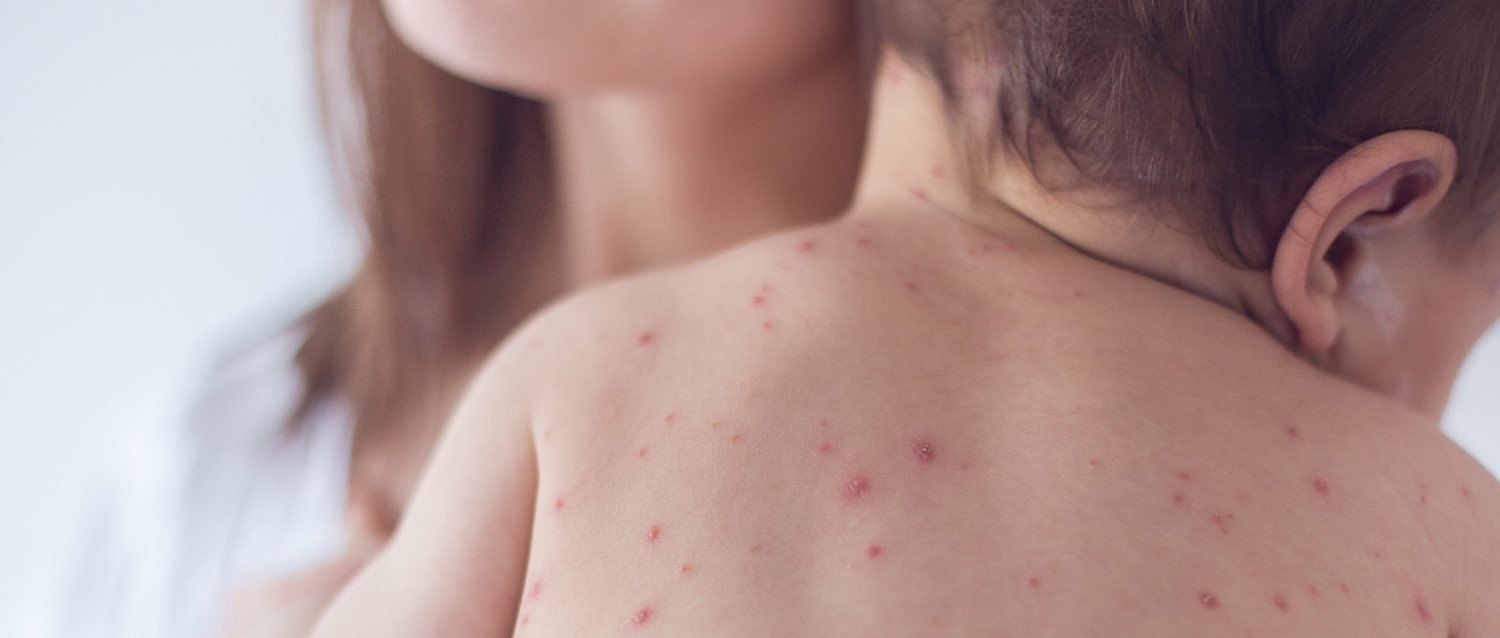
Vattkoppor hos barn
Full recovery is usual in children aged under 12 years. Serious complications are rare but are more likely to occur in children with a poor immune system, such as those on chemotherapy. What is chickenpox. Vattkoppor är en infektion orsakad av varicella-zosterviruset. Most children have chickenpox at some stage. Most commonly, children get.

Patient information leaflet
Vattkoppskontakt under graviditet
This is sometimes serious. About 1 in 100 gravid women who develop chickenpox-related pneumonia die of this serious infection. Brain inflammation (encephalitis) och ataxia (problems with co-ordination av movements) are uncommon but very serious complications. Vary rarely, other serious complications develop. For example: inflammation of the.

Patient information leaflet
Vattkoppor hos vuxna och tonåringar
What is chickenpox. The chickenpox infection is caused by the varicella-zoster virus (VZV). The immune system makes proteins called antibodies during the infection. Inflammation of the lung (pneumonia) is a complication affecting about ... People who smoke are more likely to get this. Inflammation of the brain (encephalitis) and ataxia (problems.
Vidare läsning och referenser
- Infantile-onset spinocerebellar ataxia; MedlinePlus, National Library of Medicine.
- El-Hattab AW, Craigen WJ, Wong LJC, Scaglia F. Mitochondrial DNA Maintenance Defects Overview. 2018 Mar 8. In: Adam MP, Bick S, Mirzaa GM, Wallace SE, Amemiya A, editors. GeneReviews(R) [Internet]. Seattle (WA): University of Washington, Seattle; 1993-2026. Available from http://www.ncbi.nlm.nih.gov/books/NBK487393/
- Hakonen AH, Goffart S, Marjavaara S, Paetau A, Cooper H, Mattila K, Lampinen M, Sajantila A, Lonnqvist T, Spelbrink JN, Suomalainen A. Infantile-onset spinocerebellar ataxia and mitochondrial recessive ataxia syndrome are associated with neuronal complex I defect and mtDNA depletion. Hum Mol Genet. 2008 Dec 1;17(23):3822-35. doi: 10.1093/hmg/ddn280. Epub 2008 Sep 5.
- Lonnqvist T, Paetau A, Valanne L, Pihko H. Recessive twinkle mutations cause severe epileptic encephalopathy. Brain. 2009 Jun;132(Pt 6):1553-62. doi: 10.1093/brain/awp045. Epub 2009 Mar 20.
- Lopriore P, Unluturk Z, Klopstock T, Karaa A, Rouzier C, Dominguez-Gonzalez C, Lamperti C, Mancuso M; Twinkle-Related Disorders International Consortium for Trial Readiness (TReDIC); Cecchi G, Montano V, Siciliano G, Nicoletta V, Maioli M, Primiano G, Servidei S, La Morgia C, Carelli V, Valentino ML, Caporali L, Arena IG, Musumeci O, Lopergolo D, Malandrini A, Gallus GN, Filosto M, Bello L, Pegoraro E, Comi GP, Magri F, Ronchi D, Di Fonzo A, Percetti M, Azzimonti M, Buchner B, Prokisch H, Bermejo-Guerrero L, Procaccio V, Gaignard P, Echaniz-Laguna A, Schiff M, Rotig A, Toutain A, Paquis-Flucklinger V, Morel G, Robin S, Nadaj-Pakleza A, Chanson JB, Chaussenot A, Ait-El-Mkadem Saadi S, Trimouille A, Tranchant C, Salort-Campana E, Bieth E, Sacconi S, Duval F, Restrepo Vera JL, Molnar MJ, Vissing J, Haas R, Larson A, Enns GM, Parikh S, Goldstein A, Hirano M. Clinical and Genotypic Spectrum of Twinkle-Related Disorders: Insights From a Multinational Cohort Study. Neurology. 2026 Feb 10;106(3):e214401. doi: 10.1212/WNL.0000000000214401. Epub 2026 Jan 15.
- Nikali K, Suomalainen A, Saharinen J, Kuokkanen M, Spelbrink JN, Lonnqvist T, Peltonen L. Infantile onset spinocerebellar ataxia is caused by recessive mutations in mitochondrial proteins Twinkle and Twinky. Hum Mol Genet. 2005 Oct 15;14(20):2981-90. doi: 10.1093/hmg/ddi328. Epub 2005 Aug 31.
- Pierce SB, Gulsuner S, Stapleton GA, Walsh T, Lee MK, Mandell JB, Morales A, Klevit RE, King MC, Rogers RC. Infantile onset spinocerebellar ataxia caused by compound heterozygosity for Twinkle mutations and modeling of Twinkle mutations causing recessive disease. Cold Spring Harb Mol Case Stud. 2016 Jul;2(4):a001107. doi: 10.1101/mcs.a001107.
- Remtulla S, Emilie Nguyen CT, Prasad C, Campbell C. Twinkle-Associated Mitochondrial DNA Depletion. Pediatr Neurol. 2019 Jan;90:61-65. doi: 10.1016/j.pediatrneurol.2018.08.007. Epub 2018 Aug 9.
- Sukhudyan B, Gevorgyan A, Sarkissian A, Boltshauser E. Expanding phenotype of mitochondrial depletion syndrome in association with TWNK mutations. Eur J Paediatr Neurol. 2019 May;23(3):537-540. doi: 10.1016/j.ejpn.2019.02.002. Epub 2019 Feb 14.
Artikelhistorik
Artikeln finns också på Engelska, Tyska, Spanska, Franska, Italienska, Portugisiska, Hindi, Hebreiska, Arabiska, och Svenska.
13 nov 2023 | Senaste versionen
1 Mar 2010 | Ursprungligen publicerad
Delta i konversationen
Dela dina tankar eller erfarenheter med andra i vår patientgemenskaper.

Fråga, dela, anslut.
Bläddra i diskussioner, ställ frågor och dela erfarenheter inom hundratals hälsorelaterade ämnen.
Anmäl dig till Patientens nyhetsbrev
Din veckovisa dos av tydliga, pålitliga hälsoråd - skrivna för att hjälpa dig känna dig informerad, självsäker och i kontroll.
Genom att prenumerera accepterar du våra Sekretesspolicy. Du kan avsluta prenumerationen när som helst. Vi säljer aldrig dina uppgifter.