OCRL inositol polyphosphate-5-phosphatase
Senast uppdaterad 13 apr 2026
Uppfyller patientens redaktionella riktlinjer
- Ladda nerLadda ner
- Dela
- Language
- Diskussion
- Ask Patient
- Ljudversion
- Lägg till i föredragna källor på Google
The OCRL gene provides instructions for making the enzyme OCRL, which is present in cells throughout the body. OCRL is part of a larger group of enzymes that modify fat (lipid) molecules known as membrane phospholipids. Phospholipids help form the basic structure of cell membranes.
Videoval för GenesVideobibliotek
Normal function
The OCRL gene provides instructions for making the enzyme OCRL, which is present in cells throughout the body. OCRL is part of a larger group of enzymes that modify fat (lipid) molecules known as membrane phospholipids. Phospholipids help form the basic structure of cell membranes.
OCRL is found in several areas within cells. It is concentrated in a complex network of membranes known as the trans-Golgi network, which sorts proteins and other molecules and sends them to their proper locations. OCRL is also found in endosomes, specialized compartments that help transport proteins and other molecules within the cell. The trans-Golgi network and endosomes play an important role in endocytosis, which is the process of transporting proteins from the outer cell membrane to the inside of the cell.
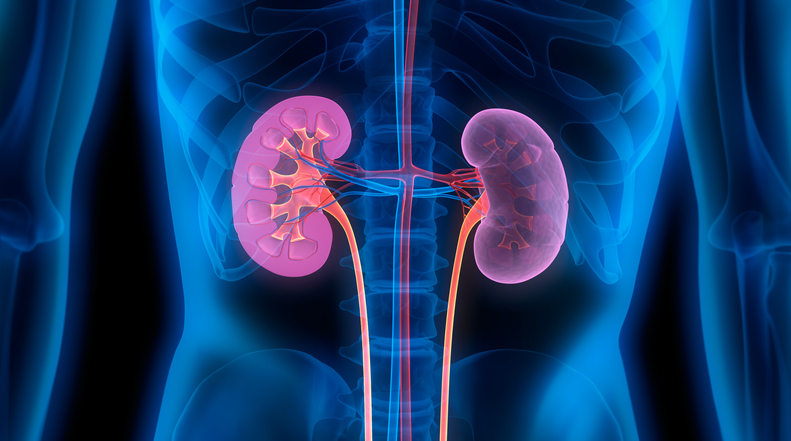
Endocytosis is especially important in proximal tubular cells. Proximal tubules are structures that are found in the kidneys. They help reabsorb proteins and other nutrients into the bloodstream. OCRL plays a key role in the kidneys' ability to reabsorb proteins and important nutrients.
Recent research suggests that OCRL is also involved in the formation of certain types of cilia. Cilia are microscopic, finger-like projections that stick out from the surface of cells. They are important for the structure and function of many types of cells, including cells in the eyes and kidneys.
Conditions referring to this gene or chromosome
Other names
Dent disease 2
Dent-2
OCRL1
Related patient information and medicines

Patient information leaflet
Perifera vasodilatatorer
Peripheral vasodilators are medicines that are used to treat conditions that affect blood vessels in outer (peripheral) parts of the body such as the arms and legs. Inositol nicotinate and pentoxifylline are not considered effective for PAD. Cilostazol Cilostazol tablets and inositol nicotinate work by widening the arteries that supply blood to.
Patient information leaflet
Kronisk njursjukdom
Severity can vary but most cases are mild or moderate, occur in older people and do not cause symptoms. Chronic kidney disease (CKD) means that the kidneys are not working as well as they used to, either due to being diseased or damaged in some way, or due to ageing. Chronic means ongoing, persistent and long-term. The word "failure" implies that.

Patient information leaflet
Diet in chronic kidney disease
Chronic kidney disease (CKD) is a common long-term condition where the kidneys aren't working as well as they should be. There are some dietary choices that are recommended for people with early CKD. See the separate Healthy Eating Healthy eating leaflet for more information. If your kidney function is becoming worse (stage 4 to 5), you will.

Patient information leaflet
Polycystisk njursjukdom
Polycystic kidney disease (PKD) causes many fluid-filled sacs (cysts) to develop in the kidneys. The most common type of PKD is an inherited condition called autosomal dominant polycystic kidney disease (ADPKD). What is polycystic kidney disease. A cyst is a fluid-filled sac. Cysts occur in various sizes, in various conditions and in various parts.

Patient information leaflet
Testikelcancer
Testicular cancer is a cancer that arises from a testicle (testis). Around half of all cases occur in men aged under 35 but testicular cancer rarely occurs before puberty. Another useful test i... The tumör markers commonly tested for are alpha-fetoprotein (AFP), beta human chorionic gonadotrophin (beta-hCG), lactic dehydrogenase (LDH) and.

Patient information leaflet
Kawasakis sjukdom
Kawasakis sjukdom is a rare condition that affects small to medium-sized blood vessels in the body. Kawasaki disease causes the the walls of the blood vessels to become inflamed and swollen (vasculitis). Kawasaki disease mainly affects children less than 5 years old. The exact cause of Kawasaki disease remains unknown. Kawasaki disease causes a.
Vidare läsning och referenser
- OCRL inositol polyphosphate-5-phosphatase; MedlinePlus, National Library of Medicine.
- Attree O, Olivos IM, Okabe I, Bailey LC, Nelson DL, Lewis RA, McInnes RR, Nussbaum RL. The Lowe's oculocerebrorenal syndrome gene encodes a protein highly homologous to inositol polyphosphate-5-phosphatase. Nature. 1992 Jul 16;358(6383):239-42. doi: 10.1038/358239a0.
- Choudhury R, Diao A, Zhang F, Eisenberg E, Saint-Pol A, Williams C, Konstantakopoulos A, Lucocq J, Johannes L, Rabouille C, Greene LE, Lowe M. Lowe syndrome protein OCRL1 interacts with clathrin and regulates protein trafficking between endosomes and the trans-Golgi network. Mol Biol Cell. 2005 Aug;16(8):3467-79. doi: 10.1091/mbc.e05-02-0120. Epub 2005 May 25.
- Claverie-Martin F, Ramos-Trujillo E, Garcia-Nieto V. Dent's disease: clinical features and molecular basis. Pediatr Nephrol. 2011 May;26(5):693-704. doi: 10.1007/s00467-010-1657-0. Epub 2010 Oct 10.
- Coon BG, Hernandez V, Madhivanan K, Mukherjee D, Hanna CB, Barinaga-Rementeria Ramirez I, Lowe M, Beales PL, Aguilar RC. The Lowe syndrome protein OCRL1 is involved in primary cilia assembly. Hum Mol Genet. 2012 Apr 15;21(8):1835-47. doi: 10.1093/hmg/ddr615. Epub 2012 Jan 6.
- Ehlayel AM, Copelovitch L. Update on Dent Disease. Pediatr Clin North Am. 2019 Feb;66(1):169-178. doi: 10.1016/j.pcl.2018.09.003.
- Erdmann KS, Mao Y, McCrea HJ, Zoncu R, Lee S, Paradise S, Modregger J, Biemesderfer D, Toomre D, De Camilli P. A role of the Lowe syndrome protein OCRL in early steps of the endocytic pathway. Dev Cell. 2007 Sep;13(3):377-90. doi: 10.1016/j.devcel.2007.08.004.
- Hall AM, Polesel M, Berquez M. The proximal tubule, protein uptake, and the riddle of the segments. Kidney Int. 2021 Apr;99(4):803-805. doi: 10.1016/j.kint.2020.12.031.
- Hichri H, Rendu J, Monnier N, Coutton C, Dorseuil O, Poussou RV, Baujat G, Blanchard A, Nobili F, Ranchin B, Remesy M, Salomon R, Satre V, Lunardi J. From Lowe syndrome to Dent disease: correlations between mutations of the OCRL1 gene and clinical and biochemical phenotypes. Hum Mutat. 2011 Apr;32(4):379-88. doi: 10.1002/humu.21391. Epub 2011 Mar 10.
- Hoopes RR Jr, Shrimpton AE, Knohl SJ, Hueber P, Hoppe B, Matyus J, Simckes A, Tasic V, Toenshoff B, Suchy SF, Nussbaum RL, Scheinman SJ. Dent Disease with mutations in OCRL1. Am J Hum Genet. 2005 Feb;76(2):260-7. doi: 10.1086/427887. Epub 2004 Dec 30.
- Hyvola N, Diao A, McKenzie E, Skippen A, Cockcroft S, Lowe M. Membrane targeting and activation of the Lowe syndrome protein OCRL1 by rab GTPases. EMBO J. 2006 Aug 23;25(16):3750-61. doi: 10.1038/sj.emboj.7601274. Epub 2006 Aug 10.
- Jin YY, Huang LM, Quan XF, Mao JH. Dent disease: classification, heterogeneity and diagnosis. World J Pediatr. 2021 Feb;17(1):52-57. doi: 10.1007/s12519-020-00357-1. Epub 2020 Apr 4.
- Lewis RA, Nussbaum RL, Brewer ED. Lowe Syndrome. 2001 Jul 24 [updated 2019 Apr 18]. In: Adam MP, Bick S, Mirzaa GM, Wallace SE, Amemiya A, editors. GeneReviews(R) [Internet]. Seattle (WA): University of Washington, Seattle; 1993-2026. Available from http://www.ncbi.nlm.nih.gov/books/NBK1480/
- Lieske JC, Milliner DS, Beara-Lasic L, Harris P, Cogal A, Abrash E. Dent Disease. 2012 Aug 9 [updated 2017 Dec 14]. In: Adam MP, Bick S, Mirzaa GM, Wallace SE, Amemiya A, editors. GeneReviews(R) [Internet]. Seattle (WA): University of Washington, Seattle; 1993-2026. Available from http://www.ncbi.nlm.nih.gov/books/NBK99494/
- Lowe M. Structure and function of the Lowe syndrome protein OCRL1. Traffic. 2005 Sep;6(9):711-9. doi: 10.1111/j.1600-0854.2005.00311.x.
- Luo N, West CC, Murga-Zamalloa CA, Sun L, Anderson RM, Wells CD, Weinreb RN, Travers JB, Khanna H, Sun Y. OCRL localizes to the primary cilium: a new role for cilia in Lowe syndrome. Hum Mol Genet. 2012 Aug 1;21(15):3333-44. doi: 10.1093/hmg/dds163. Epub 2012 Apr 27.
- McCrea HJ, Paradise S, Tomasini L, Addis M, Melis MA, De Matteis MA, De Camilli P. All known patient mutations in the ASH-RhoGAP domains of OCRL affect targeting and APPL1 binding. Biochem Biophys Res Commun. 2008 May 2;369(2):493-9. doi: 10.1016/j.bbrc.2008.02.067. Epub 2008 Feb 26.
- Pirruccello M, De Camilli P. Inositol 5-phosphatases: insights from the Lowe syndrome protein OCRL. Trends Biochem Sci. 2012 Apr;37(4):134-43. doi: 10.1016/j.tibs.2012.01.002. Epub 2012 Feb 28.
- Raucher D, Stauffer T, Chen W, Shen K, Guo S, York JD, Sheetz MP, Meyer T. Phosphatidylinositol 4,5-bisphosphate functions as a second messenger that regulates cytoskeleton-plasma membrane adhesion. Cell. 2000 Jan 21;100(2):221-8. doi: 10.1016/s0092-8674(00)81560-3.
- Saito A, Sato H, Iino N, Takeda T. Molecular mechanisms of receptor-mediated endocytosis in the renal proximal tubular epithelium. J Biomed Biotechnol. 2010;2010:403272. doi: 10.1155/2010/403272.
- Utsch B, Bokenkamp A, Benz MR, Besbas N, Dotsch J, Franke I, Frund S, Gok F, Hoppe B, Karle S, Kuwertz-Broking E, Laube G, Neb M, Nuutinen M, Ozaltin F, Rascher W, Ring T, Tasic V, van Wijk JA, Ludwig M. Novel OCRL1 mutations in patients with the phenotype of Dent disease. Am J Kidney Dis. 2006 Dec;48(6):942.e1-14. doi: 10.1053/j.ajkd.2006.08.018.
Artikelhistorik
Artikeln finns också på Engelska, Tyska, Spanska, Franska, Italienska, Portugisiska, Hindi, Hebreiska, Arabiska, och Svenska.
13 apr 2026 | Senaste versionen
1 Apr 2026 | Ursprungligen publicerad
Dela dina tankar eller erfarenheter med andra i vår patientgemenskaper.
Enkel tillgång till pålitliga behandlingar och hälsotjänster online.
Common conditions
Get help with common conditions through the NHS, without a GP appointment.





Anmäl dig till Patientens nyhetsbrev
Din veckovisa dos av tydliga, pålitliga hälsoråd - skrivna för att hjälpa dig känna dig informerad, självsäker och i kontroll.
Genom att prenumerera accepterar du våra Sekretesspolicy. Du kan avsluta prenumerationen när som helst. Vi säljer aldrig dina uppgifter.