
Hyperlipidemi
Granskad av Dr Colin Tidy, MRCGPSenast uppdaterad av Dr Toni Hazell, FRCGPSenast uppdaterad 24 jul 2025
Uppfyller patientens redaktionella riktlinjer
- Ladda nerLadda ner
- Dela
- Language
- Diskussion
- Ask Patient
- Ljudversion
- Lägg till i föredragna källor på Google
I denna serie:Högt kolesterolFamiljär hyperkolesterolemiStatiner och andra blodfettsänkande läkemedel
Hyperlipidemi innebär en hög nivå av kolesterol eller triglycerider i ditt blod.
Överblick
Hyperlipidaemia means you have high levels of fats (lipids) in your blood.
It can be caused by lifestyle, other medical conditions, inherited genes, or some medicines.
It is usually found during routine screening through a blood test.
Treatment involves a healthy diet and sometimes medication to lower lipid levels.
Explore cholesterol treatment options
Get expert healthcare advice from the comfort of home. Complete a quick online consultation, available 24/7, with your request reviewed by a UK-registered clinician. Next day delivery available on eligible treatments.

What causes hyperlipidaemia?
Hyperlipidaemia is often found when people are overweight or have an unhealthy diet. It can also be the result of drinking too much alcohol. It can be something that you may have inherited through your family genes (known as primary hyperlipidaemia) and approximately 1 person in 500 will have this cause.
Andra tillstånd
It may be because of another medical condition that you may have, such as diabetes, when it is known as secondary. Other causes include:
Medicine side-effects
Some prescribed medicines can affect your cholesterol level, including:
Tiaziddiuretika (used to control blood pressure).
Ciclosporin (used after organ transplants).
Antiretroviral therapy (used to treat HIV infection).
Betablockerare (used to control heart rate).
Atypical antipsychotics (used in some mental health problems).
Retinoic acid derivatives (used in some skin conditions).
How do I know if I have hyperlipidaemia?
Hyperlipidaemia is often found during routine screening when your doctor is trying to assess your risk of having heart attacks or strokes. This may be as part of an annual health check if you are over 40 years of age, or if you have a close relative who had these problems at a young age.
Usually, the diagnosis is made after a blood test. It used to be the case that we always asked people to fast (not eat) for 8-12 hours before the blood test, but this is now usually not needed. The person who requests the blood test will tell you if you need to fast for it.
There are also changes that may be visible on your body if you have the inherited form of hyperlipidaemia:
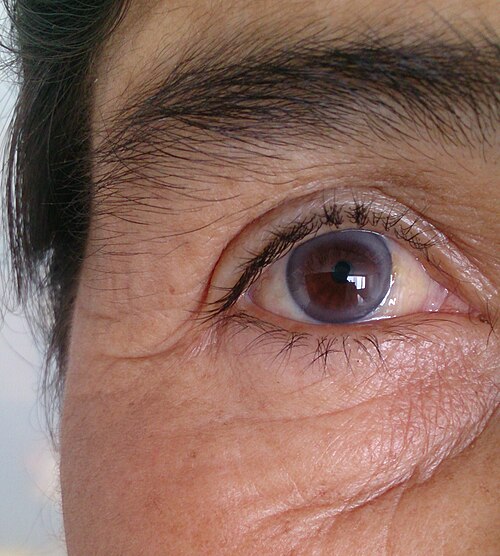
Premature arcus senilis - this is a white or grey ring that is visible when your doctor looks at the front of your eyes.
Arcus senilis
Tendon xanthomata - these are hard nodules that you may find in the tendons of the knuckles and the Achilles (at the back of your ankle).
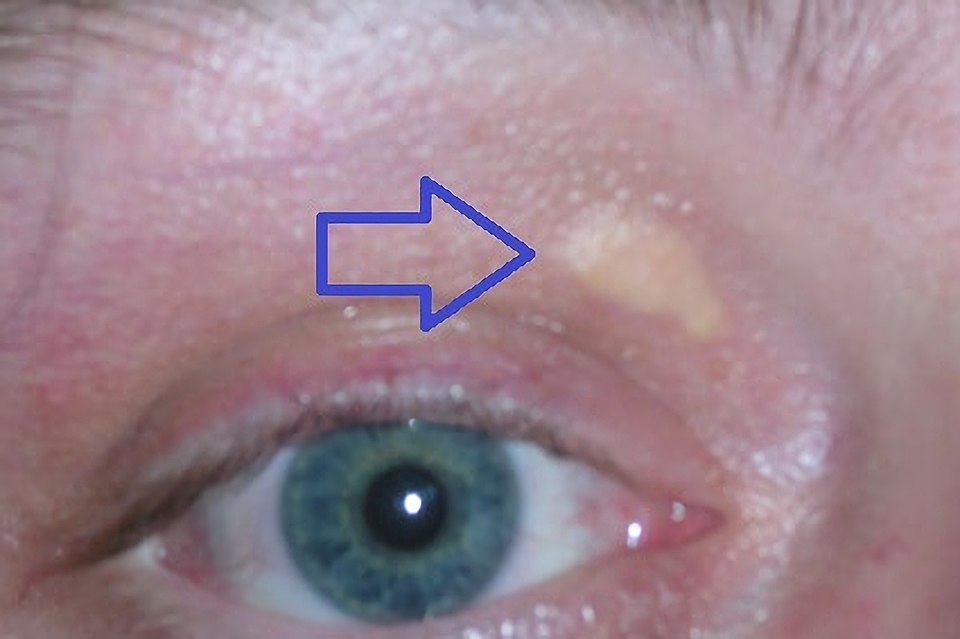
Xanthelasma - fatty deposits in the eyelids.
Xanthelasma_palpebrarum
Se den separata broschyren kallad Familjär hyperkolesterolemi.
What can I do to lower my lipid levels?
Hyperlipidaemia can be treated both by eating a healthy diet and by taking a medicine to reduce your cholesterol level. It is also very important to lower any other risk factors for cardiovascular diseases, such as doing regular fysisk aktivitet and not smoking. See the separate leaflet called Cardiovascular disease (Atheroma) for more information.
The decision as to whether you need medication is usually taken by your healthcare professional by putting your information into an online calculator. This uses a variety of factors to predict your risk of having a cardiovascular event such as a heart attack or stroke. If your risk is over 10% then you will usually be offered medication, however if you would like to first try diet and other lifestyle change then you can do that and arrange a re-test in 6-12 months. Some people are always offered medication, with no need to do a risk calculation. This includes those who have already been found to have arterial disease (for example, angina, heart attack, stroke), and those who have type 1 diabetes, chronic kidney disease, or a type of raised cholesterol which is inherited.
Kost
Changing from an unhealthy diet to a healthy diet can reduce a cholesterol level. However, dietary changes alone rarely lower a cholesterol level enough to change a person's risk of cardiovascular disease from a high-risk category to a lower-risk category. A healthy diet has other benefits too, apart from reducing the level of cholesterol. See also the separate leaflet called Healthy eating.
Medicinering
If you are at high risk of developing a cardiovascular disease then medication is usually advised along with advice to tackle any lifestyle issues, including diet. Medication can be used to lower your cholesterol or triglyceride level, usually with a statin medicine. Read more about statins and other lipid-lowering medicines for further details. Most medication is taken by mouth, but there is some newer medications (for example, evolocumab and incliseran) which are given by injection. They are usually prescribed by specialists rather than by GPs.
Explore cholesterol treatment options
Get expert healthcare advice from the comfort of home. Complete a quick online consultation, available 24/7, with your request reviewed by a UK-registered clinician. Next day delivery available on eligible treatments.
Patientval för Högt kolesterol
Hjärthälsa och blodkärl
Familjär hyperkolesterolemi
Familjär hyperkolesterolemi är ärftligt högt kolesterol. Det är ett tillstånd där du har en mycket hög kolesterolnivå i ditt blod.
av Dr Colin Tidy, MRCGP

Hjärthälsa och blodkärl
Högt kolesterol
Kolesterol är en fettkemikalie (lipid) som bildas i cellerna i din kropp. Många olika celler producerar kolesterol, men cellerna i levern står för ungefär en fjärdedel av det totala. Du behöver en viss mängd kolesterol för att hålla dig frisk.
av Dr Rosalyn Adleman, MRCGP
Vanliga frågor
Are there different kinds of hyperlipidaemia?
Yes, there are different kinds. It can be inherited through your family genes, which is known as primary hyperlipidaemia. It can also be a result of another medical condition you may have, such as diabetes, in which case it is called secondary hyperlipidaemia.
What kind of medical conditions can lead to hyperlipidaemia?
Several medical conditions can cause hyperlipidaemia, including an underactive thyroid gland (hypothyroidism), obstructive jaundice, Cushing's syndrome, anorexia nervosa, nephrotic syndrome, and chronic kidney disease.
Which prescribed medicines can affect my cholesterol levels?
Some prescribed medicines can impact your cholesterol level. These include certain diuretics (thiazide diuretics), steroids (glucocorticoids), ciclosporin, antiretroviral therapy for HIV, beta-blockers, the combined oral contraceptive pill, atypical antipsychotics, and retinoic acid derivatives.
How long do I need to fast before a blood test for hyperlipidaemia?
It used to be common practice to fast for 8-12 hours before a blood test for hyperlipidaemia. However, this is usually not required anymore. The person who requests your blood test will let you know if you need to fast.
Is diet always enough to lower lipid levels effectively?
While changing to a healthy diet can reduce cholesterol levels and offers other health benefits, dietary changes alone rarely lower cholesterol enough to move someone from a high-risk category for cardiovascular disease to a lower one. Medication is often advised in conjunction with lifestyle changes if you are at high risk.
Vidare läsning och referenser
- Cardiovascular disease: risk assessment and reduction, including lipid modification; NICE guidance (December 2023)
- Familial hypercholesterolaemia: identification and management; NICE Clinical Guideline (2008, last updated October 2019)
- Riktlinjer för hantering av dyslipidemier: lipidmodifiering för att minska kardiovaskulär risk; Europeiska kardiologföreningen/Europeiska aterosklerossällskapet (2019)
- Lipidmodifiering - CVD-prevention; NICE CKS, mars 2025 (endast tillgång i Storbritannien).
- 2021 europeiska riktlinjer för förebyggande av hjärt-kärlsjukdomar i klinisk praxis; Europeiska kardiologföreningen (2021)
- Hypercholesterolaemia - familial; NICE CKS, April 2024 (UK access only)
Om författarenVisa fullständig biografi
Uppdaterad av

Dr Toni Hazell, FRCGP
MBBS, BSc, FRCGP, DFSRH, Dip GU med, DRCOG, DCH (London, UK, 2000)
Dr. Toni Hazell tog examen från St. Mary’s Hospital Medical School och genomförde sin VTS vid Northwick Park Hospital.
Om recensentenVisa fullständig biografi

Dr Colin Tidy, MRCGP
Allmänläkare, Medicinsk Författare
MBBS, MRCGP, MRCP (Paediatrics), DCH
Dr Colin Tidy är en NHS-läkare, baserad i Oxfordshire.
Artikelhistorik
Artikeln finns också på Engelska, Tyska, Spanska, Franska, Italienska, Portugisiska, Hindi, Hebreiska, Arabiska, och Svenska.
Nästa granskning: 23 jul 2028
24 jul 2025 | Senaste versionen
14 Oct 2011 | Ursprungligen publicerad
Dela dina tankar eller erfarenheter med andra i vår patientgemenskaper.
Enkel tillgång till pålitliga behandlingar och hälsotjänster online.
Common conditions
Get help with common conditions through the NHS, without a GP appointment.





Anmäl dig till Patientens nyhetsbrev
Din veckovisa dos av tydliga, pålitliga hälsoråd - skrivna för att hjälpa dig känna dig informerad, självsäker och i kontroll.
Genom att prenumerera accepterar du våra Sekretesspolicy. Du kan avsluta prenumerationen när som helst. Vi säljer aldrig dina uppgifter.