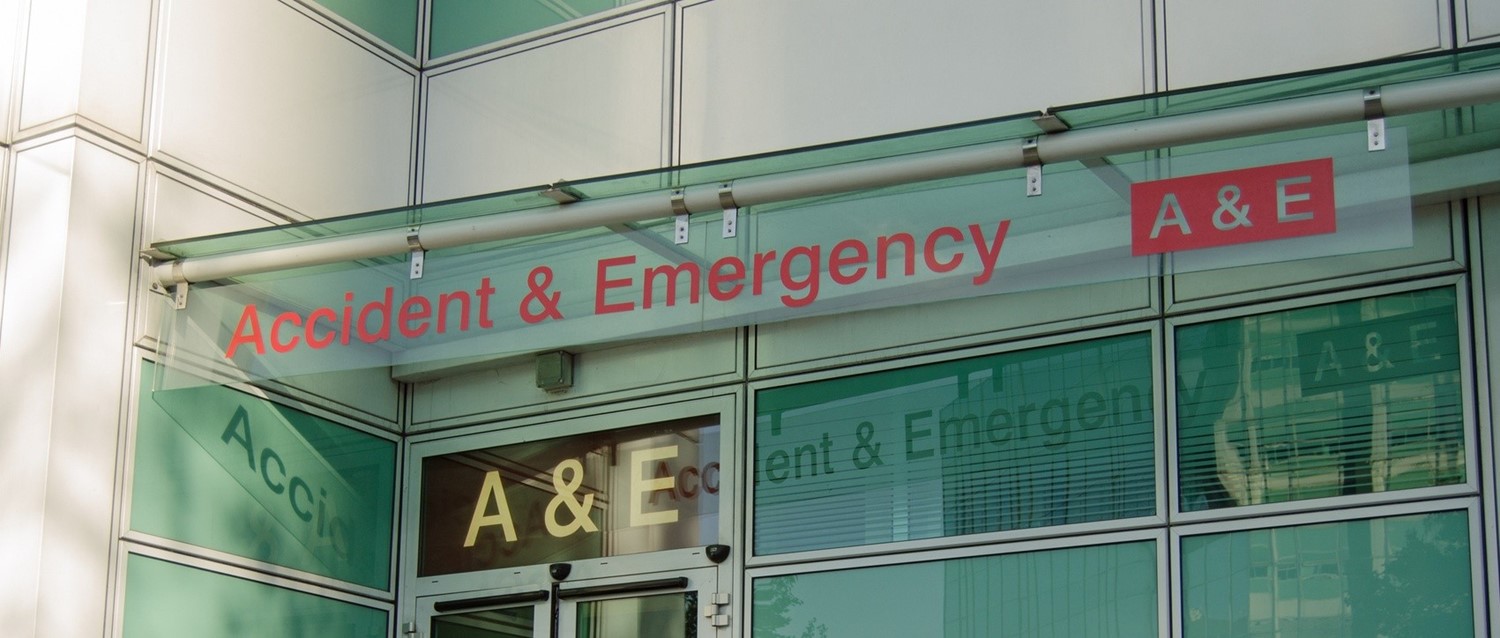
När behöver du verkligen åka till akuten?
Granskad av Dr Sarah JarvisFörfattad av Gillian HarveyUrsprungligen publicerad 3 Sept 2019
Uppfyller patientens redaktionella riktlinjer
- Ladda nerLadda ner
- Dela
- Language
- Diskussion
- Ask Patient
- Ljudversion
- Lägg till i föredragna källor på Google
Medan vissa nödsituationer - såsom olyckor eller allvarliga fysiska symtom - är lätta att känna igen, kan allvarliga tillstånd ibland visa sig på mindre uppenbara sätt. Det kan vara svårt att veta om man ska åka till akuten, ringa läkaren för en akuttid, söka hjälp från en annan vårdpersonal som en apotekare eller helt enkelt vänta ut symtomen.
Stomach ache
Let's face it, there's a lot going on in our abdomens. So when we feel a pain in the stomach, it's hard to identify exactly what's going on. Whilst this type of pain is common - and often related simply to digestion - what are the signs that it's something worse?
"Stomach pain is really difficult," agrees GP clinical lead Dr Daniel Atkinson of Treated. "Most of the time it's nothing serious. However, there are a few symptoms that should make you sit up and take notice. If the pain is severe; if it's accompanied by vomiting and there's blood in the vomit; if you are passing blood from the rectum (or black, tarry poo) or have blood in your urine, these warrant an emergency appointment."
Longer term: "If the symptoms are accompanied by other symptoms such as ofrivillig viktminskning, it's advisable get checked out."
Huvudvärk
Some of us are unlucky enough to suffer from regular huvudvärk, which may result from tiredness, hormonal issues or stress. But what happens when we get a blinder out of the blue?
"If a headache starts very suddenly and is very severe, it may be caused by a bleed or other problem within the skull," explains Atkinson. "It’s important to get yourself checked out immediately."
Other symptoms which may cause concern is if the headache is accompanied by "tingling or numbness in the hand, foot or leg, severe aversion to light or if headaches are getting worse over time", adds Atkinson.
A headache with neck stiffness, dislike of bright lights and/or a rash which doesn't fade when you press a glass against it should also be checked out as an emergency, as it could be down to meningit. Likewise, any weakness of one side of your face or body, problems speaking, changes in vision or severe eye pain should be looked at urgently.
Bröstsmärta
Anyone who's experienced halsbränna will know how excruciating this form of indigestion can be. So how do we differentiate between this kind of pain and the onset of something more worrying?
"Heart attacks are often sudden in onset and the pain is usually severe," says Atkinson. "If the pain is accompanied by shortness of breath, or radiates to your left arm or jaw, it's something that should have you dialling 999 [in the UK]."
Pale skin, a rapid pulse or sweating are also red flags for a heart attack. "People also often have a sense that something terrible is happening when experiencing heart pain - trust your instincts and if at all worried, seek help," adds Atkinson.
In addition, chest pain accompanied by coughing up blood or rusty coloured sputum, significant shortness of breath and/or sharp stabbing chest pain when you breathe (rather than cough) also need checking out. These could indicate a pulmonary embolus (clot on the lung), lunginflammation, collapsed lung or even lung cancer.
Yrsel
Feeling a bit dizzy could be the result of uttorkning, or a sign that we’ve skipped lunch. But like many common symptoms it could also signal a condition that requires medical attention.
"If the dizziness is accompanied by double vision, or lasts for a long time, it's a red flag sign," says Atkinson. "If it's short-lived and relieved by eating or drinking, then it's less concerning - although you should mention this to your GP."
If someone you are with loses consciousness, it's important to seek medical advice or call 999 [in the UK].
Skada
If you've fallen over as an adult, you will know it's a lot more painful than it seemed as a child. But if we take a tumble, should we rush off to the hospital or stick on a plaster and soldier on?
"This also goes to your instincts," explains Atkinson. "For example, is it more painful than you'd expect? Does it just feel as if something's wrong?" In addition, "if the mobility of an area of your body is affected, or if there’s swelling", it's worth a trip to A&E.
Importantly, even if we're not displaying worrying symptoms, if we've experienced a forceful impact, or fallen from somewhere high, it's important to get checked out as symptoms of more severe injury may not be instantly apparent. Likewise, a huvudskada accompanied by loss of consciousness should always be checked, even if the person concerned comes round quickly.
Feber
If a fever hits 40°C and isn't relieved by taking paracetamol, seek medical advice. However, even a lower feber can sometimes cause concern. According to Atkinson, we should also consider "the story that comes before the fever". For example, "if you've travelled somewhere foreign, are coughing up blood or experiencing headache symptoms with a high fever" or "if your fever lasts for more than 72 hours", it's time to seek urgent advice.
The rules are different for under-5s, where a lower-grade fever can signify a more serious problem. You should seek medical advice if a 3- to 6-month-old child has a temperature of 39°C or more, or if a baby under 3 months has a temperature of 38°C or more.
Symptoms in children
There are many things that may cause concern in children - for example, if they're less responsive than usual, develop a rash with a fever, or their crying or behaviour changes, it's important to get them seen quickly.
However, in addition to these 'red-flag' signs, Atkinson feels we should trust our "sixth sense" and act on them where children are concerned.
"Parents have a sort of sixth sense about their children, which should never be ignored" he says. "You can meet a child in surgery for five minutes and think they're OK, but if their parent says they're not behaving normally, it's really important to take that into account.
Graviditet
Any of the symptoms above, teamed with pregnancy, should lead to patients seeking urgent medical attention. "Pregnancy is really a trump card in all of these cases," explains Atkinson. "If you are pregnant and experience any of these symptoms you need to get seen."
Trust your instincts
Whilst none of us wants to clog up the waiting room, or add to the pressure on A&E, doctors would much prefer it that we seek medical attention if we're at all unsure, than miss an opportunity to make ourselves better.
Remember, your local pharmacist is often a good first port of call if you're feeling unwell. They'll also be able to advise if your ailment requires a visit to hospital or the GP. Alternatively, Atkinson suggests you can also call 111 [in the UK] if you're worried about symptoms.
Patientval för Vårdcentral och NHS-tjänster
Allmän hälsa och livsstil
Varför du inte bör hoppa över din gratis hälsokontroll hos NHS
It has never been easier to get a health MOT. Many risk factors don't cause short-term symptoms, but getting them identified and treated can hugely reduce your risk of heart attack, stroke, type 2 diabetes and kidney problems. But what tests do you need, and when should you have them done?
av Dr Sarah Jarvis

Allmän hälsa och livsstil
NHS öppnar drop-in kliniker för överlevare av kvinnlig könsstympning
NHS lanserar specialistkliniker över hela England för att stödja överlevare av kvinnlig könsstympning (FGM).
av Milly Evans
Om författarenVisa fullständig biografi
Författad av
Gillian Harvey
Frilansskribent
Kandidatexamen (Hons) i engelska
Gillian är frilansskribent och kolumnist för en rad nationella tidningar och tidskrifter.
Om recensentenVisa fullständig biografi

Dr Sarah Jarvis
Klinisk konsult
MA (Cantab), BM, BCh (Oxon), DRCOG, FRCGP, MBE
Efter att ha utbildat sig i medicin vid Cambridge och Oxford blev Dr Sarah Jarvis MBE allmänläkare.
Artikelhistorik
Artikeln finns också på Engelska, Tyska, Spanska, Franska, Italienska, Portugisiska, Hindi, Hebreiska, Arabiska, och Svenska.
3 Sept 2019 | Ursprungligen publicerad
Författad av:
Gillian HarveyGranskad av
Dr Sarah Jarvis
Dela dina tankar eller erfarenheter med andra i vår patientgemenskaper.
Enkel tillgång till pålitliga behandlingar och hälsotjänster online.
Common conditions
Get help with common conditions through the NHS, without a GP appointment.





Anmäl dig till Patientens nyhetsbrev
Din veckovisa dos av tydliga, pålitliga hälsoråd - skrivna för att hjälpa dig känna dig informerad, självsäker och i kontroll.
Genom att prenumerera accepterar du våra Sekretesspolicy. Du kan avsluta prenumerationen när som helst. Vi säljer aldrig dina uppgifter.