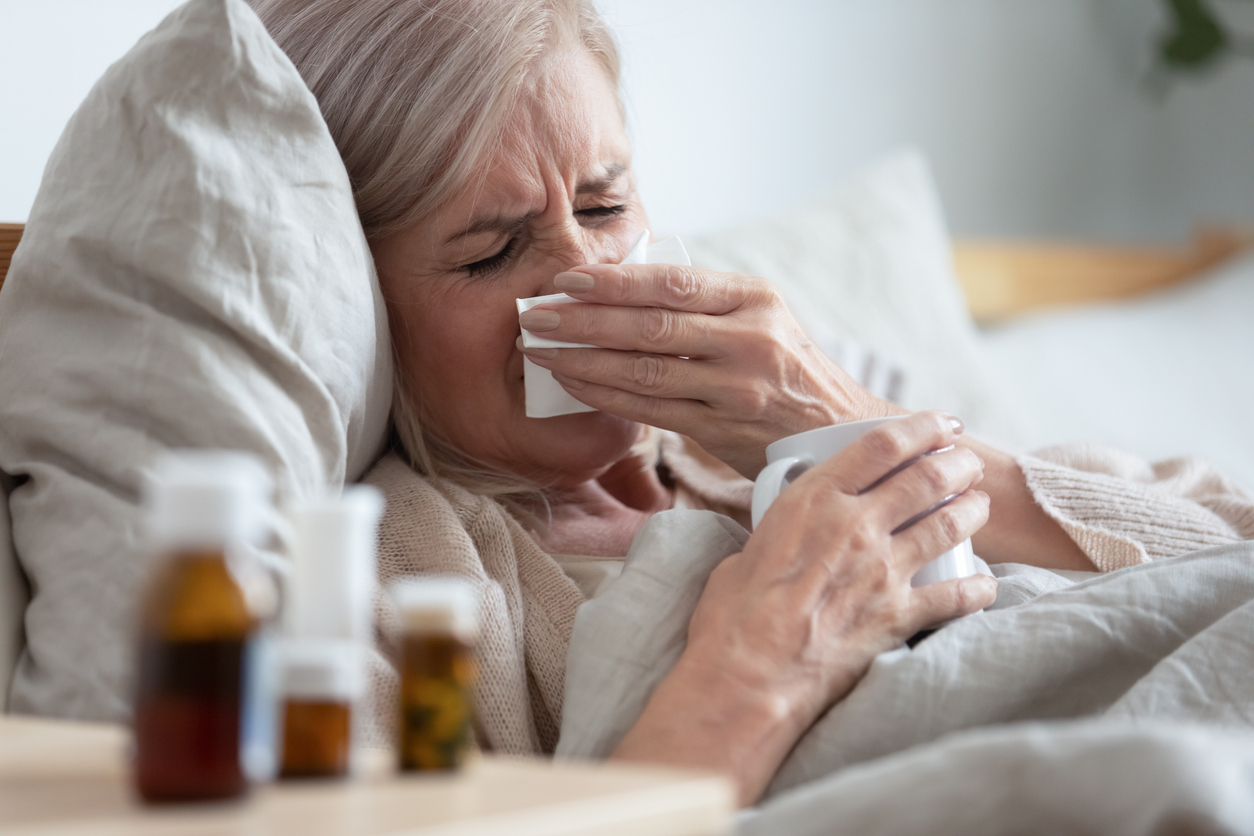
Why you should consider the flu vaccine
Granskad av Dr Sarah JarvisSenast uppdaterad av Dr Laurence KnottSenast uppdaterad 26 sept 2017
Uppfyller patientens redaktionella riktlinjer
- Ladda nerLadda ner
- Dela
- Language
- Diskussion
- Ljudversion
- Lägg till i föredragna källor på Google
After nearly 40 years in general practice, I think I’ve heard them all. “I don’t need a flu jab, doc, I’m as fit as a flea.” “I’ve never had a flu jab, and I’ve never had the flu”. And best of all: “I knew someone who never had the flu till he had the jab, and now he gets flu every year.”
These mythical tales are bane of most doctors’ lives. They're often cited by patients who don’t like the advice they are being given, but can’t think of a good reason why they should not take it. There's a Mr Miracle out there who seems to smoke 40 cigarettes a day, eats burgers every day for lunch washed down with a bottle of whisky, and has never had a day off sick in his life.
It is very difficult for doctors to respond sensibly to these stories. All we can do is trot out the same boring – but nevertheless evidence-based – advice.
Your immunity wanes as you get older
Even if you have never had a day’s illness in your life, your chance of catching influensa increases as you get older. En studie found that people over the age of 65 who had a flu jab consulted their GPs less often with what the scientists call ‘flu-related illnesses’ (basically flu, bronchitis och lunginflammation) than those of similar age who hadn’t.
People with chronic conditions are more likely to get flu
It has long been known that flu-related illnesses are commoner in people who already have long-term conditions (what medical bods call co-morbidities) such as chronic lung disease, heart disease, diabetes or immune system deficiencies.
Co-morbidities themselves are commoner in people over the age of 65, so the combination of getting older, developing age-related diseases and remaining unimmunised creates a perfect storm for the flu bugs waiting to strike.
The benefits outweigh the risks
If patients are to be believed (and I do believe them, most of the time) they all have an acquaintance who turned into Dr Jekyll after a flu jab.
The overwhelming evidence is that serious side effects are extremely rare. The jury is still out about just how effective flu jabs are in protecting older people from flu - partly because effectiveness seems to vary from year to year, depending on the strains used in the vaccine.
In 2016, a strain of virus called Australia H2N3 (AH2N3 to its friends) decided to change its antigen coat (the outer protective layer of the bag) at the last minute. The vaccine makers were unable to keep up with this change which made the jab less effective than the previous year. In 2017 the new strain of H2N3 was incorporated into the flu jab, which should make it more effective, especially for older people.
Even if they don't offer quite the same protection as they do in younger people, you're still less likely to get flu if you've been immunised, whatever your age. And given the choice between having a low side effect jab with a slight niggle about effectiveness, or a proven risk of catching a disease which could kill me, I know which way I would jump.
“It is crucial that we remember that vaccination remains the best protection we have against the unpredictable flu virus,” said Dr Christopher Chiu, clinical senior lecturer and honorary consultant in infectious diseases at Imperial College London and spokesperson for the British Society for Immunology. “Hundreds of virologists around the world are constantly working to make vaccines safer, more reliable and more effective. Just because the process isn’t perfect doesn’t mean it’s not saving hundreds of thousands of lives a year. I would urge anyone in the at-risk categories to get their free jab before this winter.”
Older people are also more likely to have serious complications from flu. I’ve included this point for those brave soldiers who say they’ve had flu, it’s not so terrible and they’ll take their chances.
The flu can be fatal
Professor Dame Sally Davies, the UK’s Chief Medical Officer of Health, has other ideas. “Let me be crystal clear – flu kills,” she said. “For many people it is an unpleasant illness but for the most vulnerable in society – small children, the elderly, those with long-term health problems and for pregnant women – it is extremely dangerous and can be lethal."
"Getting the vaccine is the best way to protect yourself and your loved ones from catching flu and I would urge everyone who is offered the vaccine free on the NHS to get vaccinated.”
Studies found that of the 250,000-500,000 people who die across the world from influenza every year, 90% are over the age of 65. If that statistic doesn’t get you rolling your sleeve up, I don’t know what will.
Patientval för Flu and vaccination
Infektioner
Hur du hanterar dina influensasymptom hemma
Winter is coming and that means flu season is also about to be in full swing. Most of us are familiar with the headaches, pains, sore throat and runny nose, but you don't have to suffer through it - there are steps you can take to manage your symptoms at home.
av Andrea Downey
Infektioner
Hur du bokar din influensavaccination innan vintern
Vintern närmar sig och med den ökar risken för att få influensa. Influensa kan få många av oss att känna oss eländiga och sängliggande i flera dagar, men för vissa människor kan effekterna vara allvarligare eller till och med livshotande. Att få ditt influensavaccin är det bästa sättet att skydda dig själv och andra - och här är hur du får ditt.
av Lydia Smith
Om författarenVisa fullständig biografi

Dr Laurence Knott
Allmänläkare, Medicinsk Författare
BSc (Hons) Biokemi, Läkarexamen
Dr Laurence Knott kvalificerade sig 1973 och har haft omfattande erfarenhet som allmänläkare.
Om recensentenVisa fullständig biografi

Dr Sarah Jarvis
Klinisk konsult
MA (Cantab), BM, BCh (Oxon), DRCOG, FRCGP, MBE
Efter att ha utbildat sig i medicin vid Cambridge och Oxford blev Dr Sarah Jarvis MBE allmänläkare.
Artikelhistorik
Informationen på denna sida är granskad av kvalificerade kliniker.
Artikeln finns också på Engelska, Tyska, Spanska, Franska, Italienska, Portugisiska, Hindi, Hebreiska, Arabiska, och Svenska.
26 sept 2017 | Senaste versionen

Fråga, dela, anslut.
Bläddra i diskussioner, ställ frågor och dela erfarenheter inom hundratals hälsorelaterade ämnen.

Känner du dig sjuk?
Bedöm dina symtom online gratis
Anmäl dig till Patientens nyhetsbrev
Din veckovisa dos av tydliga, pålitliga hälsoråd - skrivna för att hjälpa dig känna dig informerad, självsäker och i kontroll.
Genom att prenumerera accepterar du våra Sekretesspolicy. Du kan avsluta prenumerationen när som helst. Vi säljer aldrig dina uppgifter.
Mer om infektioner
- 9 ways to get rid of a UTI
- Ett klamydiavaccin har klarat de inledande säkerhetstesterna
- Uppmaningar om förbättrad tillgång till sexuella hälsotjänster när STI-frekvensen ökar
- Can I have the flu jab if ...?
- Kan du få klamydia från att kyssas?
- Gör influensavaccinet dig immun mot influensa?
- Allmänna infektionsvideor
- Hur dör man av influensan?
- Hur man hanterar en HIV-diagnos
- Hur man behandlar matförgiftning hemma
- Är det influensa eller bara en förkylning?
- Bör skolor eller föräldrar bekämpa löss?
- Video: Vilka är de olika typerna av STI?
- Vad är skillnaden mellan HIV och AIDS?
- Vad man inte ska säga till någon med HIV
- Vad man ska äta när man har gastroenterit
- What you need to know about HPV
- Vad du behöver veta om lunginflammation
- Where to get your flu jab this year
- Varför du behöver ta hand om din bäckenbotten