
Hur du slutar oroa dig för saker du inte kan förändra
Granskad av Dr Sarah JarvisFörfattad av Natalie HealeyUrsprungligen publicerad 6 Apr 2020
Uppfyller patientens redaktionella riktlinjer
- Ladda nerLadda ner
- Dela
- Language
- Diskussion
- Ask Patient
- Ljudversion
- Lägg till i föredragna källor på Google
As COVID-19 dominates our daily lives, it's never been more obvious that there are some things that can't be controlled or even predicted. Worrying about things you can't change may be futile but how can you stop yourself spiralling into negative thought patterns?
Stöd för psykisk hälsa för vuxna och barn
Online-KBT och psykologisk terapi för vuxna och barn i åldern 8–17 år. Onebrights ackrediterade kliniker hjälper personer som upplever ångest, depression och andra känslomässiga utmaningar.
You can find our latest features and advice on coronavirus and COVID-19 at our coronavirus hub.
Use Patient's coronavirus checker tool if you have any symptoms of fever or a new cough. Until you have used the tool and been advised what action to take, please stay at home and avoid contact with other people.
The difficult truth is there are a huge number of factors we cannot control in life. This is more apparent than ever as our daily lives diverge in ways we never thought possible in response to the COVID-19 pandemic. Stressing about things you can't change isn't limited to coronavirus and global emergencies though - it's one of the main symptoms of ångest. Most people feel anxious from time to time, but it tends to be a problem if the worry is out of proportion to the stressful situation, persists when the stress is over, or occurs when there isn't an obviously stressful situation.
"Anxiety often means worrying about things that are out of our control," says psychotherapist and Counselling Directory member Natasha Crowe. "The mind has an ability to catastrophise regardless of what's going on."
Why do I always imagine the worst?
If your mind always jumps to the worst-case scenario, blame evolution. Anxiety would have been an advantageous trait when humans first emerged. Our ancestors needed to be primed for danger in order to survive and reproduce. We call this response 'fight or flight' - where a hormone called adrenaline is produced by the body. It was useful back then, in case you needed to run away from a sabre-toothed tiger, but it's of less benefit in modern life where the threat isn't usually quite so obvious. Too much adrenaline can also cause physical symptoms such as a pounding heart, svettas, breathlessness and panikattacker.
Look for evidence
There will always be periods of life that are more challenging than others. We don't have control of that, but we can choose to respond to a difficult situation in a more helpful way. Focusing on what might go wrong and the worst possible scenario can trap us in the negative thought loop, leading to feelings of hopelessness and fear.
Kognitiv beteendeterapi (CBT) can be really helpful for those who find themselves struggling with spiralling negative thoughts. It aims to break problems down into more manageable chunks to stop you getting overwhelmed.
"CBT is about checking to see what's real. Ask yourself: do I have the evidence that this thought, this feeling, or this scenario is actually going to happen?," says Crowe.
Focus on what you can control
While there's a lot we can't change in life, there are some things that we can influence. For instance, while we can't control the actions of others, we do have control over how we behave in response to them. You may not know how you're perceived by someone, but you can choose to show kindness towards them. Similarly, we may not know what's around the corner, but we can make sure we're looking after ourselves and following a healthy lifestyle so we're in the best position to help others if a challenging situation does occur.
"When people feel overwhelmed by the lack of control, you have a choice in how you behave," explains Crowe. "So you can either go towards the anxiety and the fear and get completely caught up in it or you can choose to be more mindful about your reactions to things."
Stay away from social media
If you know certain things tend to trigger negative thoughts and anxiety spirals, it's best to take some time away from them. Constantly reading the news or checking social media may feel like a productive action because you convince yourself you're gaining useful information to help you prepare for disaster, but it may just be making you feel worse. Plus, a lot of misinformation circulates online. Try to limit yourself to checking trusted sources of news twice a day if you're feeling overwhelmed.
"If you're constantly fed negative messages and you have anxiety, that's terrifying because you will believe what you're seeing," says Crowe. "You need to be able in some ways to remove yourself from that."
Bring it back to the present
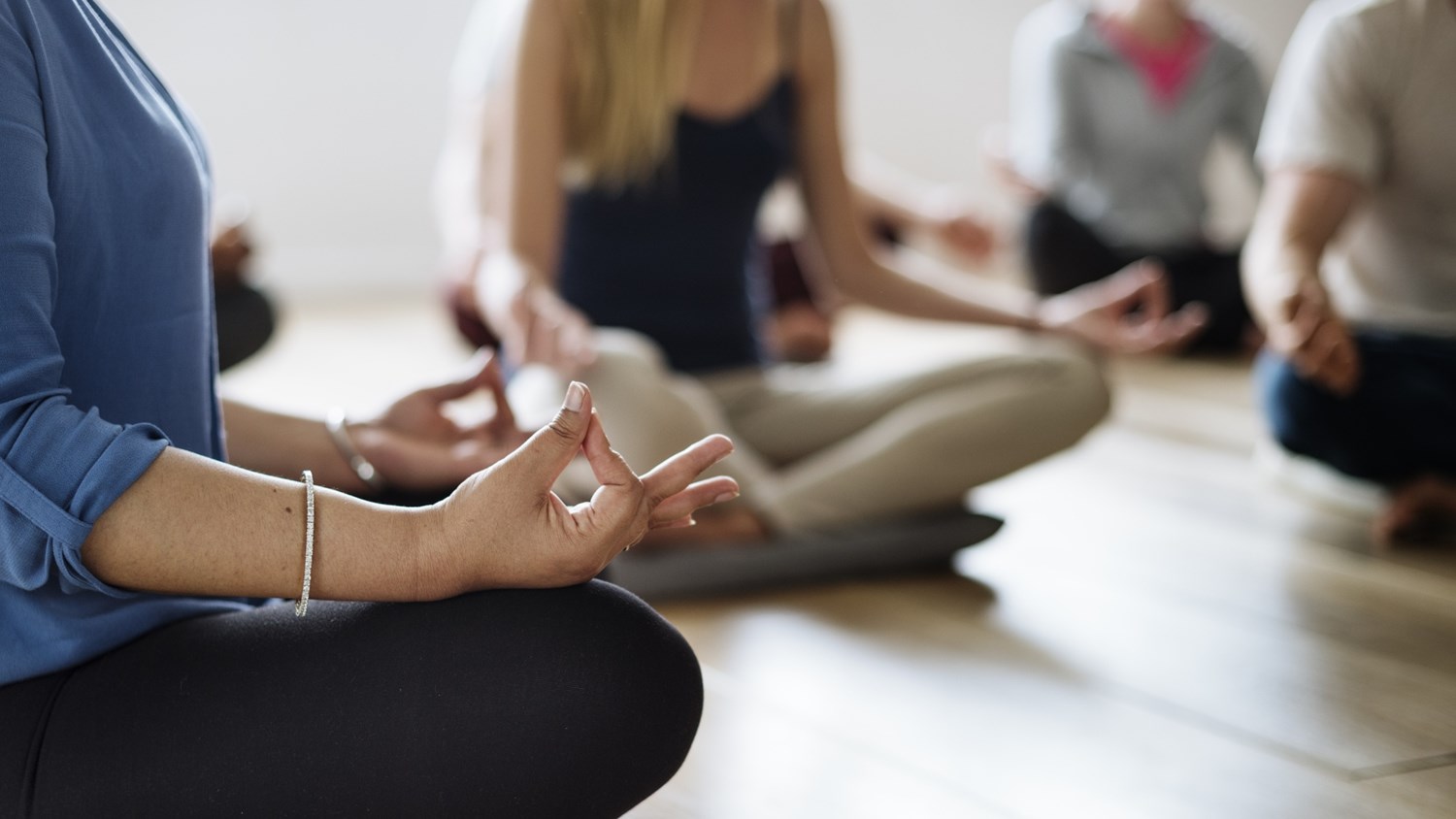
We don't know what's going to happen in the future, so trying to focus on the present moment can really help with anxiety. Medveten närvaro is based on this principle. Paying moment-by-moment attention to what's happening in the now, rather than the past or future, can be incredibly therapeutic.
"You haven't got the next moment and you haven't got the past, you've just got this moment," reveals Crowe. "It's about asking: Am I safe right now? And if that's true for you in that moment, it's the truth."
Anyone can practise mindfulness. There are many good guides on YouTube or apps such as Headspace to introduce you to the basic techniques. But even a simple breathing exercise kan hjälpa.
Crowe advises the following exercise to slow the mind down and engage the senses:
Firmly put your feet on the floor.
Name five things you can see.
Name four things you can hear.
Name three things you can touch.
Name two things you can smell.
Seek support
If your worries are affecting your daily life, you don't need to just put up with them. If you live in England, you can self-refer to talking therapies in your area. You don't need a GP appointment. You'll usually be assigned a telephone appointment with a therapist who will decide on the best course of treatment for the problem you're dealing with. You may be recommended CBT, group therapy or online counselling.
There may be quite a wait for NHS talking therapy though, so you may wish to go private. You can book a private counselling and psychotherapy consultation on Patient Access.
Patientval för Ångest
Mentalt välbefinnande
Avslappningsövningar
Muscular relaxation exercises and deep breathing are two ways to help people to relax and combat symptoms of anxiety. They may also help to ease symptoms of depression. They can be used together with mindfulness techniques which have been shown to help with anxiety and depression.
av Dr Jan Sambrook, MRCGP

Mentalt välbefinnande
Hur man hanterar ångest inför att återgå till arbetet
Det är ett scenario som många av oss har upplevt. Semestern vi har sett fram emot i månader närmar sig sitt slut och när vi packar våra resväskor börjar ångesten över att återvända till jobbet sätta in.
av Lydia Smith
Om författarenVisa fullständig biografi
Författad av

Natalie Healey
Frilansjournalist
BSc (Hons) Biomedicinsk vetenskap
Hon är en hälsojournalist baserad i London som har skrivit om vetenskap och medicin i flera år. Hon är tidigare redaktionschef på Patient.
Om recensentenVisa fullständig biografi

Dr Sarah Jarvis
Klinisk konsult
MA (Cantab), BM, BCh (Oxon), DRCOG, FRCGP, MBE
Efter att ha utbildat sig i medicin vid Cambridge och Oxford blev Dr Sarah Jarvis MBE allmänläkare.
Artikelhistorik
Artikeln finns också på Engelska, Tyska, Spanska, Franska, Italienska, Portugisiska, Hindi, Hebreiska, Arabiska, och Svenska.
6 Apr 2020 | Ursprungligen publicerad
Författad av:
Natalie HealeyGranskad av
Dr Sarah Jarvis
Dela dina tankar eller erfarenheter med andra i vår patientgemenskaper.
Anmäl dig till Patientens nyhetsbrev
Din veckovisa dos av tydliga, pålitliga hälsoråd - skrivna för att hjälpa dig känna dig informerad, självsäker och i kontroll.
Genom att prenumerera accepterar du våra Sekretesspolicy. Du kan avsluta prenumerationen när som helst. Vi säljer aldrig dina uppgifter.