Movember i fokus: svarta mäns mentala hälsa
Granskad av Dr Krishna Vakharia, MRCGPFörfattad av Amberley DavisUrsprungligen publicerad 2 Nov 2023
Uppfyller patientens redaktionella riktlinjer
- Ladda nerLadda ner
- Dela
- Language
- Diskussion
- Ljudversion
- Lägg till i föredragna källor på Google
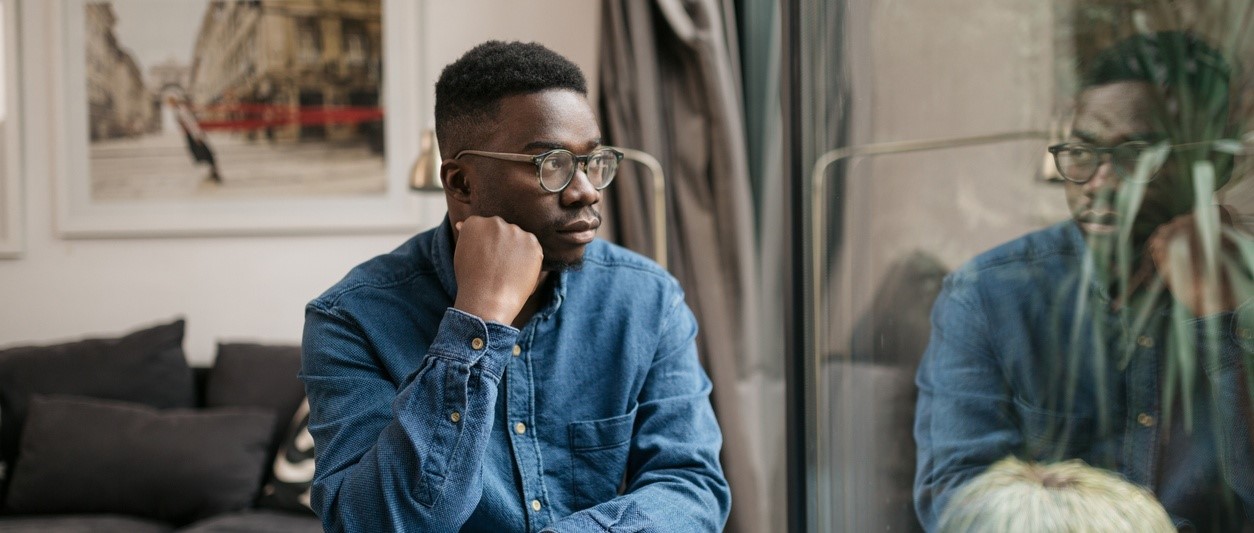
Black men are more likely to experience poor mental health than any other ethnic group, yet they are the least likely to receive treatment. This Movember, we explore this contradiction and ask what can be done to get boys and men the support they need.

Stigma, barriers, and discrimination
Male depression has been labelled a mental health crisis, with men accounting for around 80% of suicides worldwide1.
For black men, and particularly young black men, this gender gap and the male stigma around mental health is compounded by cultural barriers and experiences of racism. This has made black men the most likely group to develop mental health problems2.
UK statistics:3
3.2% of black men experience symptoms of psychosis, compared to 1.3% of Asian men and 0.3% of white men. There is no significant variation by ethnic group among women.
23% of people from UK black communities are experiencing a common mental health problem in any given week. This is compared to 18% of those from Asian communities and 17% from white communities.
6% of black people are treated for mental health problems, compared to 13% of white people. This is the lowest treatment rate of any ethnic group.
There are lots of complex reasons for this, and every person's circumstances are unique. But there are some overarching factors that help explain how both race and gender inequalities and barriers have led to this crisis. We explore these factors, with help from mental health expert and counsellor Matthew Schubert.
Intergenerational trauma
The concept of intergenerational trauma may help explain some of the mental health challenges faced by black men. This is the idea that you can feel the effects of trauma experienced by your family members in previous generations4, as Schubert explains:
"Much like the inheritance of genes, life experiences are transmitted across generations. When trauma, oppression, and socio-economic adversities affect a parent or grandparent, their impact often carries forward through their children."
Black communities have experienced more trauma than other racial groups, due to a long history of racism and discrimination4. Children learn how to respond to their surroundings in a similar way as their parents responded to theirs. Consequently, it's thought that the burden of inherited trauma explains why more black people experience posttraumatiskt stressyndrom (PTSD) than other ethnicities5.
Fatherless household epidemic
But are there intergenerational traumas that might affect black men in particular? Schubert believes so: "the fatherless household epidemic is more common in the black communities. When boys don't have a father figure in the home to model the behaviour of a loving male adult, they have a harder time becoming a loving male adult themselves - and this can mean bottling up emotions."
In a 2019 survey of England and Wales, 63% of children in Black Caribbean families were found to live in single-parent households - this compares to the lowest ratio of 6% of children in UK Indian families6. This can also be seen in the US, where 58% of black children are raised in a fatherless home, compared to 21% in the white community7.
Toxic masculinity
Black men also have to battle with a set of unhealthy and harmful standards that set out what it means to be masculine. This so-called toxic masculinity has existed as a cultural pressure for decades, for men across all ethnicities.
One notion of toxic masculinity is toughness. Expressions such as 'take it like a man' or 'boys don't cry', build the dangerous and unrealistic idea that men should not express emotions that make them look vulnerable, such as being sad or anxious.
Yet, bottling up emotions and following the masculine norms of self-reliance make men more likely to develop depression8, more likely to consider självmord9, and less likely to seek support for their mental health10.
For black men, this is compounded by intergenerational trauma. Historically, black men have opted into toxic masculinity to provide for and protect their families - beginning with slavery and lasting through social structures that have ultimately favoured wealthy white men above everyone else11.
Black masculinity
Experts argue that black masculinity has been a way for black men to form their own culture of dominance, building a barrier between them and racist discrimination.
Counsellor Schubert agrees that the behaviours passed down from father to son are important here. "Again, we can use the example of fatherless households. If there is no positive adult male role model in the home, boys will have a difficult time becoming emotionally mature men."
Outside the family home, the image of black masculinity has seeped into our films and TV shows, sending a clear message to some black men that displays of emotion are frowned upon12.
Accessing mental health support
These influences leave black men more vulnerable to mental health problems like isolation, ensamhet, trauma-related mental conditions, depression, and ångest. It also makes them less likely to ask for help. For those that do, they may experience some barriers and shortcomings in the care they receive.
An analysis of 66 studies on ethnic inequalities in UK mental healthcare found13:
A lack of socially relevant knowledge in medical training and services, which becomes a barrier when treating mental illnesses linked to experiences of complex trauma, systemic racism, and migration.
Many patients avoid mental healthcare due to fears of racist care and concerns around unsuitable treatment.
Direct experiences of discrimination.
A lack of progress in tackling ethnic inequalities, due to many services not adopting community recommendations.
Ongoing education
Schubert says that for mental health professionals working with marginalised or oppressed communities, ongoing education about cultural and racial diversities is crucial. "By understanding people's diverse backgrounds, professionals can significantly enhance their ability to empathise with, comprehend, and effectively support their clients."
There are also many examples of this in UK healthcare:
Den Young Black Men and Mental Health programme is an NHS-funded pioneering programme with Islington Council, in London. Initiatives include a 'Becoming a Man' counselling programme in schools as well as 'Let's talk about race and culture' training sessions for professionals.
Shifting the Dial is a community programme also promoting good mental health in young black men. Based in Birmingham, tactics here involve theatre groups focussed on strengthening mental wellbeing and 'Dear Youngers', a mental health forum offering peer support.
These types of programmes offer valuable blueprints for the future of black mental health support. A report sharing what has been learnt from Shifting the Dial has called for the UK government to tackle all forms of discrimination, including in schools, employment, policing, and healthcare.
It also asks charitable bodies to ensure black-led organisations get fair access to funding, so that these types of programmes can continue to improve black men's mental health support.
What can you do this Movember?
In November 2023, men's health movement Movember is asking people to move for mental health. This means completing a 60km run or walk in November to commemorate the 60 men who kill themselves every hour worldwide. There are also other ways to do your bit for Movember and black men's mental health.
Vidare läsning
Sibrava et al: Posttraumatic stress disorder in African American and Latino adults: clinical course and the role of racial and ethnic discrimination.
US Census Bureau: America’s families and living arrangements.
King et al: Expressions of masculinity and associations with suicidal ideation among young males.
Bansal et al: Understanding ethnic inequalities in mental healthcare in the UK: A meta-ethnography.
Patientval för Mentalt välbefinnande

Mentalt välbefinnande
Bipolär sjukdom, offentliga personer och gränsen mellan förklaring och ansvar
Recent comments from Kanye West have once again pushed bipolar disorder into the centre of public conversation. When someone with a global platform speaks openly about their diagnosis, it can feel like a rare moment of visibility for a condition that is often misunderstood. But when that same diagnosis is linked to controversial or harmful behaviour, the tone shifts quickly. For many people living with bipolar disorder it has a real impact on how they are seen by others, how seriously they are taken, and whether they are met with empathy or suspicion. So it is worth stepping back from the noise and asking a calmer, more useful question - what does bipolar disorder actually mean in real life?
av Thomas Andrew Porteus, MBCS
Mentalt välbefinnande
Hur jag fick en ADHD-diagnos: Kateys berättelse
Getting an ADHD diagnosis as an adult can be a long and emotional journey. For Katey, years of feeling burnt out, struggling to manage everyday life, and wondering why previous diagnoses didn’t fully explain her experiences eventually led her to seek answers. In this patient story, Katey Moseley shares how she was diagnosed with ADHD through the NHS Right to Choose pathway, what the assessment process involved and how diagnosis has helped her better understand herself.
av Heather Ainsworth
Om författarenVisa fullständig biografi

Amberley Davis
Seniorförfattare
BA (Hons), CPD
Amberley är en senior skribent hos Patient och har skrivit omfattande om en rad olika hälso- och välbefinnandeämnen.
Om recensentenVisa fullständig biografi

Dr Krishna Vakharia, MRCGP
Medicinsk chef för hälsa, Optum UK
MBChB, MRCGP(2013), BMedSci (hons), DFSRH, DRCOG, PGDipDerm (Distn)
Dr Krishna Vakharia är en NHS-läkare. Hon är också en regelbunden examinator för den postgraduate Diplom i Praktisk Dermatologi vid Cardiff University samt Chief Medical Officer för hälsa på Optum UK.
Artikelhistorik
Informationen på denna sida är granskad av kvalificerade kliniker.
Artikeln finns också på Engelska, Tyska, Spanska, Franska, Italienska, Portugisiska, Hindi, Hebreiska, Arabiska, och Svenska.
2 Nov 2023 | Ursprungligen publicerad
Författad av:
Amberley DavisGranskad av
Dr Krishna Vakharia, MRCGP

Fråga, dela, anslut.
Bläddra i diskussioner, ställ frågor och dela erfarenheter inom hundratals hälsorelaterade ämnen.

Känner du dig sjuk?
Bedöm dina symtom online gratis
Anmäl dig till Patientens nyhetsbrev
Din veckovisa dos av tydliga, pålitliga hälsoråd - skrivna för att hjälpa dig känna dig informerad, självsäker och i kontroll.
Genom att prenumerera accepterar du våra Sekretesspolicy. Du kan avsluta prenumerationen när som helst. Vi säljer aldrig dina uppgifter.
Mer inom mental hälsa
- Bryta stigmat kring psykisk hälsa
- Kan ångest orsaka depression?
- Kan döva människor få terapi?
- Kan hårtransplantationer förbättra mental hälsa?
- Kan tittande på skräckfilmer minska stress?
- Kan din 'morgonskräck' vara ett tecken på perimenopaus?
- Förhindrar amning förlossningsdepression?
- Hur elever och lärare kan övervinna provstress
- Hur pressen att amma kan påverka mental hälsa
- Hur man hanterar ångest efter cancer
- Hur du kan hjälpa om ditt barn har en ätstörning
- Hur du förbättrar din självkänsla och är snällare mot dig själv
- Hur man byter antidepressiva säkert
- Är ASMR hemligheten till sensorisk lycka?
- Är vagusnerven nyckeln till vår mentala hälsa?
- Inte riktigt 'tillbaka till det normala': en guide till familjeläkning efter pandemin
- Popcornhjärna: vad det är, varför det händer och hur du återställer ditt fokus
- Vad är dialektisk beteendeterapi (DBT)?
- NyVad är skogsbad och kan det förbättra din hälsa?
- Vad du kan göra om du har det svårt med din mentala hälsa under julen