
Hur man slutar känna sig uppblåst hela tiden
Granskad av Dr Krishna Vakharia, MRCGPSenast uppdaterad av Victoria RawSenast uppdaterad 21 jan 2025
Uppfyller patientens redaktionella riktlinjer
- Ladda nerLadda ner
- Dela
- Language
- Diskussion
- Ask Patient
- Ljudversion
- Lägg till i föredragna källor på Google
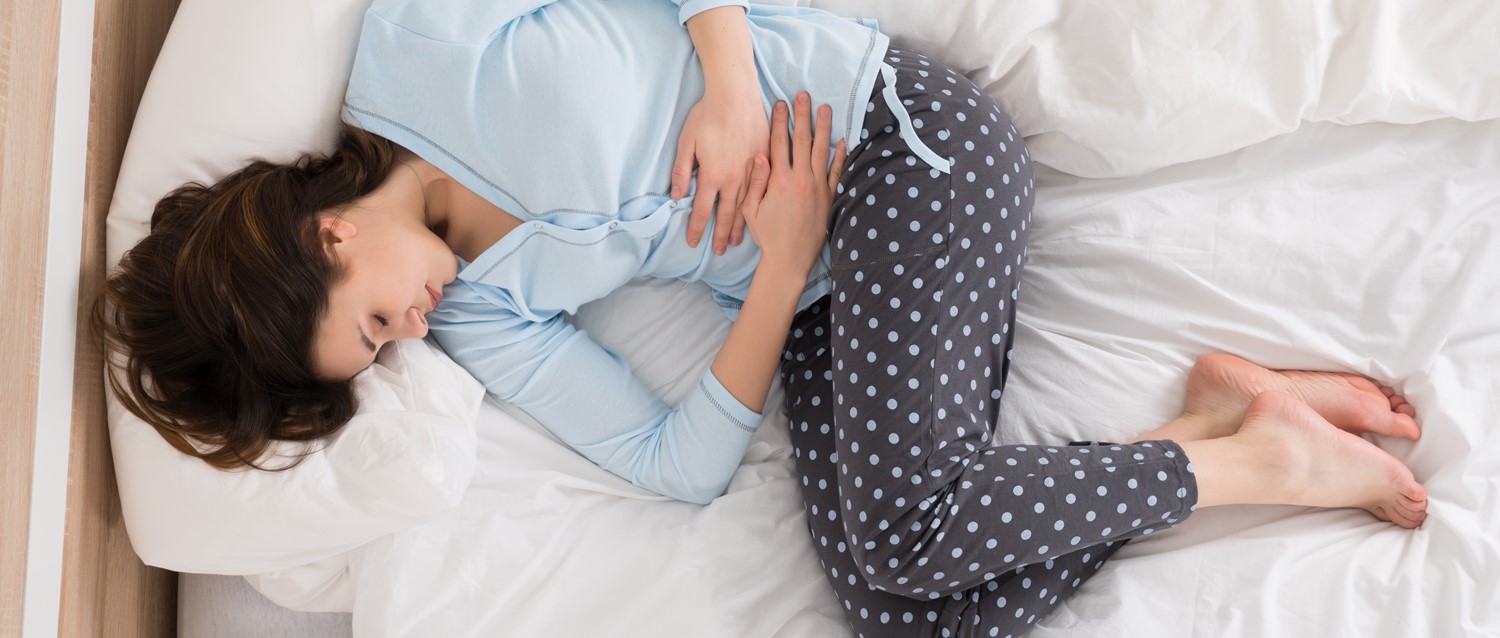
Oavsett om du har ätit en måltid för snabbt eller upplever hormonella förändringar, är känslan av uppblåsthet i magen ofta åtföljd av en känsla av trötthet och utmattning. Här tittar vi på vad som orsakar uppblåsthet och vad du kan göra åt det.
Bloating is often described as a stretched, puffy and uncomfortable feeling in your stomach.
Dr Ayesha Akbar, consultant gastroenterologist, The Princess Grace Hospital, London, UK explains that in some cases, your tummy can feel rock-hard and look swollen in appearance.
"Most people will have bouts of bloating fairly regularly," she says. "There can be a number of factors and triggers that cause this."
Although it's hard to assess the extent of bloating, the condition is certainly commonplace. You might feel bloated after a big weekend of eating - such as over the festive period - and the gassiness will eventually ease by itself. In these cases. There is little to worry about, beyond being temporarily unable to zip up your jeans.
Akbar advises that if your bloating is more than an occasional inconvenience, it may be worth exploring further, as regular or consistent bloating can be debilitating.
Hon säger: "It doesn't just affect your health but can also have an effect on your body confidence and general well-being. If bloating symptoms persist, are continuously affecting daily life, or are accompanied by other symptoms, such as a change in how often you need to go to the toilet, then see a doctor or specialist gastroenterologist as soon as possible.
"They will be able to help pinpoint the cause of your bloating through a variety of tests."
Dietary factors
If you have persistent bloating, the most likely cause is diet. If you've ruled out the obvious - having eaten too much in one sitting, or eaten too quickly - it's possible you have a food intolerance or allergy and have consumed something that doesn't agree with you.
Although everybody is different, the two food groups most liable to lead to bloating are dairy products and foods containing gluten. In these cases, your bowel might not be emptying properly, or too much wind might be being produced in reaction to the food.
Akbar says that even people who have not been diagnosed as being intolerant to dairy or have an autoimmune condition which causes their body to react to gluten (celiaki) can often have sensitivity to these foods, and feel bloated after eating them.
She suggests: "The best thing to do when trying to identify a bloating trigger is to keep a food diary for a couple of weeks, and note down when bloating symptoms arise."
Akbar adds that several other food types can be a bloating trigger - most notably, the kinds that are notorious for causing you to fart. For instance, if you're feeling bloated after Christmas dinner, you might be able to blame the Brussels sprouts along with the overindulgence.
"I always recommend to my patients that they should reduce the amount of foods they are eating which are known to cause too much farting and burping," she advises.
These foods include:
Bönor.
Lök.
Broccoli.
Cabbage.
Sprouts.
Cauliflower.
An imbalance in your gut bacteria - which help you digest food - can also lead to bloating. Several trials have shown that some probiotics and prebiotics can help improve bloating.
Another common cause of bloating is förstoppning, which can lead to a hard feeling in the stomach.
If that's you, make sure to:
Eat a fibre-rich diet.
Drink lots of water.
Take regular exercise.
Bloating can be made worse by lack of sleep, and by stress and dehydration, and is a sign of premenstrual syndrome (PMS). It can also come about when you've taken in too much air. In this case, cutting down on chewing gum and fizzy drinks ought to help.
Akbar recommends sitting down to eat, and avoiding talking while eating.
Possible medical reasons
Less commonly, bloating may point to a number of medical conditions.
Aside from food intolerances, these can include:
Coeliac disease - occurs when the intestines react to gluten, causing inflammation
Inflammatorisk tarmsjukdom (IBD) - a chronic inflammatory disorder of the gut
Irritabel tarm-syndrom (IBS) - is related to a loss of coordination in the digestive nervous system
Since the symptoms of these conditions can overlap, it's important to speak to a doctor about them - don't self-diagnose.
Very rarely, persistent bloating - sometimes along with a feeling of fullness, and needing to pee more - can be a symptom of äggstockscancer. This disease is most likely to develop in women over 55 but can affect younger women, and is often diagnosed late, due to low awareness of the symptoms.
According to the charity Target Ovarian Cancer, only one third of women would book a doctor's appointment when faced with persistent bloating. However, NHS England recommends seeing your doctor if you've been feeling bloated most days for the past three weeks. If there is something wrong, early detection will make it easier to treat.
Pinpointing the cause
More often than not, though, the cause will be something much less serious.
As Akbar explains, if a medical professional is looking to identify the root cause of your bloating, they will ask you a few key questions.
"They are likely to ask questions around how often bloating is happening, how long the bloating typically lasts for, and if there are any lifestyle changes, dietary changes or medicine that help to improve the condition," she says. "They may also ask if you are having any unusual symptoms or changes in going to the toilet, which could help to find what's causing your bloating."
Once the cause of your bloating is confirmed, it should be much easier to find ways to ease it. Most of the time it can be redressed through lifestyle changes and it poses no real cause for concern.
Patientval för Uppblåsthet

Tecken och symtom
Hur man hanterar illaluktande fisar, högljudda rapar och dålig andedräkt
Som läkare hoppas jag alltid att det inte finns något mina patienter inte kommer att säga till mig. Oavsett hur pinsamt det kan vara för dem, har jag sett allt tidigare. Men alltför ofta lämnar patienter det problem de oroar sig för tills de är på väg ut genom dörren. Och undersökningar tyder på att människor ofta inte pratar om att fisa, kissa på sig (inkontinens) och en mängd andra problem i åratal, när enkla livsstilsförändringar kan göra en stor skillnad.
av Victoria Raw
Tecken och symtom
Är uppblåsthet normalt och vad orsakar det?
Uppblåsthet kan kännas obehagligt, vilket kan få dig att undra om det är normalt eller inte. Faktum är att det finns flera anledningar till varför din mage kan bli uppblåst: vissa av dessa är naturliga och kan åtgärdas med livsstilsförändringar, men vissa kan vara orsak till oro. Låt oss utforska varför uppblåsthet uppstår och när du bör rådfråga din läkare om det.
av Emily Jane Bashforth
Om författarenVisa fullständig biografi
Uppdaterad av

Victoria Raw
Featureförfattare
BA (Hons), Engelsk litteratur
Victoria är en innehållsskribent på Patient, med särskilda intressen som sträcker sig över mental välbefinnande, samhälleliga trender och teknikens påverkan på vår hälsa.
Författad av

Abi Millar
Frilansjournalist
BA (Hons), MA
Abi är en frilansjournalist med ett särskilt intresse för att skriva om hälsa och medicin.
Om recensentenVisa fullständig biografi

Dr Krishna Vakharia, MRCGP
Medicinsk chef för hälsa, Optum UK
MBChB, MRCGP(2013), BMedSci (hons), DFSRH, DRCOG, PGDipDerm (Distn)
Dr Krishna Vakharia är en NHS-läkare. Hon är också en regelbunden examinator för den postgraduate Diplom i Praktisk Dermatologi vid Cardiff University samt Chief Medical Officer för hälsa på Optum UK.
Artikelhistorik
Artikeln finns också på Engelska, Tyska, Spanska, Franska, Italienska, Portugisiska, Hindi, Hebreiska, Arabiska, och Svenska.
Nästa granskning: 21 jan 2028
21 jan 2025 | Senaste versionen
26 jun 2018 | Ursprungligen publicerad
Författad av:
Abi Millar
Dela dina tankar eller erfarenheter med andra i vår patientgemenskaper.
Enkel tillgång till pålitliga behandlingar och hälsotjänster online.
Common conditions
Get help with common conditions through the NHS, without a GP appointment.





Anmäl dig till Patientens nyhetsbrev
Din veckovisa dos av tydliga, pålitliga hälsoråd - skrivna för att hjälpa dig känna dig informerad, självsäker och i kontroll.
Genom att prenumerera accepterar du våra Sekretesspolicy. Du kan avsluta prenumerationen när som helst. Vi säljer aldrig dina uppgifter.